This is a special post for quick takes by Lucius Bushnaq. Only they can create top-level comments. Comments here also appear on the Quick Takes page and All Posts page.
Comment Permalink
*4-1
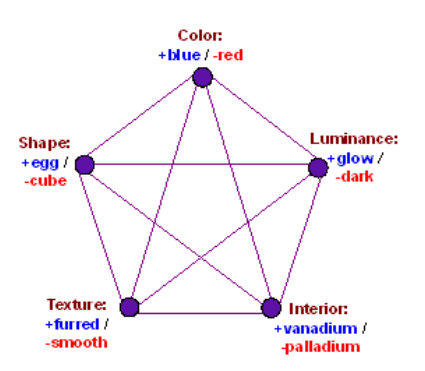
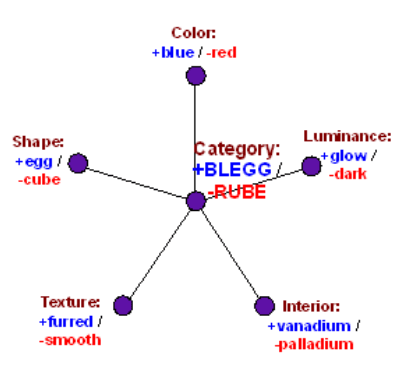
I'm with @chanind: If elephant is fully represented by a sum of its attributes, then it's quite reasonable to say that the model has no fundamental notion of an elephant in that representation.
Yes, the combination "grey + big + mammal + ..." is special in some sense. If the model needed to recall that elephans are afraid of mice, the circuit would appear to check "grey and big and mammal" and that's an annoying mouthful that would be repeated all over the model. But it's a faithful representation of what's going on.
Let me be precise by what I mean "has no fundamental notion of an elephant". Suppose I tried to fine tune the model to represent some new fact about animals, say, if they are worth a lot of points in Scrabble. One way the model could do this by squeezing another feature into the activation space. The other features might rotate a little during this training, but all the existing circuitry would basically continue functioning unchanged.
But they'd be too unchanged: the "afraid of mice" circuit would still be checking for "grey and big and mammal and ..." as the finetune dataset included no facts about animal fears. While some newer circuits formed during fine tuning would be checking for "grey and big and mammal and ... and high-scrabble-scoring". Any interpretability tool that told you that "grey and big and mammal and ..." was "elephant" in the first model is now going to have difficulty representing the situation.
Meanwhile, consider a "normal" model that has a residual notion of an elephant after you take away all all facts about elephants. Then both old and new circuits would contain references to that residual (plus other junk) and one could meaningfully say both circuits have something in common.
Your example, which represents animals purely by their properties, reminds me of this classic article, which argues that a key feature in thought is forming concepts of things that are independent of the properties we learnt about them.