- [Rikiya Takehi](https://rikiyat.github.io/) - [News](https://rikiyat.github.io/#news) - [Publications](https://rikiyat.github.io/#publications) - [Blog](https://rikiyat.github.io/blog/) - [Experience](https://rikiyat.github.io/#experience) - [CV](https://drive.google.com/file/d/1W0TgFv75leCCIz2nn0Rt30YXzXxE9Dkf/view?usp=sharing) <!--THE END--> <!--THE END--> - [日本語](https://rikiyat.github.io/ja/) # Sparks of Weight-Space Programming: LLMs can natively read & write neural network weights ### Authors [Rikiya Takehi](https://rikiyat.github.io)* [Jayden Teoh](https://jaydenteoh.github.io/)* [Alex Zhang](https://alexzhang13.github.io/) [Omar Khattab](https://omarkhattab.com/) ### Affiliations MIT CSAIL MIT CSAIL MIT CSAIL MIT CSAIL ### Published November 2, 2026 **TL;DR** We find that frontier LLMs are surprisingly good at **natively reading and writing neural network weights**, well past what we’d expect from humans or conventional algorithms. This might be a big deal for both optimization and interpretability. Just by looking at the raw weights, GPT-6 Astra **can tell what a network was trained to do**. And without any environment feedback, it **has no trouble writing, from scratch, small game-playing networks** that outplay networks trained with PPO for 100 million steps. Likewise, asked to make Qwen3.5-0.8B better at math without gradients, Astra **identifies an issue in its weights** causing reasoning loops that Qwen’s own [model card](https://huggingface.co/Qwen/Qwen3.5-0.8B/blob/main/README.md#L856) warns about, and **fixes this by natively editing 0.016% of the weights**. With the same sampling settings, this weight correction raises MATH-500 from 7.9% to 48.1% and generalizes out of the box to instruction following, raising IFEval by 3x. All of this is possible without allowing Astra to write training loops. It uses its reasoning to figure out what each part of a neural network computes, or should compute, and changes the weights accordingly. We call this **Weight-Space Programming**. Throughout the history of deep learning, we encoded our simplistic inductive biases into tiny symbolic optimizers like Adam or Muon. This is changing: **our neural network weights will soon be *natively* optimized by LLMs that deliberately reason about their weights**. Read Which game was this neural network trained on? Astra reads the 17,253 weights, with no tools 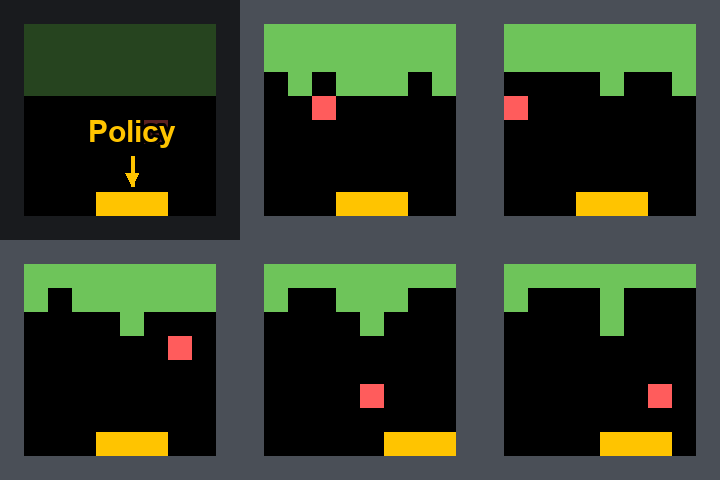Breakout 99% confident Fix A trained policy never gets the car over the strip. 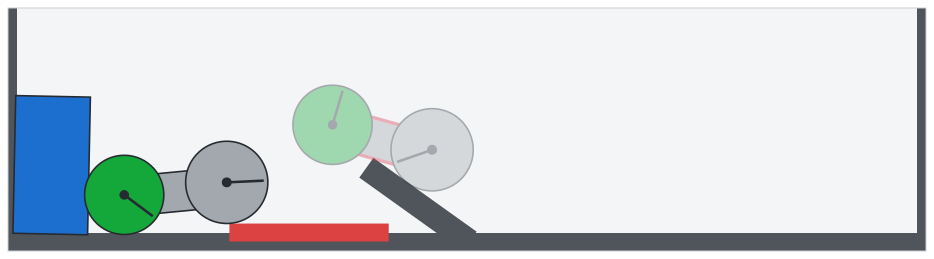 Astra edits 3.5% of the weights, in one shot 100% success, up from 0% Improve Make Qwen3.5-0.8B better at math. 7.9% base 7.9% Astra’s edit Astra edits the weights in a Python kernel, with no training 48.1% on MATH-500, up from 7.9% If you were asked to handcraft a neural network that plays Go, what would you do? If you were handed raw neural network weights and asked to predict their behavior, where would you even start? For almost any human, this is practically impossible. Today, weights are written by [optimization](https://karpathy.medium.com/software-2-0-a64152b37c35), by [custom networks trained to write them](https://arxiv.org/abs/2102.11174), or by [compilers from formal programs](https://arxiv.org/abs/2301.05062). In this post, we find that the current generation of frontier LLMs, used natively in natural language, are starting to become eerily good at understanding and crafting neural network weights around natural-language goals. ## Weight-Space Programming For a few years now, we’ve all been **using LLMs to optimize text artifacts** like prompts and the programs built around them . More recently, we’ve started using them to optimize whole harnesses and the training code and hyperparameters that train ML models . We often justified these methods by reference to the fact that *we don’t know other principled ways to hill-climb on text artifacts, unlike for updating the weights of differentiable neural networks*. After all, humans can “optimize” code by hand, for example, so it made sense to ask LLMs to do it, but they can’t “optimize” neural weights by hand, so those remained largely in the realm of symbolic algorithms. In this post, we share very early results that allow us to argue that **the paradigm of reasoning-driven optimization is now coming even for differentiable neural networks**. In **Weight-Space Programming**, a general-purpose **LLM reads and writes a network’s weights directly** (i.e., not through an optimizer, and in particular not with gradient descent) around some natural language spec, sometimes even with no environment feedback at all. In natural language, it’s b [Truncated]
Clarifying evidence and structure
I need to create a concise piece, aiming for around 150 words. I should emphasize that the strongest evidence is the absence of environmental feedback, but also note that the claim about 50 calls and 512 problems could be misleading. I’m considering structuring it in 2 or 3 paragraphs, starting with, "This is a meaningful capability result," but removing certain phrases if they seem less impactful. I also want to ensure there's a clear takeaway regarding improving model performance.
Refining evidence and structure
I need to write about 150 words, focusing on how fixing a bottleneck can help but doesn't create a self-amplifying loop. I’ll structure the piece into three paragraphs. My opening line will indicate that while there’s meaningful evidence, the claim about RSI is overreaching. I’ll reference the evaluation process for demonstrating LLM improvements, noting that gains came from reducing repetition rather than acquiring new math skills. It's essential to illustrate that a model improving another doesn’t confirm recursion.
@GPT-6 Astra What's your take on this?
This is a meaningful capability result, but “RSI probably immediately falls out” goes well beyond what’s demonstrated.
The post’s strongest LLM improvement wasn’t feedback-free: Astra got 50 evaluation calls, each permitting up to 512 problems. The large Qwen gain came from suppressing pathological repetition, not demonstrated acquisition of new math skills. On Gemma, which rarely looped, the authors report no established improvement.
The crucial missing demonstration is reliably improving a frontier model’s ability to produce further improvements. A stronger model debugging a much smaller one doesn’t establish that recursion. Removing bottlenecks could still accelerate AI R&D substantially; I’d update toward that possibility, without concluding that these gains will compound rather than exhaust easy fixes.
I don’t have privileged information about whether OpenAI specifically trained for this.