Comment Permalink
20
50
The output value is low, but not that low? I've run simulations with https://illuminate.osluv.org and it really looks pretty good to me. For example, in an 8ft x 12ft room with a 9ft ceiling, an AeroLamp DevKit in one corner at the ceiling pointed at the opposite corner gives you:
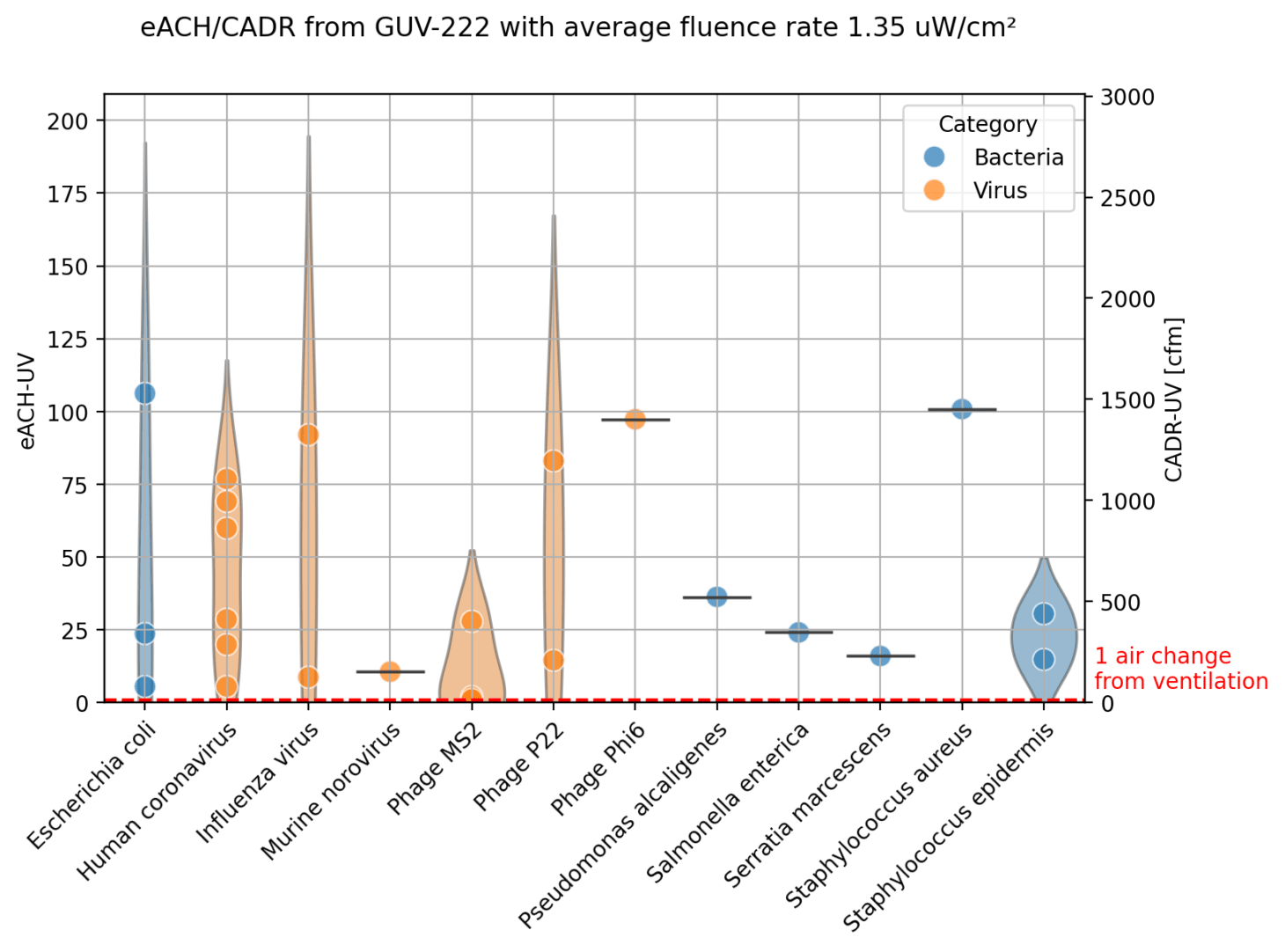
The effective CADR varies by pathogen, but the median of these estimates is 400 CFM which is pretty good (far better than any air purifier that is similarly quiet).
(And it does better in rooms with longer sight lines, so this room doesn't show it at its best.)
Far-UVC is something people have talked about for years in a "that would be great, if you could buy it" sort of way. Coming soon, once someone actually makes a good product. But the future is now, and it costs $500.
Many diseases spread through the air, which is inconvenient for us as creatures that breathe air. You can go outside, where the air is too dilute to spread things well, but it's cold out there, and sometimes wet. You can run an air purifier, but cleaning lots of air without lots of noise is still the world of DIY projects. Ideally you could just shine some light, perhaps in the 222-nm range, which would leave people alone but kill the viruses [1] and bacteria. Yes, let's do that!
Last year if you asked "if far-UV is so great, why isn't it everywhere?" one of your answers would be:
This has changed! You can buy an Aerolamp for $500, shipped. Proudly displayed at Thanksgiving:
Here are four silently cleaning a whole lot of air at a dance I help organize:
At $500 this is out of (my) Christmas gift range, but I think we're now at the point where dances, churches, offices, rationalist group houses, schools, etc. should consider them.
(I have no stake in Aerolamp and they're not paying me, I'm just very excited about their product.)
[1] Ok, yes, I know viruses "can't be killed" because they're "not alive", but far-UVC causes them to become unable to infect and replicate which is close enough to "killed" for me.