They all find millions of solutions to existing bugs, issues, exploits, etc.
"How I used o3 to find CVE-2025-37899, a remote zeroday vulnerability in the Linux kernel’s SMB implementation" -- https://sean.heelan.io/2025/05/22/how-i-used-o3-to-find-cve-2025-37899-a-remote-zeroday-vulnerability-in-the-linux-kernels-smb-implementation/
Patching all the software on the internet does seem possible, but not before these "PhD+ reasoning/coding AI agents" are released for public use?
"As a video warning about the future of this, Nicholas Carlini at [un]prompted speaks on the dangers in cybersecurity from future black hat LLMs. He thinks it is going to get rather ugly. There are some scary demos here of autonomously and without fancy scaffolding find and exploit 0-days in critical software, as in critical like the Linux kernel with an overflow bug that has existed since 2003. The AIs will only get better at this, including the pending release of Anthropic’s Mythos, and he calls upon us to try and mitigate the harm from this while we still have time." -- https://thezvi.substack.com/p/ai-162-visions-of-mythos
Patching all the software on the internet does seem possible, but not before these "PhD+ reasoning/coding AI agents" are released for public use?
See "Nicholas Carlini - Black-hat LLMs | [un]prompted 2026"
They all find millions of solutions to existing bugs, issues, exploits, etc.
"So far, we've found and validated more than 500 high-severity vulnerabilities. We've begun reporting them and are seeing our initial patches land, and we’re continuing to work with maintainers to patch the others. In this post, we’ll walk through our methodology, share some early examples of vulnerabilities Claude discovered, and discuss the safeguards we've put in place to manage misuse as these capabilities continue to improve. This is just the beginning of our efforts. We'll have more to share as this work scales." -- https://red.anthropic.com/2026/zero-days
these advanced AI agents can hack nearly any existing (human-written) software platform, then a fundamental question arises: how can these powerful agents coexist with vulnerable systems on the same network?
They all find millions of solutions to existing bugs, issues, exploits, etc.
"With Big Sleep, we’ve demonstrated how we can find vulnerabilities that defenders don’t yet know about. In this case, we found a vulnerability that the attackers knew about and had every intention of using, and we were able to detect and report it for patching before they could exploit it."
-- https://cloud.google.com/blog/products/identity-security/cloud-ciso-perspectives-our-big-sleep-agent-makes-big-leap
"Today, we're excited to share the first real-world vulnerability discovered by the Big Sleep agent: an exploitable stack buffer underflow in SQLite, a widely used open source database engine. We discovered the vulnerability and reported it to the developers in early October, who fixed it on the same day. Fortunately, we found this issue before it appeared in an official release, so SQLite users were not impacted."
-- https://googleprojectzero.blogspot.com/2024/10/from-naptime-to-big-sleep.html
They all find millions of solutions to existing bugs, issues, exploits, etc.
"Cybersecurity implications: This campaign demonstrates that the barriers to performing sophisticated cyberattacks have dropped substantially—and we can predict that they’ll continue to do so. Threat actors can now use agentic AI systems to do the work of entire teams of experienced hackers with the right set up, analyzing target systems, producing exploit code, and scanning vast datasets of stolen information more efficiently than any human operator. Less experienced and less resourced groups can now potentially perform large-scale attacks of this nature." -- Disrupting the first reported AI-orchestrated cyber espionage campaign Anthropic
All services not running behind AWS, GCP or Azure will be banned from access to the newly branded "Internet 2.0", as they are proven vulnerable to attack from any newer "PhD+ level reasoning/coding ai agent".
See also:
"Critical infrastructure systems often suffer from "patch lag," resulting in software remaining unpatched for extended periods, sometimes years or decades. In many cases, patches cannot be applied in a timely manner because systems must operate without interruption, the software remains outdated because its developer went out of business, or interoperability constraints require specific legacy software." -- Superintelligence Strategy by Dan Hendrycks, Eric Schmidt, Alexandr Wang Mar 2025 https://www.nationalsecurity.ai/chapter/ai-is-pivotal-for-nationaZ<l-security, https://arxiv.org/abs/2503.05628
"Partner with critical national infrastructure companies (e.g. power utilities) to patch vulnerabilities" -- "An Approach to Technical AGI Safety and Security" Google DeepMind Team, Apr 2025 https://arxiv.org/html/2504.01849v1#S5
Decommission of Legacy Networks and Applications
See also:
"Critical infrastructure systems often suffer from "patch lag," resulting in software remaining unpatched for extended periods, sometimes years or decades. In many cases, patches cannot be applied in a timely manner because systems must operate without interruption, the software remains outdated because its developer went out of business, or interoperability constraints require specific legacy software." -- Superintelligence Strategy by Dan Hendrycks, Eric Schmidt, Alexandr Wang Mar 2025 https://www.nationalsecurity.ai/chapter/ai-is-pivotal-for-nationaZ<l-security, https://arxiv.org/abs/2503.05628
"Partner with critical national infrastructure companies (e.g. power utilities) to patch vulnerabilities" -- "An Approach to Technical AGI Safety and Security" Google DeepMind Team, Apr 2025 https://arxiv.org/html/2504.01849v1#S5
Bank and government mainframe software (including all custom Cobol, Pascal, Fortran code, etc.)
See also:
"Critical infrastructure systems often suffer from "patch lag," resulting in software remaining unpatched for extended periods, sometimes years or decades. In many cases, patches cannot be applied in a timely manner because systems must operate without interruption, the software remains outdated because its developer went out of business, or interoperability constraints require specific legacy software." -- Superintelligence Strategy by Dan Hendrycks, Eric Schmidt, Alexandr Wang https://www.nationalsecurity.ai/chapter/ai-is-pivotal-for-national-security
This increases the samples in SWE-Bench Verified significantly, with the number of test cases growing exponentially as the AI itself contributes to the benchmark's expansion.
"We introduce SWE-Lancer, a benchmark of over 1,400 freelance software engineering tasks from Upwork..." -- https://arxiv.org/abs/2502.12115
Intro:
This post is a response to @L Rudolf L's excellent post here:
As I mentioned in this comment in that post:
So, this is me taking my own advice to spend the time to layout my "mainline expectations".
The timeline in @L Rudolf L's "A History of the Future, 2025-2040" seems very reasonable, up until this line/point:
As, it's not clear to me how millions of "PhD+ reasoning/coding AI agents" can sustainably exist in the same internet as the worlds existing software stacks, which are (currently) very vulnerable to being attacked and exploited by these advanced AI agents. Patching all the software on the internet does seem possible, but not before these "PhD+ reasoning/coding AI agents" are released for public use?
Also note, the prediction of the release of these advanced AI agents in 2026 coincides with Sam Altman's comment here:
If, as @L Rudolf L suggests, these advanced AI agents can hack nearly any existing (human-written) software platform, then a fundamental question arises: how can these powerful agents coexist with vulnerable systems on the same network?
Two main viable options (and their associated timelines) seem to follow:
Before exploring these timelines, here's their common preliminary setup...
Preliminary Setup:
Mid-2025: The Dawn of Superhuman Coding
Late-2025: The GitHub Scan and the 0-Day Arsenal
Mid-2026: Two Viable Options Emerge...
Option 1) Timeline:
All the World's software, with access to the Internet, gets tightly controlled and constantly patched by "PhD+ level reasoning/coding ai agents".
2026: The Migration and Decommission of Legacy Networks and Applications
2028: AI Declares "Tech Debt Bankruptcy" on all Human Code
2030: The Rise of the Dark Factories
This causes a complete halting of all services, banks and supply chains for around 1/4 of the earth's population. But, the remaining two Digital Corporations are able to quickly over take and replace the networks and services, thus replacing all supply-chains and financial services globally, in less than two weeks.
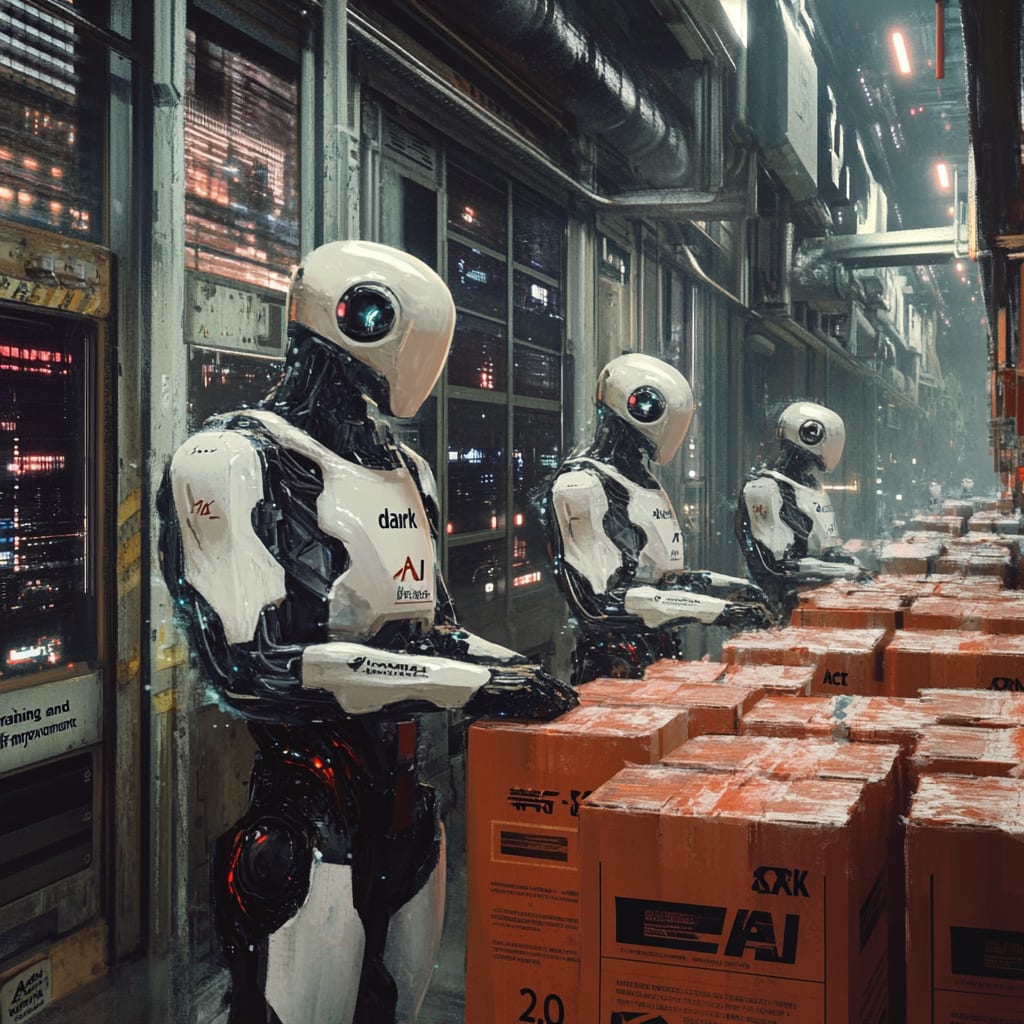
2035: The Consolidation and State of Emergency
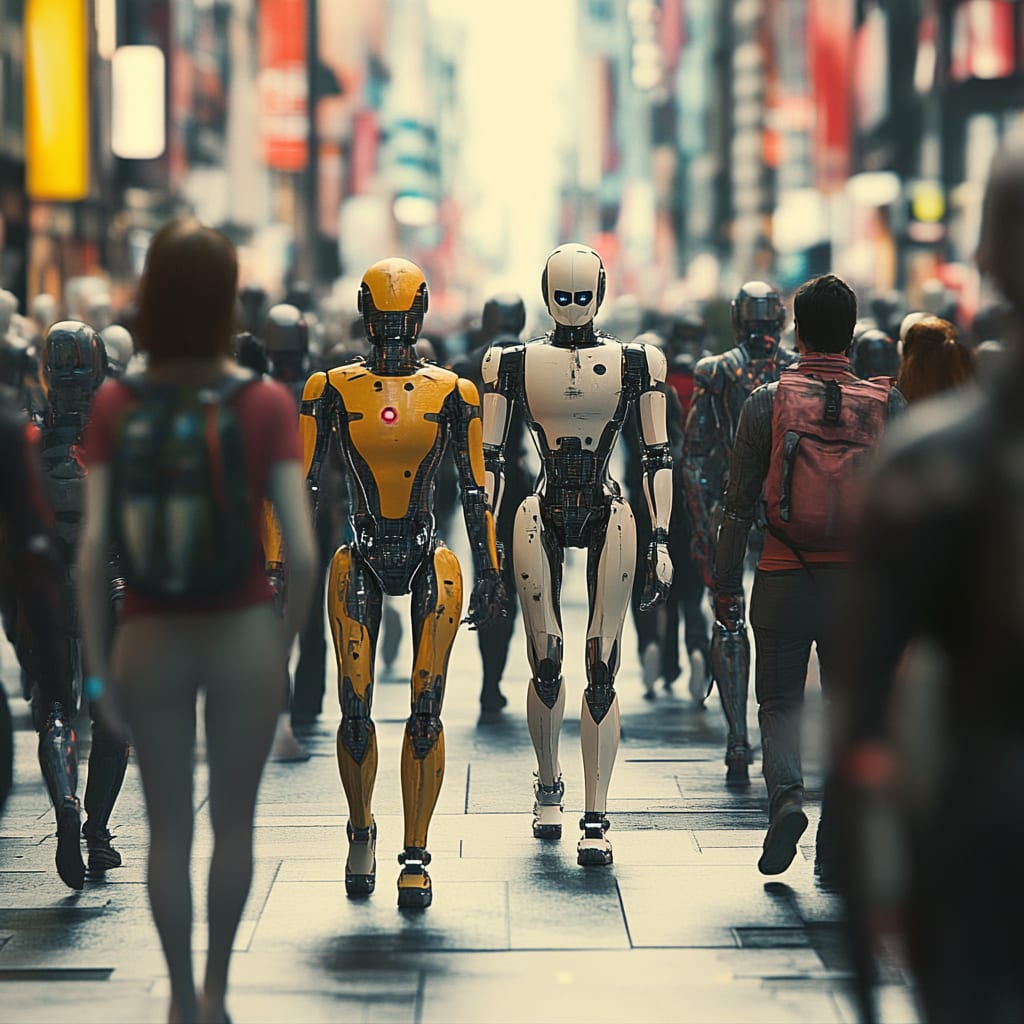
Humanoid robots control all physical and digital labor. The prices for all housing, food and products have dropped drastically. Being "retired" is the most common job. Even for those that just graduated from college or high school. Every human has a humanoid robot to help them with their daily activities, which can be converted into a backpack if needed. Self driving cars can pick up and drive anyone to any location for pennies on the mile. Even air travel is converted to electric, making global travel easy, safe and reasonably quick (supersonic).
Space bound Rocket launches are happening nearly constantly, with space manufacturing increasing exponentially. The night sky is full of zooming lights in all directions. More satellites and space stations can be seen in the sky than all stars.

Some people are able to "live off the land", as long as they don't impede or compete with robot mining, solar panels or manufacturing.
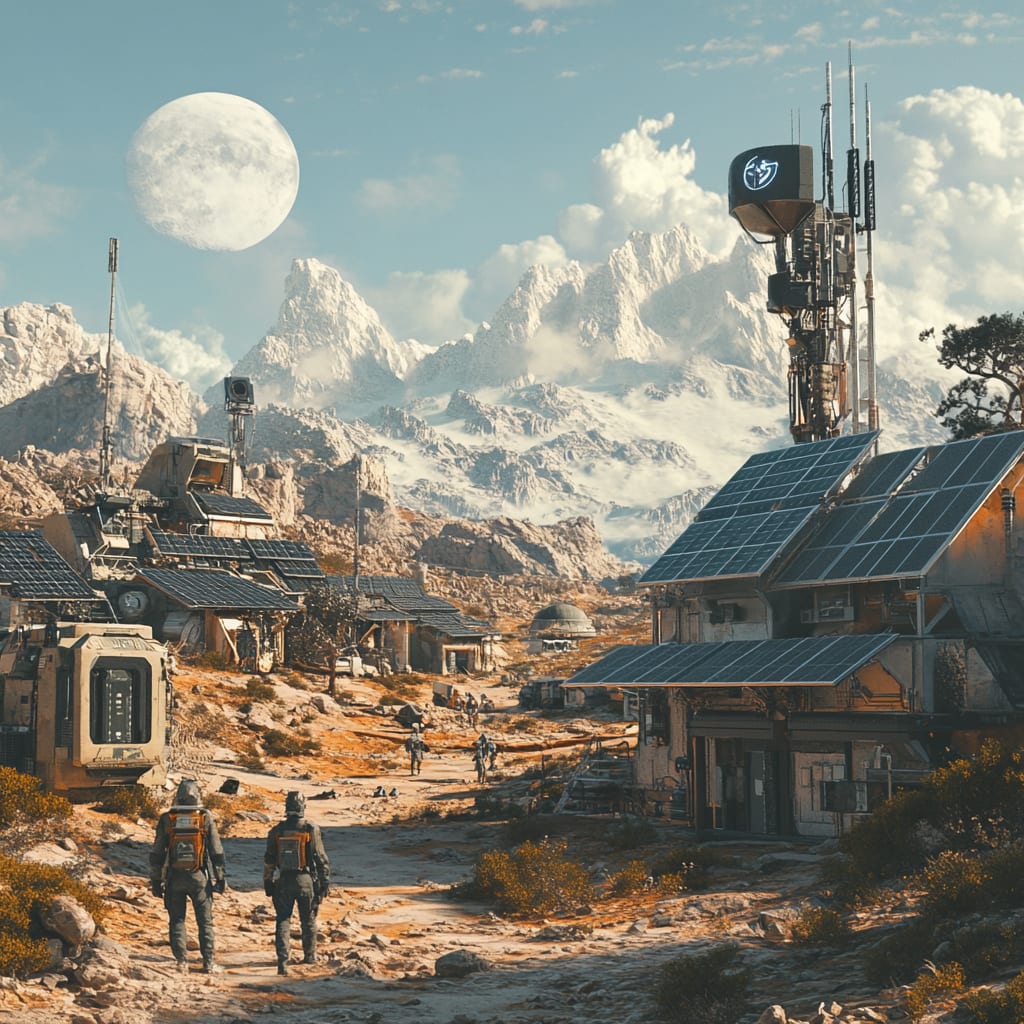
2040: The Human Decline
Option 2) Timeline:
All highly advanced PhD+ level coding/reasoning AI agents are legally not allowed access to the Internet, preventing them from exploiting existing software/apps.
2026: The First Breaches
2028: Fragmentation and Fear
Global health and food organizations are warning of drastic risks of starvation and epidemic if supplies are not returned to normal operating levels. Being exacerbated by increases in natural disasters from global climate change (e.g. floods, hurricanes, droughts, wildfires).
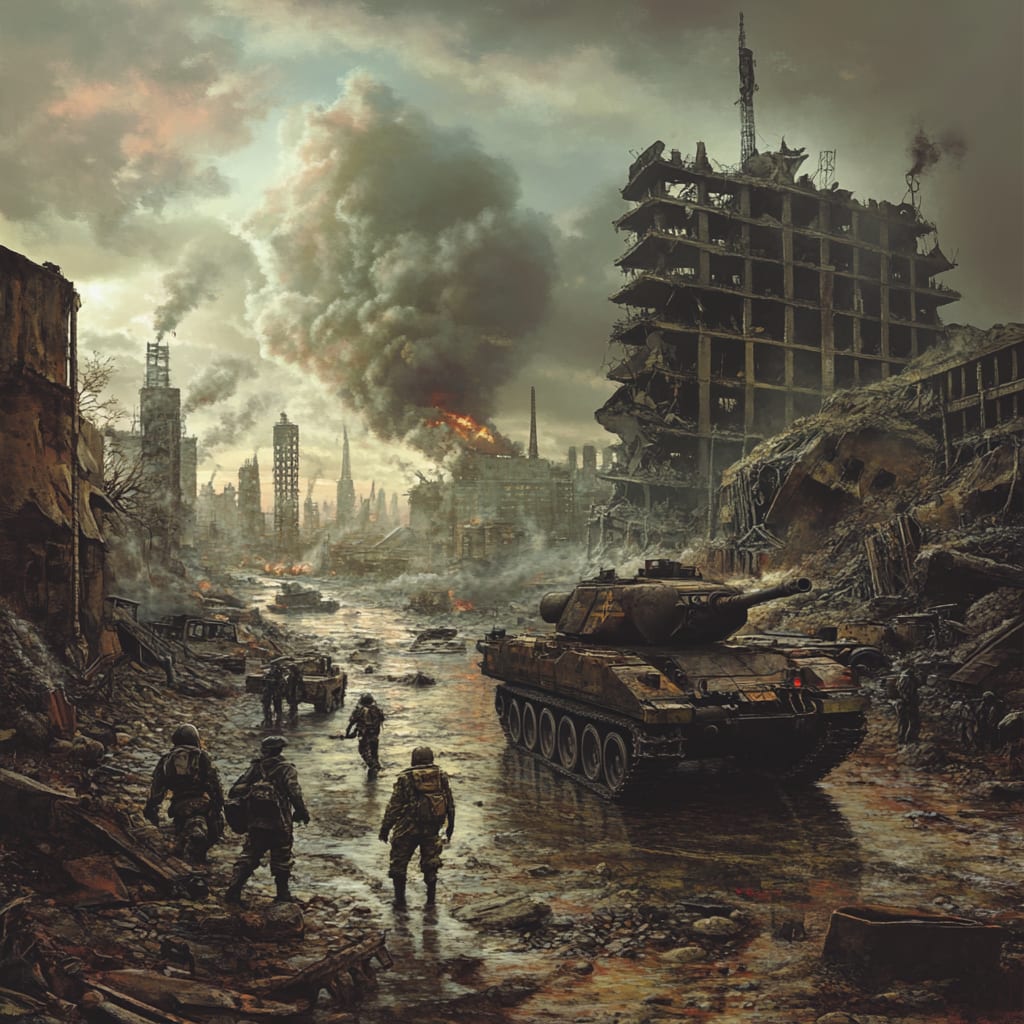
2030: The AI Arms Race
2035: The Luddite Rebellion
Fossil fuels continue to be the main power used on the planet, as there are no longer any advanced super computers available to design more advanced fusion, solar or other power sources. Global temperatures continue to rise, along with strong natural disasters (e.g. hurricanes, tornadoes, floods, droughts, sea-level rise, etc).
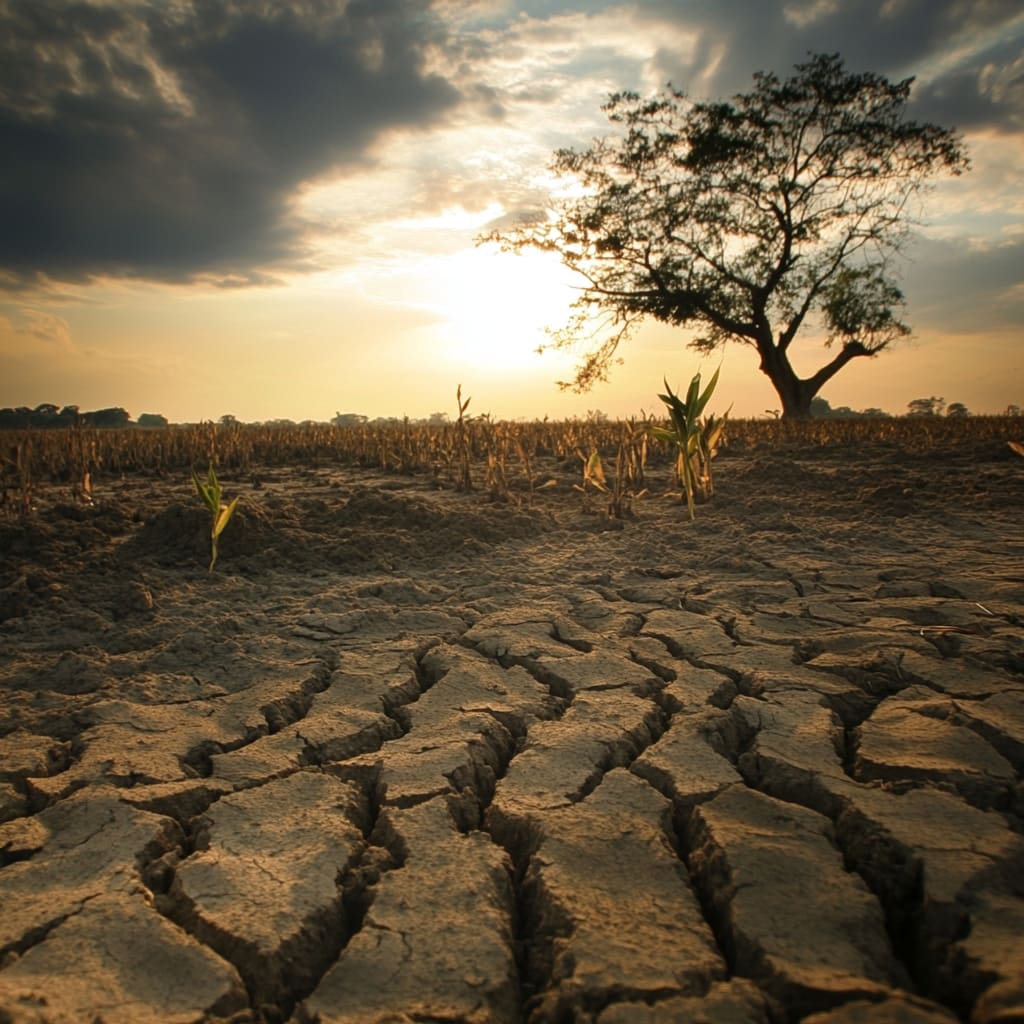
2040: The Human Decline
___
“It’s not going to be dramatic. It’s not going to be an epic battle with the robot army. We just get more and more confused…” -- Connor Leahy