We did reading yesterday. Now we do the math. Math is hard.
It does not have to be this hard.
A large part of the reason math is hard, or boring, is that education studies, especially in math, are worse than you know. It goes beyond the studies failing both math and statistics forever and into what I’d basically call fraud. Various people are at war with math education, and will do what it takes to stop it in its tracks. We must fight back.
Education Research Is Worse Than You Know
Kelsey Piper lets her title, ‘Education research is weak and sloppy. Why?’ completely downplay the level of utter awfulness she is reporting finding.
You know that whole thing where the entire Bay Area school system stopped teaching kids Algebra? That was motivated by criminal levels of fraud. I want Jo Boaler in jail doing hard time for this if it is accurate.
It is some of the most incompetently or dishonestly conducted research I have seen in a decade as a journalist.
Take one example: A report she gave at the National Council of Teachers of Mathematics on the stunning success of her innovative new math curriculum at “Railside” (she did not disclose the name of the real school where the study took place). This was a poor, disadvantaged California school, where, she said, students adopting her curriculum rocketed ahead of students attending schools with traditional curricula.
When other researchers looked into her work — combing through every school in California to figure out which one “Railside” might be, so they could look at the performance data that Boaler had declined to share — they found that Boaler had compared the top two quartiles of students at “Railside” to the middle quartiles of students at the other schools; that “Railside” students were in fact dramatically underperforming students at the other schools on every single mathematical ability test conducted during the study period, except the one that Boaler highlighted in her presentation. And the one she did highlight was actually conducted on a population of students who weren’t even exposed to the innovative new curriculum.
They found that the “tests” Boaler used to evaluate whether students were succeeding generally:
Contained material two or three years below grade level.
Did not contain any significant Algebra 1 or Geometry material despite being for an Algebra 1 or Geometry class.
Had problems that were incorrectly graded.
Had no “predictive validity” for other measures of math performance like SAT scores.
There was simply no relationship between doing well on Boaler’s error-strewn test of basic math and having mastered the material that students were supposed to master. Furthermore, the paper claimed that Boaler’s tactics closed the mathematics performance gender gap, with girls scoring as well as boys, but performance on outside tests found the gender gap at “Railside” the same as everywhere else.
On a different occasion, Boaler claimed that a single four-week summer camp could give students several years of math performance gains. Her evidence, when people dug into it, was that she gave the same test at the start of the camp and at the end, and the students’ scores improved — but that, as other researchers pointed out, is probably just explained by the fact they had seen the exact same question only a few weeks earlier. These are cartoonishly bad standards for evidence.
I wish this were a critique specific to Jo Boaler, but it isn’t. Across the board, the state of education research is incredibly grim.
One cannot purely pin this on Jo Boaler. One must mostly pin it on an entire system that allowed and accepted such fraud without examining it, and let that drive policy. This is on the level of things I uncover in the first few minutes.
The War on Math
Then, when the students finally do take algebra, they often can’t do algebra.
Why can’t the students do algebra when they passed algebra?
Oh.
Wendy: Two words a teacher never wants to hear: growth plan.
Our school is about to have a 100% Algebra I pass rate.
The last teachers holding the line on excessive absences are caving. No teacher wants to be put on a growth plan.
Johnny’s been present 5 out of 80 days. No worries. He’s passing now.
Did you know that real grades or SAT scores could have prevented what happens next?
Also, did you know that grade inflation is actually very bad for students?
The full result is that ‘passing grade inflation’ is good for earnings on the margin, but average grade inflation is quite bad for earnings. I roll to disbelieve both results in terms of magnitude, but not in terms of direction.
Passing grade inflation reduces the likelihood of being held back, increases high school graduation, and increases initial enrollment in two-year colleges. Mean grade inflation reduces future test scores, reduces the likelihood of graduating from high school, reduces college enrollment, and ultimately reduces earnings.
This is for grades in high school only, skewed towards grades 9-10.
So we have:
Passing students who should fail decreases the chance of being held back, and increases the chance of graduating, and initial enrollment in two-year colleges, because it almost has to. That’s saying fake signals create fake signals.
Inflated mean grades reduce future test scores and reduce chance of high school graduation or college enrollment, and ultimately earnings. Ut oh. That’s saying this is universally bad, even for the students getting the help (since it obviously hurts any students who don’t get their grades inflated).
Kelsey Piper: The question that captured the world’s attention was 7 + 2 = [_] + 6. There’s no trick; it’s as easy as it looks. The answer is 3.
The question was posed to students in the University of California San Diego’s (UCSD) fast-growing remedial math class, Math 2, and one-quarter of them got it wrong.
Here are some results for those in the remedial math class:
Well, sure, that sounds really bad, but it’s the remedial class, so it’s nothing, right?
In the fall of 2020, 32 students took Math 2. In the fall of 2025, fully 1,000 students had math placement scores so low they would need it.
Oh. Well, then. That’s 12% of students at UCSD. Who all failed math, then?
“Of those who demonstrated math skills not meeting middle school levels,” the report found, 42% reported completing calculus or precalculus.
… The students were broadly receiving good grades, too: More than a quarter of the students needing remedial math had a 4.0 grade point average in math. The average was 3.7.
Andrea: Yep, I saw that with VTech. You basically get admitted on the basis of your response to 3 essays, one of which asks you to describe a time when you were not being included. This is obviously a crucial factor in engineering.
Oh. So grades are so fake that they’re completely worthless. Well, then. I guess we know exactly how that happened.
Year after year, they fall farther behind, and it becomes more and more impossible for any teacher to admit that the students cannot do math and grade accordingly — since that would ruin the kids’ GPAs and college prospects. In this manner, they may make it all the way to college before they find out that they can only do math at a middle-school or sometimes an elementary-school level.
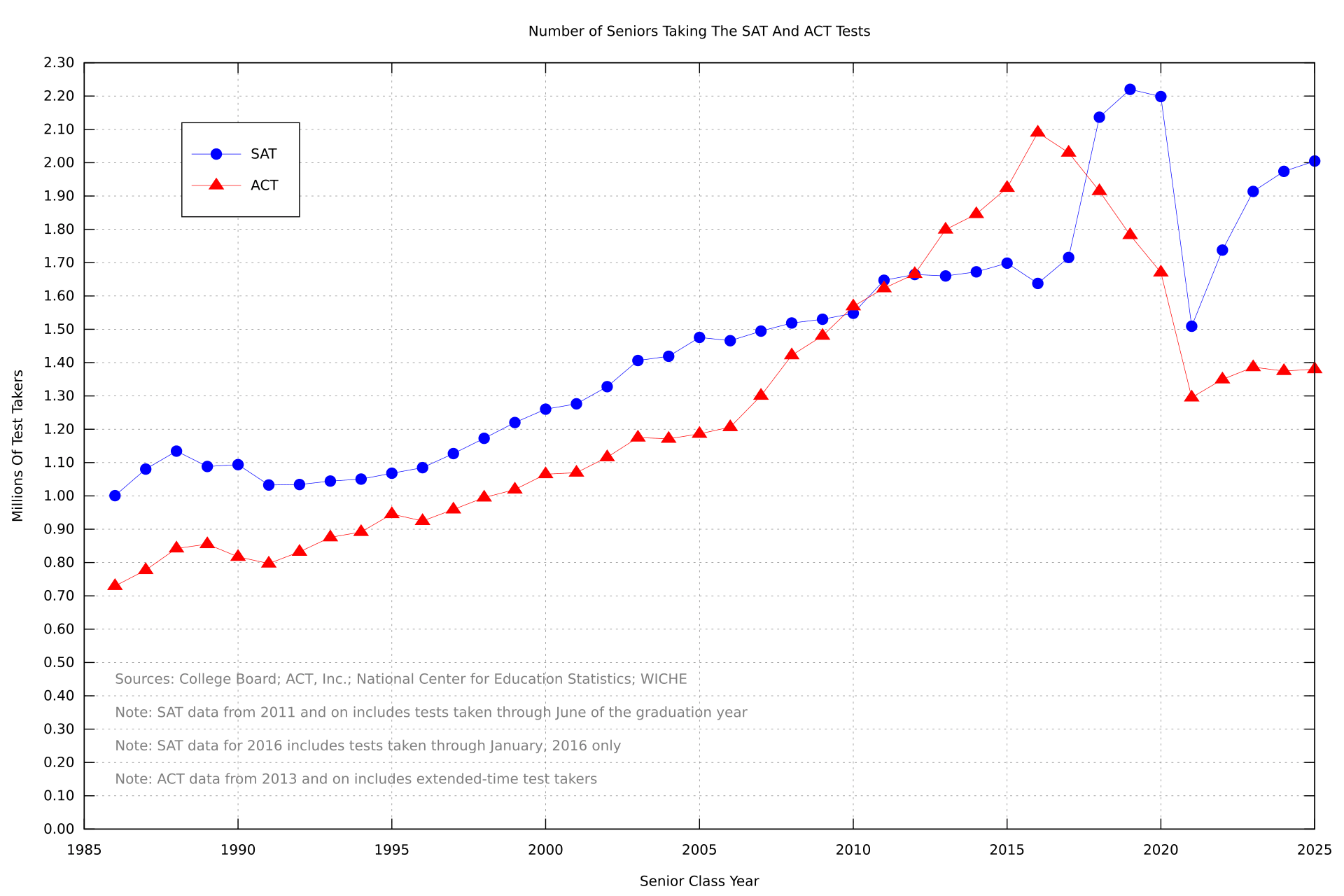
Oh. Well, then. The whole math educational system is a fraud. Once the SAT and ACT were eliminated as requirements for the UC system in 2020, there was no, as Kelsey puts it, ‘reality check’ on any of it, and that was that.
Maybe we can have them do things that don’t require the students know math?
The most common majors selected by the students taking remedial math are biology and psychology. Psychology BS majors and biology majors require college-level calculus, and students typically take UCSD’s calculus classes 10A and 10B.
But the report found that students coming from remedial math struggle in these classes, even after they’ve taken all the remedial coursework the university can offer: Between 2017 and 2023, 24% of these students earned a D, F, or withdrew from 10A. Of those who went on to 10B, 30% earned a D, F, or withdrew.
Oh. Well, then. That’s actually better than I expected. Half of them pass those classes. Except that kind of suggests that’s worse, because how exactly did they pass?
These students are not lazy or dumb.
… These kids were not doing anything wrong. They were lied to. They were told that they were prepared for classes they were not prepared for. They were told that they were excelling in classes that they were not excelling in. They deserved better.
I would love to not also blame the kids in all this, but that’s kind of nuts?
If you can’t do the most basic math questions, and there’s an AP test at the end that almost no one in class even bothers taking, and you’re somehow opting out of every objective standardized test for math (or you’re taking them), how can you possibly actually think you’re passing Calculus for real?
I flat out don’t buy it. Yes you’re being lied to, but if you’re being fooled, then there’s something deeply wrong with that. If you aren’t fooled but are going along with it because you think that’s best for your future and you’ll deal with the problem once you get into the UC system? I’m sympathetic. Hate the game and all that. But don’t tell me you’re smart, you’re not lazy, and also this all comes as a genuine surprise.
Yes. Simple as that. Cargo cult equity, and passing kids who didn’t pass, have to go.
The SAT or ACT needs to be a hard legal requirement for all college applications everywhere, so that the student has to at least know what their score was, and the college needs to be on record saying ‘I know what your score is and I accept it.’
Then there is the problem that the system wants to achieve results in the distribution of admissions that it’s illegal (via Supreme Court decisions) to achieve intentionally, so effectively the entire system is turned into a giant series of frauds to let them achieve it anyway. That’s worse. You know that’s worse, right?
As for the high schools: If a school awards you an A in Calculus, and you can’t solve basic Algebra I questions, then people need to be fired until that stops happening. Hell, if a majority of those with an A in Calculus don’t get at least a 3 on the AP exam someone should be fired, and really by majority I want to mean most and by 3 I want to mean 5.
PoliMath: It is a sin to waste the precious years of these kids’ lives pretending to teach them. It is a moral crime to waste all that money and all that time and deliver nothing.
Someone should pay for this (but no one will).
And yet, the lies continue.
Saul Geiser: UC has now been test-free for four years. The sky hasn’t fallen. Academic standards haven’t slipped. What has changed is the student body: More low-income, first-generation and underrepresented students are earning spots without affirmative action.
Kelsey Piper: This is an absurd lie which undermines substantive efforts to improve opportunities for low income students. Academic standards *have* catastrophically slipped. When you lie like this you destroy all your credibility on the topic.
I am confident there are reforms that will allow more low-income students to access higher education. But if you just flatly pretend that ‘admit students who are much less qualified’ is a miracle policy with no drawbacks, then none of those reforms will happen!!
Beyond UCSD
Justin Skycak: This isn’t just a UCSD problem. It’s even playing out at Harvard. Yeah, Harvard. The most prestigious university in the USA and maybe even the world. Last year they had to add remedial support to their entry-level calculus courses.
It should not be so difficult to select a Harvard class that is ready for Calculus. If the school that is the first choice of half of students can’t do it, then that is their choice.
Look at what happened in New York, including the change in relative ranking. Luckily we have bounced back.
A state as rich as New York being 38th in math is also rather horrible, as is a 63% rate of not being proficient in math.
The broader story at the link is that standards have changed but performance is stagnant. Okay, I don’t love stagnant performance when it is this bad, but why did you think ‘change the standards’ was going to fix anything?
Justin Ross: LA Public High School, shutting down due to small classes.
I don’t see that scale at the link but that’s where his picture was from. He confirms this was on normal high school math questions like the ones we all had, not a super hard test designed intentionally to center around 50.
These kinds of conversions fine for a college class where the test is designed to reveal maximum information, and the average student scores 50%. In a key sense, your numerical score is arbitrary, and wasting half the scale on ‘obviously you fail’ is bad.
Especially bad is using negative selection, where you have to essentially never make a mistake to get a Good Grade. At my high school, scores were from 0-100 rather than A-F within and between classes, and if you wanted to go to the good colleges, you needed to average 95+ across classes. You were effectively being graded on ‘not screwing up’ and this meant a mix of insane pressure and also cases where you had no incentive to improve, you’d already hit 100 in context.
This was, unfortunately… not that.
This is ‘you can only turn in half the assignments and know half the answers and still get a C.’ And that the tests haven’t changed from the old ones, or got easier. Not great.
It does get crazier:
Azmazing: In Seattle Public Schools the grading scale differs from subject to subject (e.g. an 80 is a B- in math but a B in ELA). What Seattle also does though is “non-zero grading,” where a missing or failed assignment still earns 50% of the available points.
Does this fool people? To some extent, alas, it surely does. But also it’s kind of reasonable, in the sense that I don’t see much difference between a half-wrong assignment and not turning it in? Nor do we want the 0s to dominate the math.
New Math
Another ‘fun’ way to destroy math education is to teach absurdly stupid techniques, and then punish any students who attempt to use any other method. Even if the technique was good, forcing one method over another is the opposite of how math works, and how you build mathematical intuitions.
This particular process is… exactly the same as regular long division actually except a bit slower, so it’s actually rather stupid except as conceptual illustration and should clearly come before rather than after usual long division if you’re going to use it?
Russel Warne: My daughter’s elementary school is teaching the “rectangular array” method of performing long division. The procedure requires students to guess a number, multiply it by the divisor, and subtract the result from the dividend. They then repeat this process until the dividend is exhausted or there is a remainder. They then sum the numbers they guessed together.
It’s inefficient, more prone to error, and requires more steps than traditional long division. I can’t see a single advantage to this procedure.
(My daughter wrote “Stupid” on the page. She’s right.)
Chelsea Sierra Voss: This topic is a scissor because *teaching* multiple methods of arriving at the correct answer is an excellent practice for encouraging understanding, mental math, and checking work, but *requiring* students use only one prescribed method at a time to get the answer is Bureaucracy
… The rectangular trick shown is in fact great btw. It’s not at all “inefficient” or “prone to error,” and it’s optionally algorithmically identical to long division, just with added flexibility. If you want a guaranteed log(n) runtime, limit to subtracting off powers of 2 only.
Math Anxiety Is Often Due To Knowledge Gaps
Unlike Kelsey Piper, I report that this does not confirm all of my priors, including the fact that I did successfully take math up until the level of my incompetence (at least given the incompetence of the relevant teacher) and my only anxiety was ‘is this going to ruin my average’ which went away when I realized the undergraduates were all going to get gentleman’s Bs. Then again, yes, if you are good at math you’re less likely to be anxious about it, so it’s not exactly surprising.
I have had so many interactions where a child is floundering in math, a lot of people vocally declare it “math anxiety” and then it just turns out they don’t know their times tables yet.
yeah a kid is going to be anxious/avoidant in a class that makes no sense to them because they were never systematically taught the prerequisite skills! but if you treat this as primarily a psychological problem you’re really missing the boat
I definitely experienced what you could call ‘math anxiety’ in advanced undergraduate math but which is much better described as ‘not having solid enough foundations to keep up’.
Patrick McKenzie: The implication regarding the literature about teachers with math anxiety is left as an exercise to the reader.
Wendy: I just had an interesting conversation with a counselor who told me a student in my Algebra 2 class should be allowed to use notes on his math test due to “math anxiety.”
I argued that math anxiety doesn’t come from tests. It stems from years of missing foundational skills. Passing students along without mastery creates this anxiety, and allowing notes or other crutches won’t help.
I suggested the student use an online program to close those gaps, which would reduce anxiety.
The counselor replied, “I don’t think that will work.”
Okay, that part does confirm all of my priors. If you need notes during a test, the solution is most definitely to learn the contents of the notes. If you don’t see how that would help then I don’t know what to tell you.
Calculus By Eighth Grade Is Highly Practical For Many
The amount of math we could teach, without any additional resources or time spent, is quite high. Not for every student, but as Justin Skycak says, and as I gave a school talk about when I was in the 7th grade, we go painfully slowly teaching math through about 5th grade (I’d say closer to 3rd, even, in many cases) and then we basically twiddle students thumbs in math until 8th grade. There’s no reason you can’t go a lot faster.
So when a bunch of students asked, when can we take calculus, one school just went ahead and did it, with a three year plan that took the kids through algebra, geometry, algebra 2, precalculus and then in the final year AP Calculus BC, where most of them got the maximum score of 5. Whereas I only got to take Calculus BC in 9th grade, and that was considered super unususual.
Yes, there was some selection involved, but only at the 90th percentile level on a placement exam, and this survived scaling up somewhat. We don’t know how much slack there is in the admissions process here, but this seems like definitive proof that the whole math system is fundamentally broken even when working as designed.
We did reading yesterday. Now we do the math. Math is hard.
It does not have to be this hard.
A large part of the reason math is hard, or boring, is that education studies, especially in math, are worse than you know. It goes beyond the studies failing both math and statistics forever and into what I’d basically call fraud. Various people are at war with math education, and will do what it takes to stop it in its tracks. We must fight back.
Education Research Is Worse Than You Know
Kelsey Piper lets her title, ‘Education research is weak and sloppy. Why?’ completely downplay the level of utter awfulness she is reporting finding.
You know that whole thing where the entire Bay Area school system stopped teaching kids Algebra? That was motivated by criminal levels of fraud. I want Jo Boaler in jail doing hard time for this if it is accurate.
Here’s the part before the paywall:
One cannot purely pin this on Jo Boaler. One must mostly pin it on an entire system that allowed and accepted such fraud without examining it, and let that drive policy. This is on the level of things I uncover in the first few minutes.
The War on Math
Then, when the students finally do take algebra, they often can’t do algebra.
Why can’t the students do algebra when they passed algebra?
Oh.
Did you know that real grades or SAT scores could have prevented what happens next?
Also, did you know that grade inflation is actually very bad for students?
The full result is that ‘passing grade inflation’ is good for earnings on the margin, but average grade inflation is quite bad for earnings. I roll to disbelieve both results in terms of magnitude, but not in terms of direction.
A paper from September 2025 called ‘Easy A’s, Less Pay: The Long Term Effects of Grade Inflation’ claims:
This is for grades in high school only, skewed towards grades 9-10.
So we have:
University of California San Diego
It turns out that yes, grades were load bearing all along. See the official report too.
As Matthew Zeitlin says, it’s way worse than the viral tweets imply, and yet ‘in the short-term nothing will change’ and the SAT and ACT will not be required. And no, you cannot blame this on the pandemic, we are way way past that at this point.
Here are some results for those in the remedial math class:
Well, sure, that sounds really bad, but it’s the remedial class, so it’s nothing, right?
Oh. Well, then. That’s 12% of students at UCSD. Who all failed math, then?
Oh. So grades are so fake that they’re completely worthless. Well, then. I guess we know exactly how that happened.
Oh. Well, then. The whole math educational system is a fraud. Once the SAT and ACT were eliminated as requirements for the UC system in 2020, there was no, as Kelsey puts it, ‘reality check’ on any of it, and that was that.
Maybe we can have them do things that don’t require the students know math?
Oh. Well, then. That’s actually better than I expected. Half of them pass those classes. Except that kind of suggests that’s worse, because how exactly did they pass?
I would love to not also blame the kids in all this, but that’s kind of nuts?
If you can’t do the most basic math questions, and there’s an AP test at the end that almost no one in class even bothers taking, and you’re somehow opting out of every objective standardized test for math (or you’re taking them), how can you possibly actually think you’re passing Calculus for real?
I flat out don’t buy it. Yes you’re being lied to, but if you’re being fooled, then there’s something deeply wrong with that. If you aren’t fooled but are going along with it because you think that’s best for your future and you’ll deal with the problem once you get into the UC system? I’m sympathetic. Hate the game and all that. But don’t tell me you’re smart, you’re not lazy, and also this all comes as a genuine surprise.
Yes. Simple as that. Cargo cult equity, and passing kids who didn’t pass, have to go.
The SAT or ACT needs to be a hard legal requirement for all college applications everywhere, so that the student has to at least know what their score was, and the college needs to be on record saying ‘I know what your score is and I accept it.’
Then there is the problem that the system wants to achieve results in the distribution of admissions that it’s illegal (via Supreme Court decisions) to achieve intentionally, so effectively the entire system is turned into a giant series of frauds to let them achieve it anyway. That’s worse. You know that’s worse, right?
As for the high schools: If a school awards you an A in Calculus, and you can’t solve basic Algebra I questions, then people need to be fired until that stops happening. Hell, if a majority of those with an A in Calculus don’t get at least a 3 on the AP exam someone should be fired, and really by majority I want to mean most and by 3 I want to mean 5.
And yet, the lies continue.
Beyond UCSD
It should not be so difficult to select a Harvard class that is ready for Calculus. If the school that is the first choice of half of students can’t do it, then that is their choice.
New York Can’t Do Math
Having bad Covid policies really did do a number on a generation of kids,
Look at what happened in New York, including the change in relative ranking. Luckily we have bounced back.
A state as rich as New York being 38th in math is also rather horrible, as is a 63% rate of not being proficient in math.
The broader story at the link is that standards have changed but performance is stagnant. Okay, I don’t love stagnant performance when it is this bad, but why did you think ‘change the standards’ was going to fix anything?
The Academic Standards Seem Low
Similarly, from a high school: What in blazes is this?
I don’t see that scale at the link but that’s where his picture was from. He confirms this was on normal high school math questions like the ones we all had, not a super hard test designed intentionally to center around 50.
These kinds of conversions fine for a college class where the test is designed to reveal maximum information, and the average student scores 50%. In a key sense, your numerical score is arbitrary, and wasting half the scale on ‘obviously you fail’ is bad.
Especially bad is using negative selection, where you have to essentially never make a mistake to get a Good Grade. At my high school, scores were from 0-100 rather than A-F within and between classes, and if you wanted to go to the good colleges, you needed to average 95+ across classes. You were effectively being graded on ‘not screwing up’ and this meant a mix of insane pressure and also cases where you had no incentive to improve, you’d already hit 100 in context.
This was, unfortunately… not that.
This is ‘you can only turn in half the assignments and know half the answers and still get a C.’ And that the tests haven’t changed from the old ones, or got easier. Not great.
It does get crazier:
Does this fool people? To some extent, alas, it surely does. But also it’s kind of reasonable, in the sense that I don’t see much difference between a half-wrong assignment and not turning it in? Nor do we want the 0s to dominate the math.
New Math
Another ‘fun’ way to destroy math education is to teach absurdly stupid techniques, and then punish any students who attempt to use any other method. Even if the technique was good, forcing one method over another is the opposite of how math works, and how you build mathematical intuitions.
This particular process is… exactly the same as regular long division actually except a bit slower, so it’s actually rather stupid except as conceptual illustration and should clearly come before rather than after usual long division if you’re going to use it?
Math Anxiety Is Often Due To Knowledge Gaps
Unlike Kelsey Piper, I report that this does not confirm all of my priors, including the fact that I did successfully take math up until the level of my incompetence (at least given the incompetence of the relevant teacher) and my only anxiety was ‘is this going to ruin my average’ which went away when I realized the undergraduates were all going to get gentleman’s Bs. Then again, yes, if you are good at math you’re less likely to be anxious about it, so it’s not exactly surprising.
Okay, that part does confirm all of my priors. If you need notes during a test, the solution is most definitely to learn the contents of the notes. If you don’t see how that would help then I don’t know what to tell you.
One reply suggests Beast Academy as a good resource.
Calculus By Eighth Grade Is Highly Practical For Many
The amount of math we could teach, without any additional resources or time spent, is quite high. Not for every student, but as Justin Skycak says, and as I gave a school talk about when I was in the 7th grade, we go painfully slowly teaching math through about 5th grade (I’d say closer to 3rd, even, in many cases) and then we basically twiddle students thumbs in math until 8th grade. There’s no reason you can’t go a lot faster.
So when a bunch of students asked, when can we take calculus, one school just went ahead and did it, with a three year plan that took the kids through algebra, geometry, algebra 2, precalculus and then in the final year AP Calculus BC, where most of them got the maximum score of 5. Whereas I only got to take Calculus BC in 9th grade, and that was considered super unususual.
Yes, there was some selection involved, but only at the 90th percentile level on a placement exam, and this survived scaling up somewhat. We don’t know how much slack there is in the admissions process here, but this seems like definitive proof that the whole math system is fundamentally broken even when working as designed.