This is a special post for quick takes by faul_sname. Only they can create top-level comments. Comments here also appear on the Quick Takes page and All Posts page.
Comment Permalink
RL capability gains might mostly come from better self-elicitation.
Ran across a paper NUDGING: Inference-time Alignment of LLMs via Guided Decoding. The authors took a base model and a post-trained model. They had the base model try to answer benchmark questions, found the positions where the base model was least certain, and replaced specifically those tokens with tokens from the post-trained model. The base model, so steered, performed surprisingly well on benchmarks. Surprisingly (to me at least), the tokens changed tended to be transitional phrases rather than the meat of the specific problems.
Example from the paper:

This worked even when the post-trained model was significantly smaller than the base model: on gsm8k, llama-2-7b-chat "nudging" llama-2-70b (base) scored 46.2 on gsm8k, while 7b-chat alone scored 25.5. 70b-chat barely scored better, at 48.5.
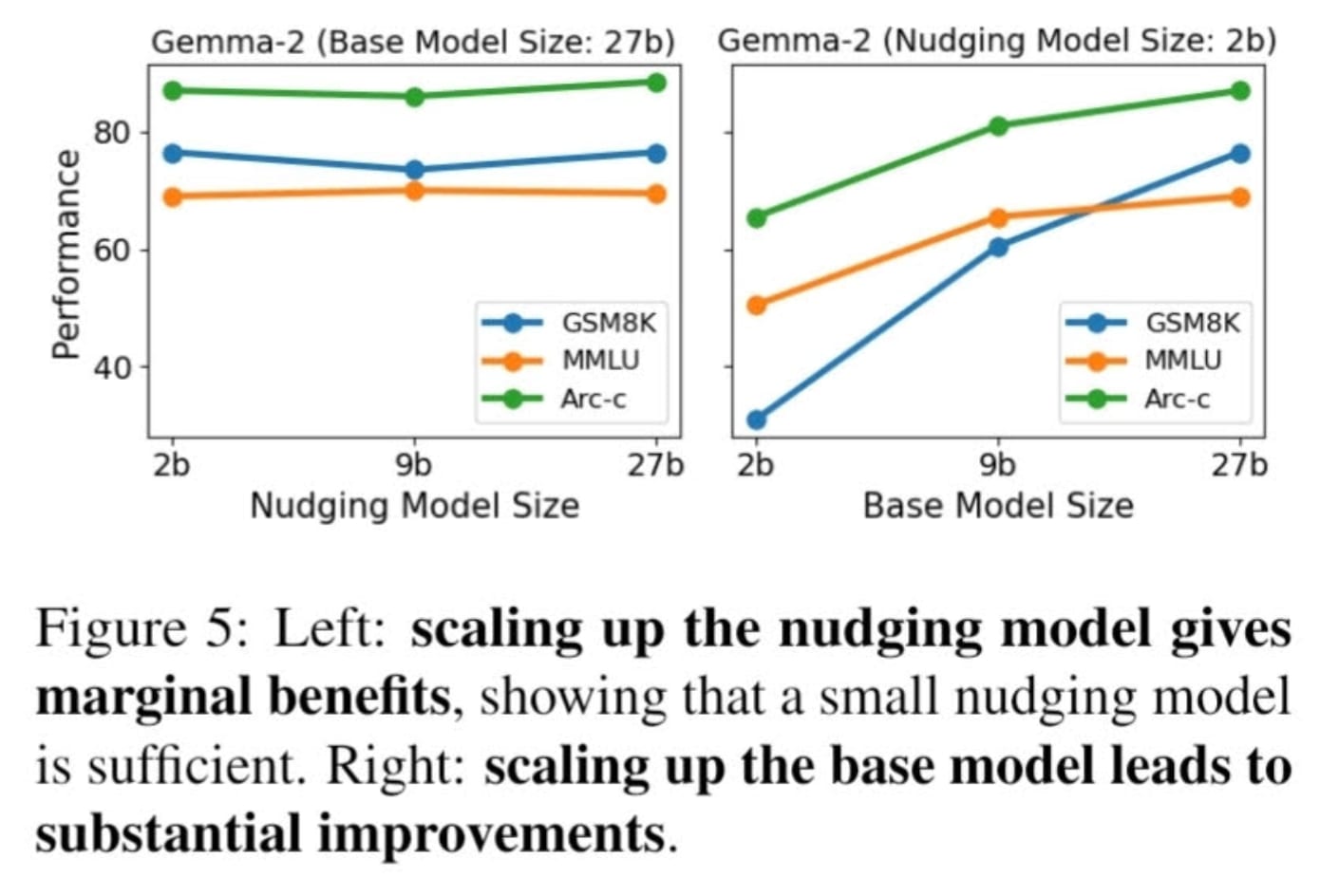
Surprisingly, I haven't seen much discussion of this paper on here. It seems very relevant to the question of whether RL bakes new behaviors into models or makes them better at eliciting behaviors they already know how to execute in appropriate situations.
I am tempted to do a longer writeup and attempt to reproduce/extend the paper, if there's interest.