This is a special post for quick takes by Drake Thomas. Only they can create top-level comments. Comments here also appear on the Quick Takes page and All Posts page.
Comment Permalink
Basically all major world currencies have a base unit worth at most 4 US dollars:
There’s a left tail going out to 2.4e-5 USD with the Iranian rial, but no right tail. Why is that?
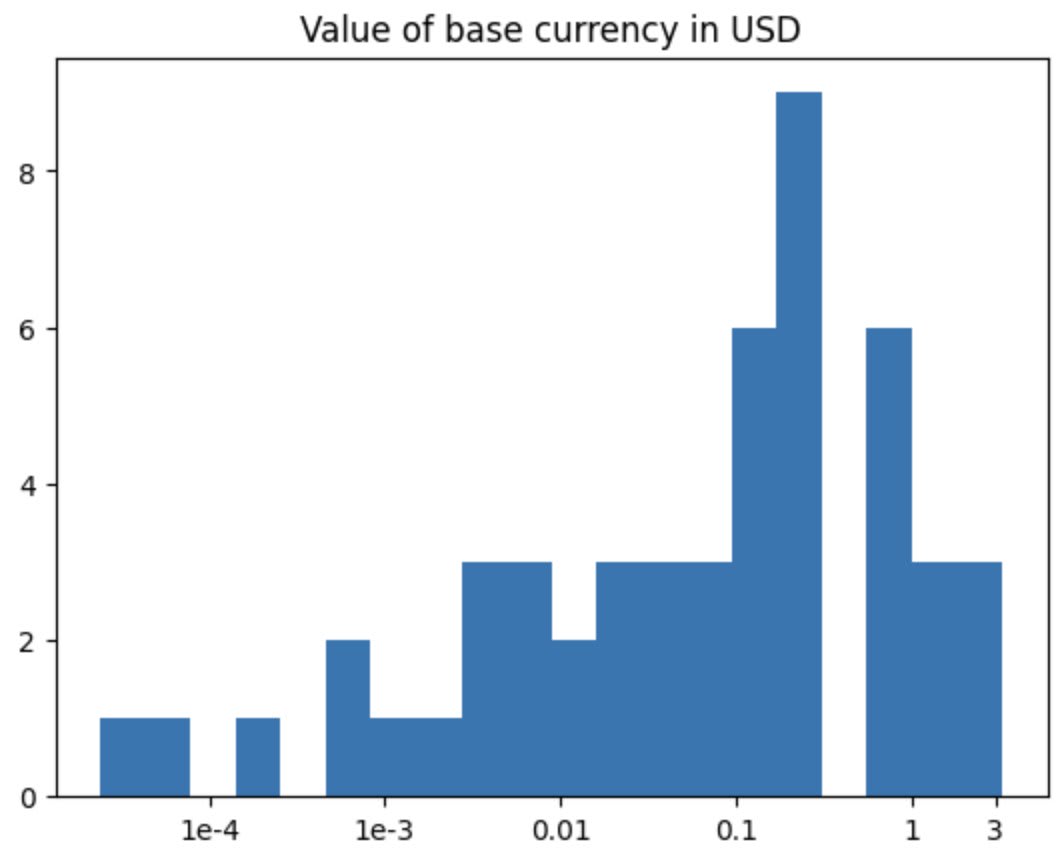
One thing to note is that this is a recent trend: for most of US history (until 1940 or so), a US dollar was worth about 20 modern dollars inflation-adjusted. I thought maybe people used dimes or cents as a base unit then, but Thomas Jefferson talks about "adopt[ing] the Dollar for our Unit" in 1784.
You could argue that base units are best around $1, but historical coins (backed by precious metals) are inconvenient if small, so they couldn’t shrink enough. But if that’s true, why not make the dime the base unit then? Maybe it’s really useful to have fractional amounts of currency, or it’s unsatisfying for a base-unit coin to be too small?
Another angle is to say that base units should be large, but steady inflation pushes them down over time and it’s inconvenient to change, and a preference for similar exchange rates + a fairly stable world order means no upstart central banks to set a new standard.
This is my current best guess (along with "base units between $1 and $20 are all basically fine") but I don't feel very confident about it (and if people want to match the US dollar then why does the left tail exist?).