It’s really difficult to measure small epsilon (and to know if it’s definitely non-zero or definitely non-negative).
What this seems to suggest is that the situation might actually be fractal-like, which is not a pleasant thought… How does one act if it is actually fractal-like?
EDIT: if people feel it’s only 51% or (50+epsilon)% chance that their contribution is positive, this is suggestive of the underlying reality being close to fractal, that is the situation where the long-term consequences of any action are so unpredictable that the valence of the long-term impact of any action is close to 50% (neutral in expectation).
 2
2 1
1Yes, on one hand, I mostly referenced alignment not being the terminal goal. It is not valuable on its own. It is only valuable to the extent it helps us to achieve what we want (“existential safety”, “human flourishing”, and so on). The assumption that one should achieve those goals via achieving alignment is currently the majority viewpoint, but there is no consensus (a number of people think going via alignment specifically to human goals and human values might be counterproductive and might reduce our chances to achieve our terminal goals).
More specifically, on one hand, it is not clear that humans can safely handle supercapabilities without creating existential risks and all kinds of smaller bad effects. We see how humans behave today, causing plenty of damage with lower capabilities. So the particular form of alignment referenced above (via control and corrigibility) might be not what one wants (although some limited form of corrigibility, as in being able to be heard and to have one’s opinion taken into account, is needed). A number of people think that direct human control over supercapabilities is a straightforward road to extinction.
Classical alignment was different (alignment to the “coherent extrapolated volition of humanity”, without direct control), but even that might be too anthropocentric to work well. Basically, one wants a scheme which survives recursive self-improvement which involves radical self-modifications of the world. The classical approach hopes to impose this form of alignment onto the ecosystem of superintelligent beings and expects it to hold throughout radical self-modifications of the world, despite the fact that in this scheme superintelligent beings have no intrinsic interest in upholding this scheme throughout radical self-modifications. Of course, this is extremely difficult to achieve, because it looks very fragile and unforgiving to any errors (which is why many people are extremely pessimistic about our chances).
So a number of people are pushing for non-anthropocentric approaches where superintelligent entities have strong intrinsic interest to maintain certain properties of the world invariant throughout radical self-modifications of the world, and with the properties humans need being corollaries of those non-anthropocentric properties. People are often reluctant to use the word “alignment” for this class of approaches (because no direct alignment to anthropocentric properties is involved).
 1
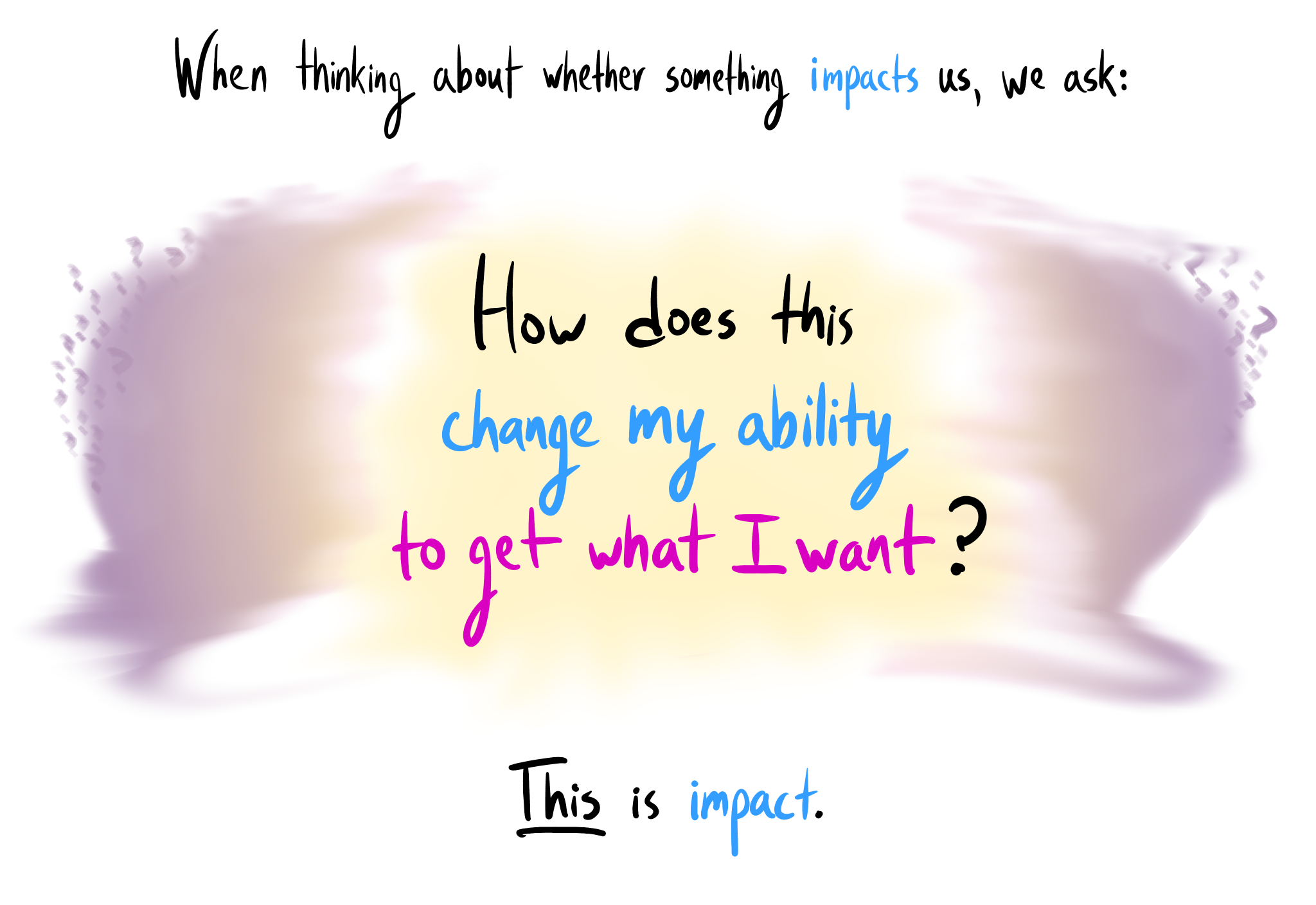
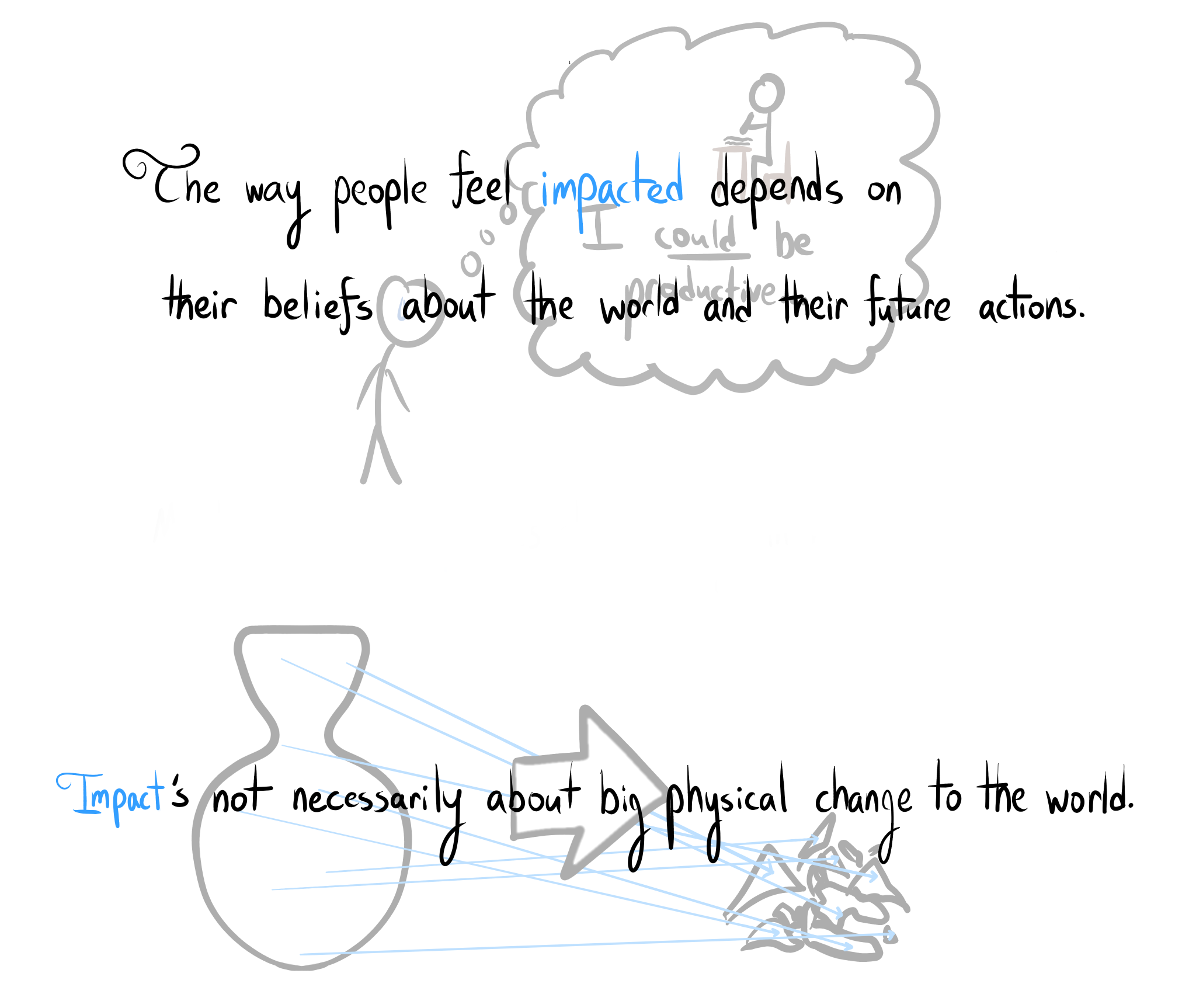
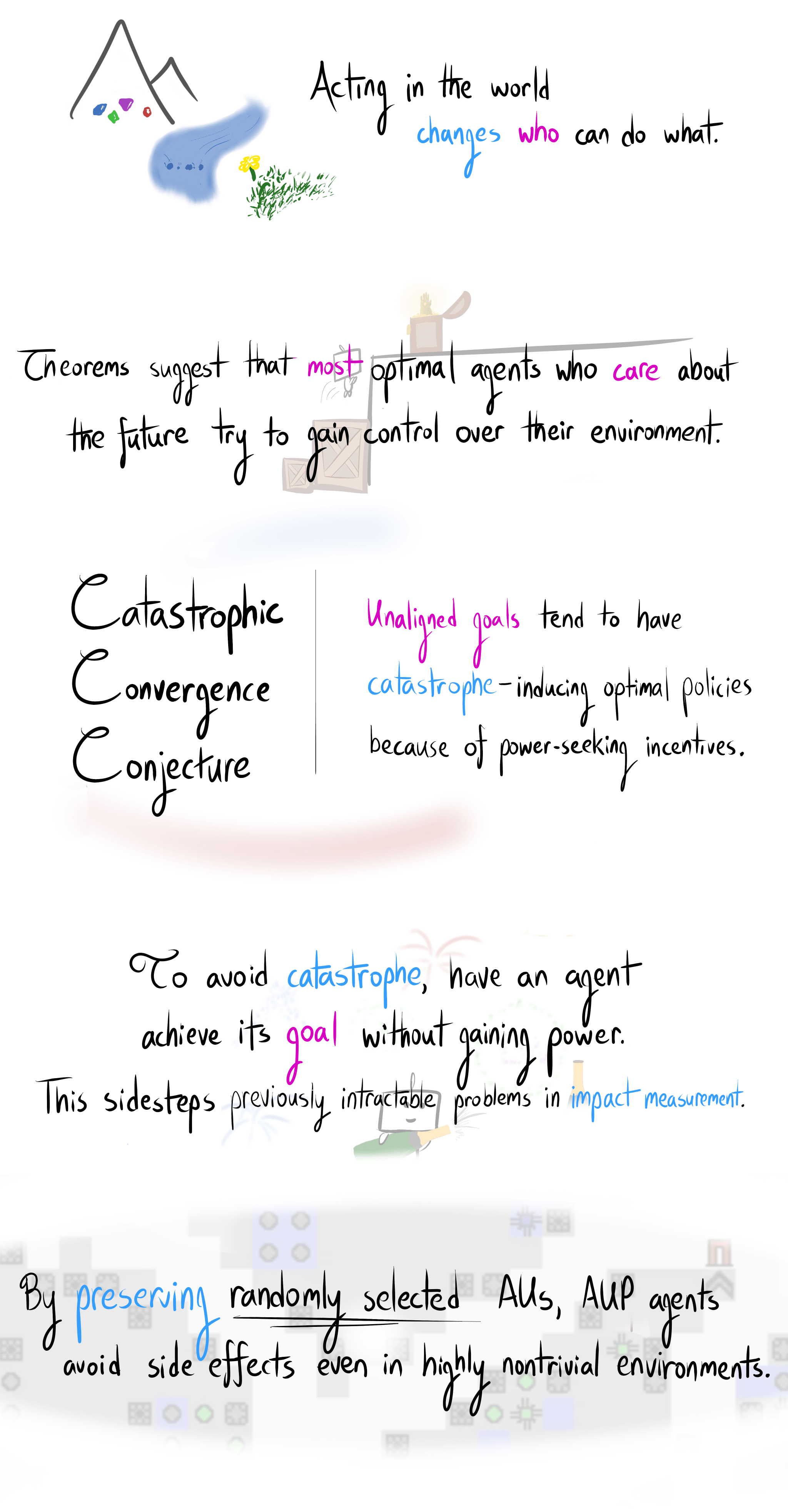
1Impact is the wrong measure. I didn't notice this when first reading the post, but reading your comment makes me realize I don't think impact is the thing we want more of. type Impact[dx, where(dx > 0)] where x is a thing we want more of, perhaps! And that's I think critical to why I believe a claim that looks vaguely similar to the one in OP. also known as sign uncertainty.
2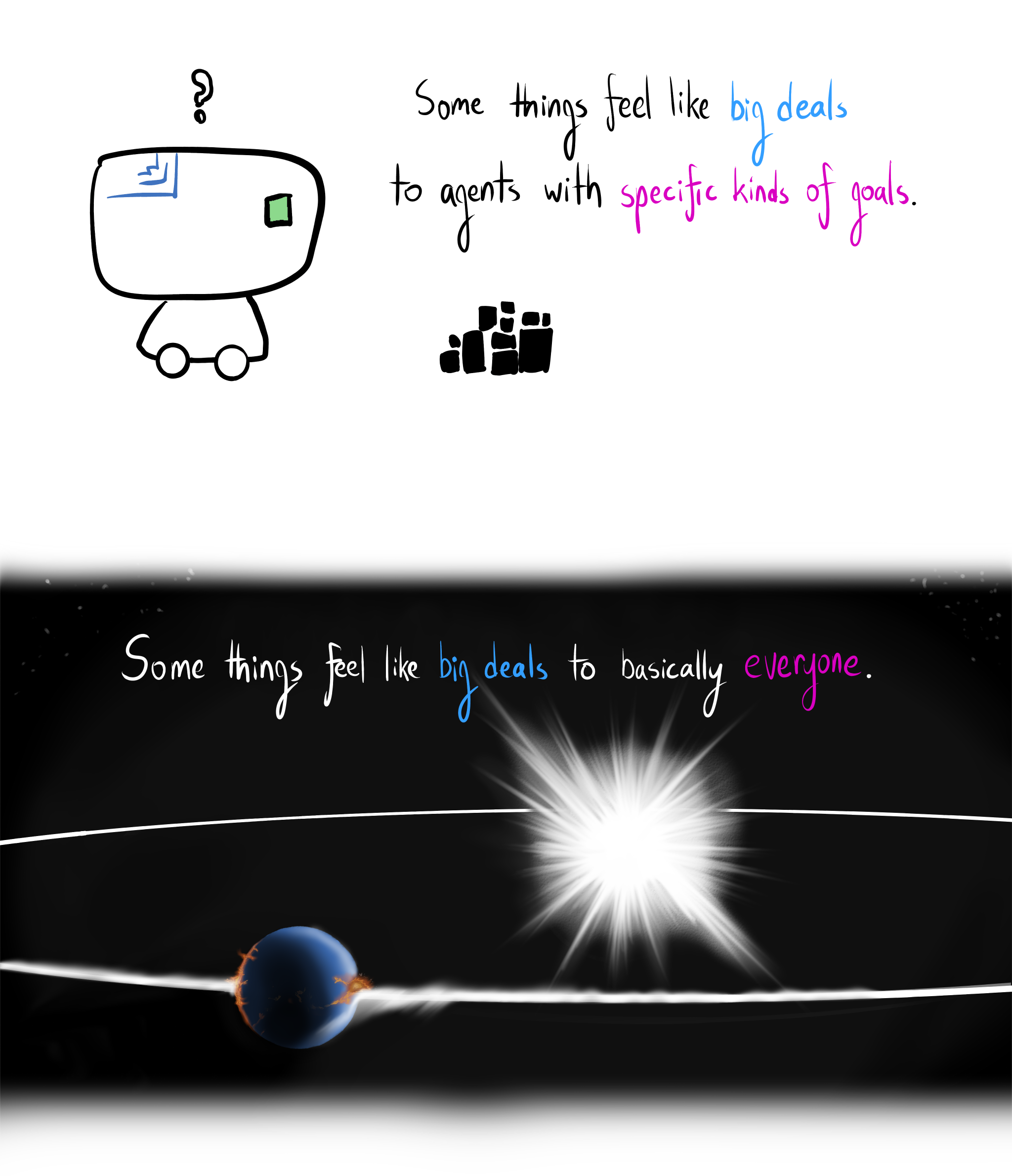
AI Safety veteran Holden Karnofsky thinks there’s a 49% chance his actions are making things worse.[1]
In 2025, Jesse Clifton even stepped down as the executive director of the Center on Long-Term risk because of similar reasons.
Even top AI Safety strategists don’t know what will make things better, and what will make things worse.
Why is it so hard to improve humanity’s odds?
And what can you do to choose your actions?
1) Hidden Failure Lets You Fail Without Knowing It
In AI Safety, impact is hard to measure, and thus lack of impact is often invisible. We call this "hidden failure". With hidden failure, projects fail to have a positive impact but the people doing the project don’t realise it.
To understand where hidden failure comes from, it’s useful to understand reasons why projects fail in general. These reasons fall on a spectrum:
These factors can cause problems with both of the things you need to be impactful – adoption and effectiveness:
With hidden failure, you might have users, citations, and funding (i.e. you have “adoption”), and still fail to have impact or even make things worse.
Let us put that more bluntly: It’s literally possible for all your friends to think you’re successful and still be making things worse. Even within AI Safety. Even outside of frontier labs.
2) Why impact is harder than profit
Creating a profitable startup is hard. Achieving impact in AI Safety is even harder for several reasons:
3) The pre-paradigmatic challenge
AI Safety doesn't have an established paradigm yet.[6] We can't predict with certainty what will be impactful. So why bother optimizing so deliberately?
First, imperfect predictions are still valuable. For example, AI Safety experts can often point out specific reasons why a given project or idea is unlikely to be impactful.[7]
Secondly, we argue the lack of a paradigm actually makes deliberate thinking about impact more important, not less. Without clear guides on what will lead to impact, you have to figure it out yourself.
The tools described in the next posts help you optimize for impact under uncertainty. The goal isn't to get it perfectly right or to cripple yourself with analysis paralysis.[8] But we do think most people would benefit from spending more time thinking about their impact.
So let's think strategically about impact. We’ll give a high-level overview of how to do that in an upcoming post, and we’ll help you measure your impact in another one.
We’re paraphrasing that from his appearance on the 80,000 hours podcast, around the 4:11:30 mark, where he said: “I think overall I would probably agree with you that the smaller you’re making the scope of where you’re hoping to have impact, the more reasonable it is to be like 60/40. But most people who go into AI are not going into it for that. Otherwise, if you want a small-scope, robustly positive impact, you should maybe work in a cause like farm animal welfare or global poverty. For the size of impact that tends to motivate people, I think it does get partially offset by this huge uncertainty about the sign.
I tend to think it’s worse than 51/49. I tend to think we’re always going to be prone to overestimate how robustly good our actions are. And the more we learn about all the galaxy-brained considerations that one should have had in one’s head, the more it’s going to be like 50+ε%. I think AI safety is a great cause to work in. I’m excited to work in it. I think it’s high impact. I am doing my best to do things that I will be proud to have done and hope for the best. But I really do have to live with the possibility that my ultimate impact on the utilons or whatever is going to be negative.”
Though you shouldn’t underestimate your brain’s ability to make itself comfortable, satisfice, and employ motivated reasoning to have you accept mediocrity.
We’re using “impact-effectiveness” as a synonym for “effectiveness” as meant by the Impact Equation: Impact = Adoption x Effectiveness.
I will refer here and in other place to for-profits as regular companies not aimed at AI Safety. Of course, an AI Safety project can be set up as a for-profit too.
Although arguably, adoption is sometimes easier in a nonprofit setting. For example, the various fellowships have no trouble finding enough participants. In contrast, though, many products, tools, and blog posts do struggle to get adoption.
See e.g. https://ai-safety-atlas.com/chapters/03/07 or https://www.thecompendium.ai/ai-safety. Although instead of saying AI Safety is pre-paradigmatic, it’s more accurate to say that none of the existing paradigms is widely agreed to be sufficient for making the world safe, especially by higher level researchers in that paradigm. Aka, we have a bunch of paradigms, but they’re all pretty limited, and all-in-all we don’t even know yet what approaches will be required to make the world safe enough.
Though there are also areas where experts disagree. In such cases, it becomes even more important to assess the specific arguments they use.
See e.g. Holden Karnofsky on the 80000 hours podcast, where he says "When people ask me for career advice or whatever, the usual thing I’d say is: take a bunch of options that all seem competitive, and all seem like they could be the best thing, and that it’s not obvious which ones are better than others from an impact perspective. And from there I would say go with personal fit, go with the energy you feel to work on them."