New Comment
Here is the updated graph
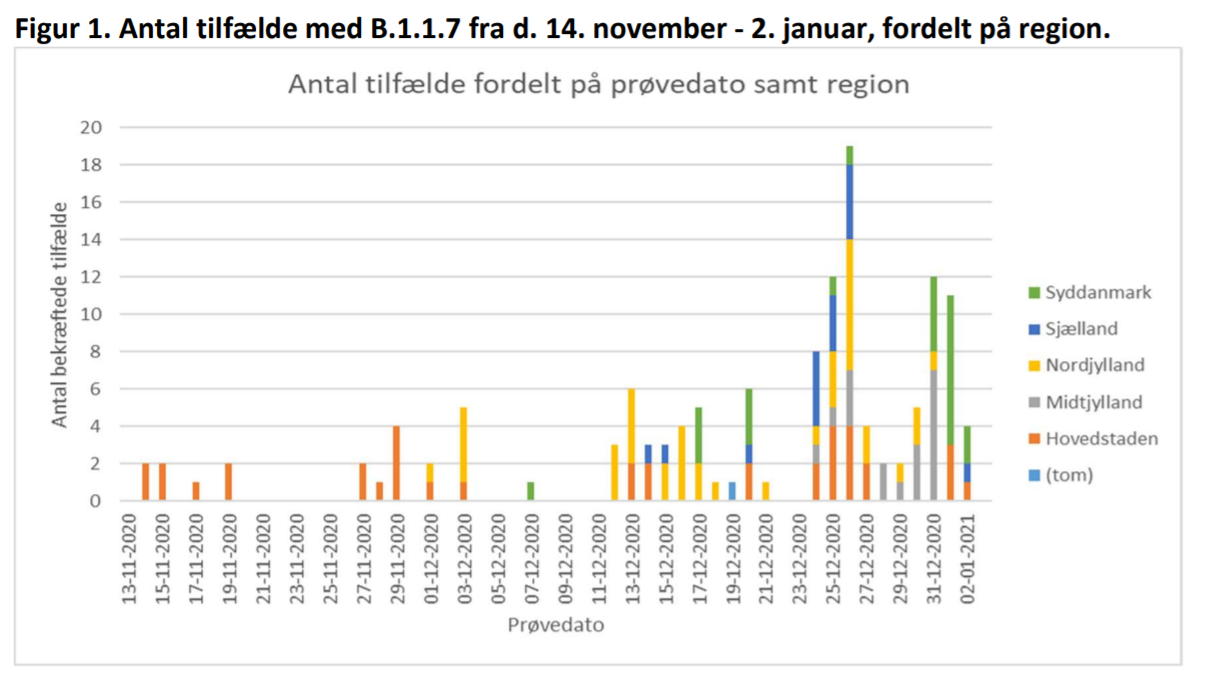
on this one days with 0 cases are not excluded
Worth noting that there doesnt seem to be any significant differences in the ages of people who have the new and old variant
Source https://www.ssi.dk/-/media/cdn/files/notat_engelsk_virusvariant090121.pdf?la=da
I noted on Zvi's recent post (found here https://www.lesswrong.com/posts/gbuXXC9KvphmXQFLd/what-evidence-will-tell-us-about-the-new-strain-how-are-you#GxzkzNdYfTLjmQEAm ) that Denmark was one of few other nations to do large amounts of Covid strain sequencing.
This is a followup with the newly released data.
The data seems consistent with a doubling time around a week.
Data found here https://www.ssi.dk/-/media/cdn/files/opdaterede-data-paa-ny-engelsk-virusvariant-sarscov2-cluster-b117--01012021.pdf?la=da
Here is a graph over cases which where tested on specific days, note that days where there where 0 tests sequenced as B.1.1.7 have been skipped
(colors corespond to different areas in Denmark)