This is a special post for quick takes by [anonymous]. Only they can create top-level comments. Comments here also appear on the Quick Takes page and All Posts page.
Comment Permalink
I was looking at this image in a post and it gave me some (loosely connected/ADD-type) thoughts.
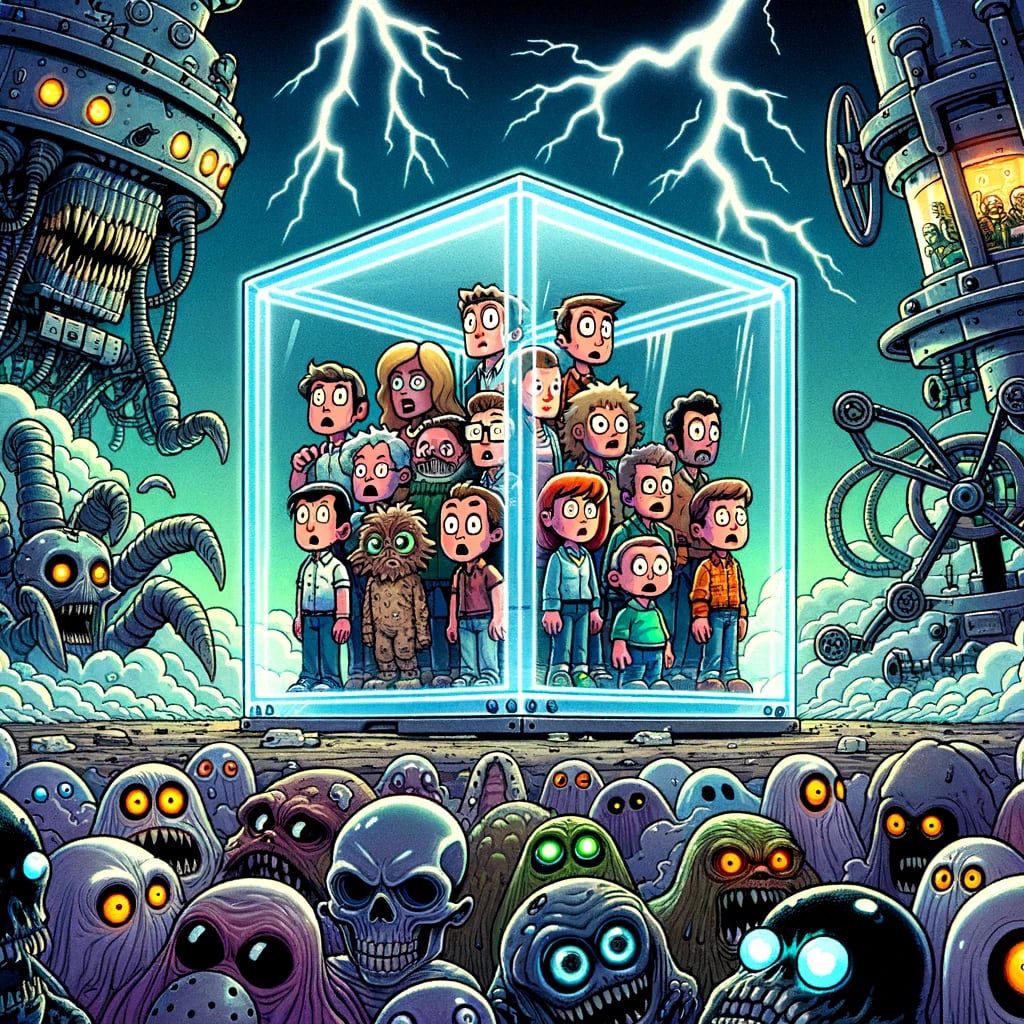
In order:
- The entities outside the box look pretty scary.
- I think I would get over that quickly, they're just different evolved body shapes. The humans could seem scary-looking from their pov too.
- Wait.. but why would the robots have those big spiky teeth? (implicit question: what narratively coherent world could this depict?)
- Do these forms have qualities associated with predator species, and that's why they feel scary? (Is this a predator-species-world?)
- Most humans are also predators in a non-strict sense.
- I don't want to live in a world where there's only the final survivors of selection processes who shrug indifferently when asked why we don't revive all the beings who were killed in the process which created the final survivors. (implicit: related to how a 'predator-species-world' from (4) could exist)
- There's been many occasions where I've noticed what feels like a more general version of that attitude in a type of current human, but I don't know how to describe it.
(I mostly ignored the humans-are-in-a-box part.)