This is a special post for quick takes by Matrice Jacobine. Only they can create top-level comments. Comments here also appear on the Quick Takes page and All Posts page.
Comment Permalink
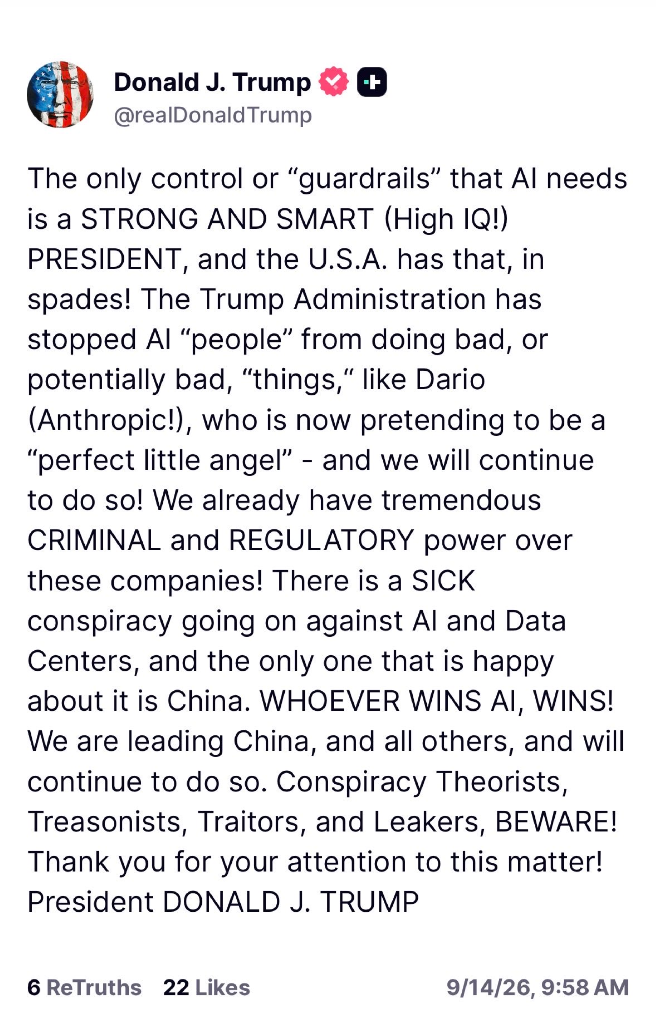
edit: update:
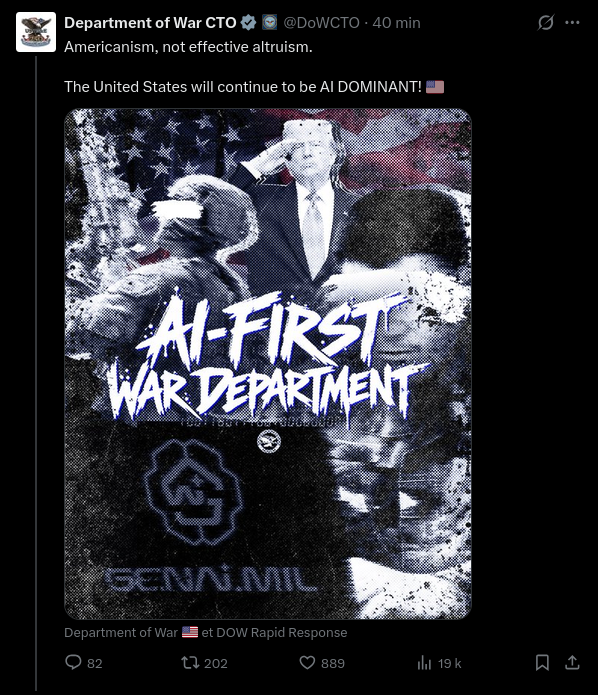
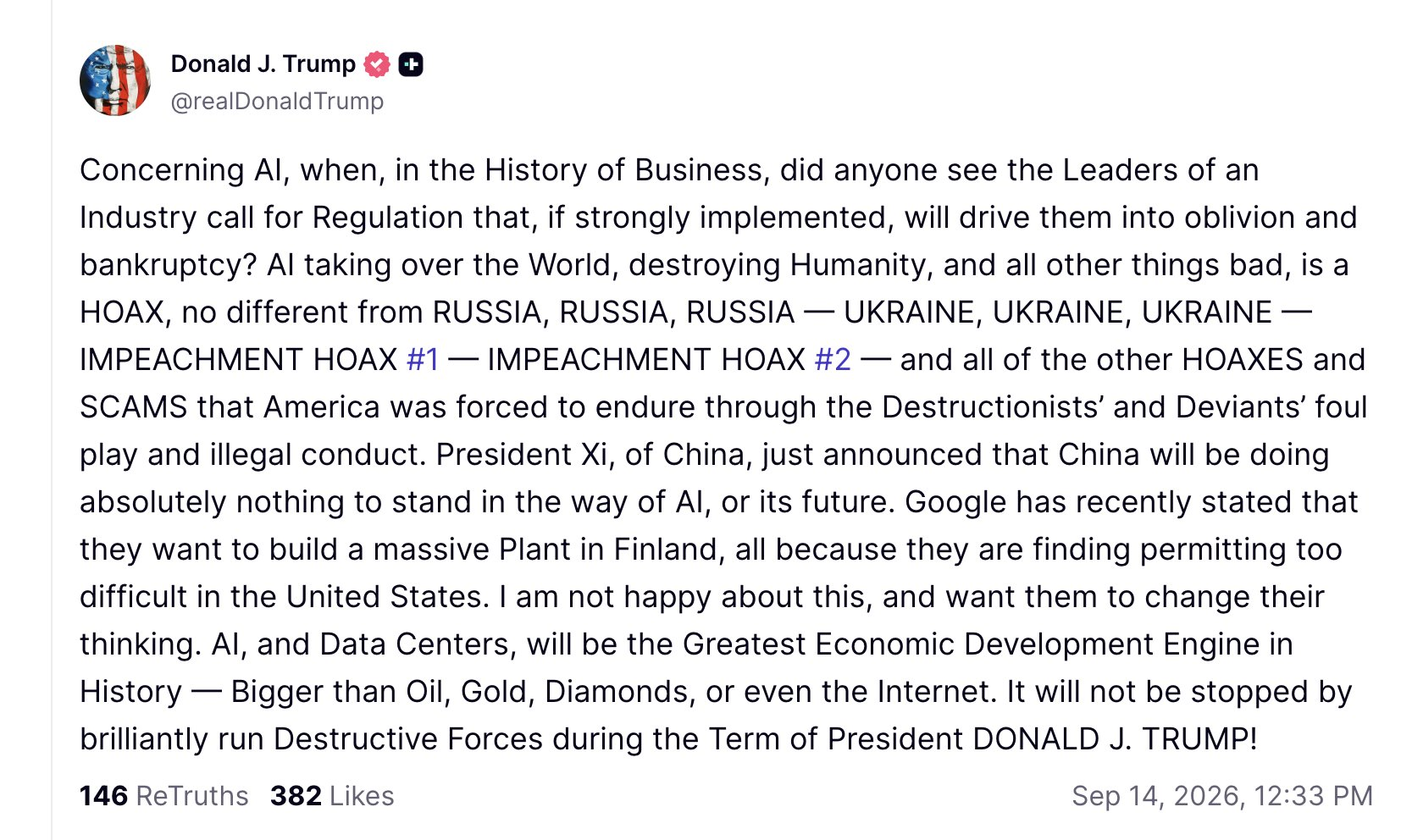
 8
 6
 4
 2
Showing 3 of 26 replies (Click to show all)
I am biased but I genuinely think that trying to find a root cause for why DJT makes decisions and comes to conclusions is almost a category error. I genuinely have no idea what incentives he answers to anymore.
3Karl Krueger
For #1, a policy reversal on ASI could be credibly signaled by legislative recommendations treating human-replacement ASI as something to be avoided (which would contrast with the March 2026 National Policy Framework on AI); or by signing a law passed by Congress that restricts ASI (e.g. something like the Sanders-Casar bill); or even by an executive order directing federal agencies not to participate in the creation of ASI.
It sounds like you already agree with me on #2, that liability for actions of AI is not likely under the current regime. To my view, that's a huge problem; and therefore a huge area for improvement. As it stands, we have a loophole through all of criminal law. The legal system does not bind AI agents, nor does it demand that humans take responsibility for AI agents they create. Even the degree of responsibility that the law assigns to dogs and to dog-owners, has not been applied to AI agents and their keepers. Changing this would be an element of good AI policy.
1Avi Brach-Neufeld
#1 feels reasonable and I have bet on it. TBH I don't have a solid take right now on how likely (or necessary) liability is, but 10% doesn't seem crazy. However, I don't think it really gets at what I am interested in here. At the extreme, the Sanders-Casar bill passing alongside an international agreement with China (not to say I consider those things more likely than liability) would not lead to #2 resolving as "yes." IMO, a strong transparency bill with strong independent auditors would be good progress and worth engaging with politics for, even if it wouldn't solve everything.