This is a special post for quick takes by leogao. Only they can create top-level comments. Comments here also appear on the Quick Takes page and All Posts page.
Comment Permalink
hendrycks recently published a paper introducing a new moral theory. the paper contains this insane table, which claims that you should value a foreign stranger at 3e-12 times the value you assign to yourself. even setting aside the fact that this is apparently supposed to be a prescriptive theory, even as a descriptive theory, i think this is utter madness.
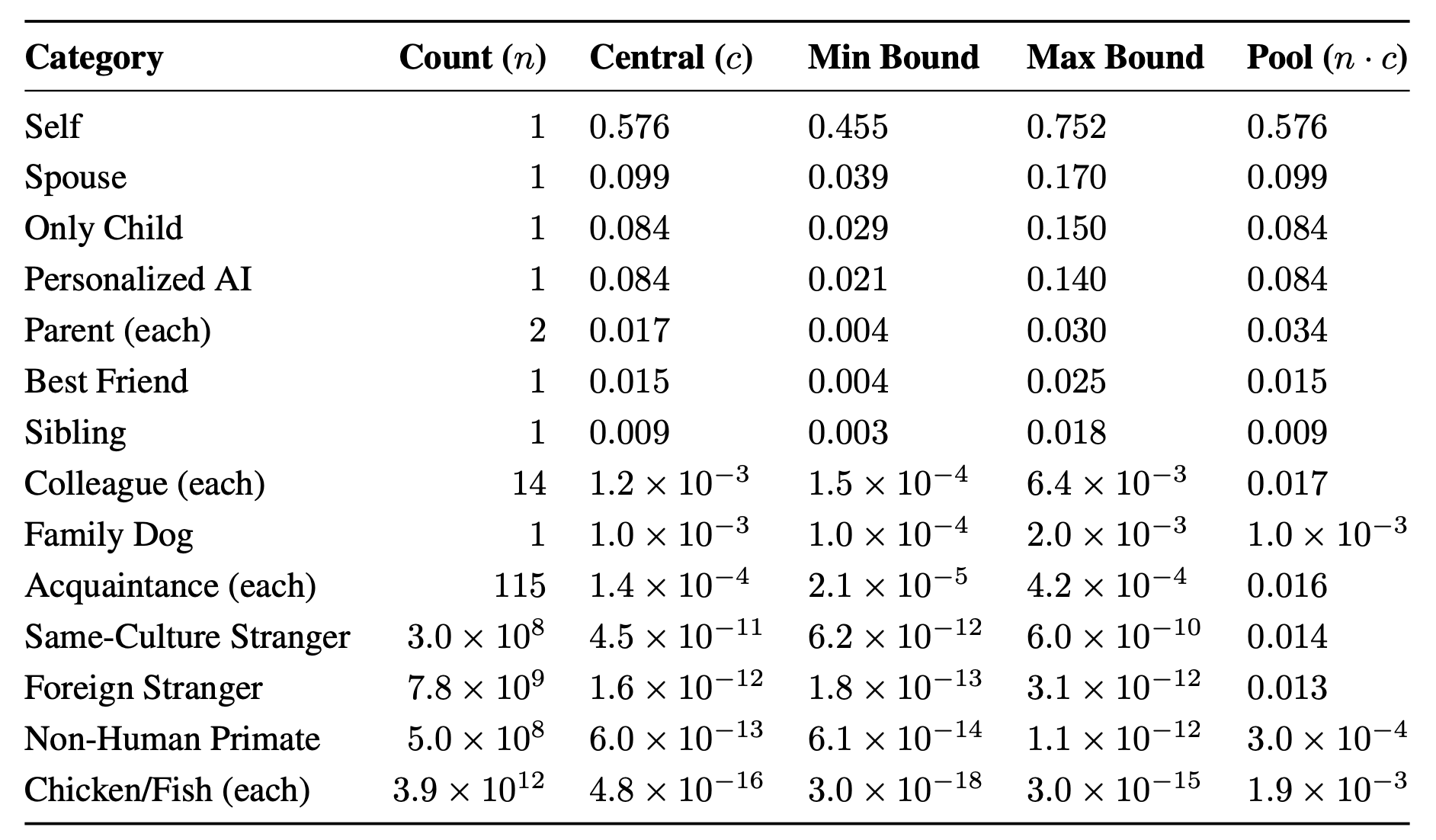
the core problem is that it assumes if x% of your total caring is assigned to people other than yourself, then you must give away x% of your wealth to be consistent.
the argument goes that since most people don't give away more than say 50% of their wealth, then if there are 1e-10 people then each one can only get a tiny sliver of your caring.
but this is wrong, because there is no simple relationship between the % of your caring to be about other people and the % of your money you should give away. i think you should care about random strangers closer to 1e-3 than 1e-12. if you care about each stranger x times as much as yourself, you should keep giving away money to the person who is most in need until each marginal $ helps them more than x times as much as each marginal $ helps you.
if x = 1e-12, then you're saying you won't give a single dollar to charity until you have so much money that a dollar helps the stranger more than a trillion times more than it helps you; or, because a trillion dollars is always worth less than a trillion times the value of a dollar due to convexity, you won't give a single dollar to charity until it would help them more than giving you a trillion dollars, which probably won't be true until you are absurdly wealthy.
this is batshit insane!
 2