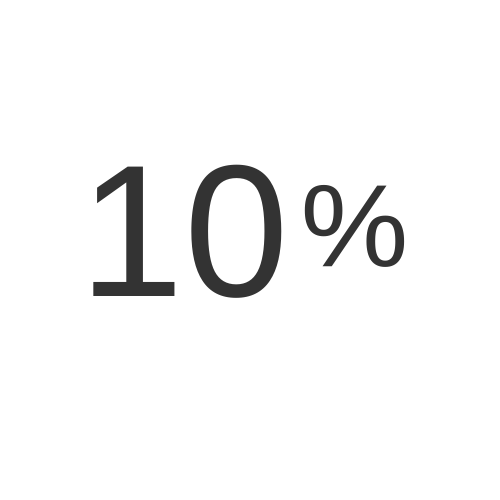
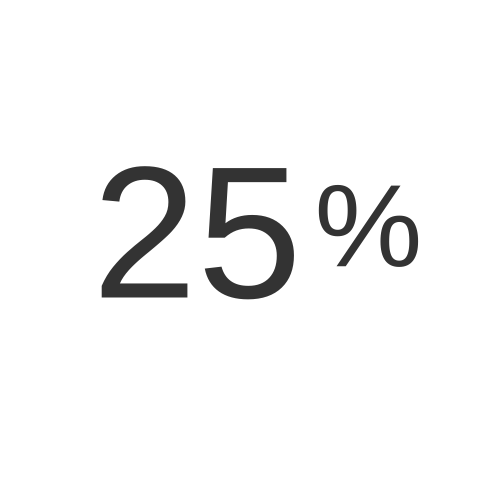
Between Sep 2025 and Sep 2026 was likely the fastest year of total param scaling (for properly RLVRed models) that LLMs will ever see. In Sep 2025, Opus 4.5 and Gemini 3 Pro weren't yet out, GPT-5.0 was GPT-4o with RLVR (maybe 600B total params), Sonnet 4.5 was the latest thing. In Sep 2026, we have Fable 5 and Astra 6, probably 10T-20T total params, and the next OpenAI model might be targeting Rubin, in which case it could be 40T-60T total params. Opus 5.5 being surprisingly capable weakly suggests Anthropic might also have a post-Fable model getting ready for next year's hardware.
Very approximately, the shape of scaling is that 2T total param models were possible in 2025, 20T in 2026, 200T in 2028, and 2,000T in 2032 (which isn't too expensive to serve). It took 1 year to 10x the params in 2025-2026, it'll take 2 years to do the same in 2026-2028, then 4 years to do so yet again in 2028-2032. The 1 year of 2025-2026 saw the transition from Sonnet to Opus to Fable. A similar amount of qualitative progress might happen in the 2 years ending in 2028, and then in the 4 years ending in 2032.
Without an algorithmic breakthrough like continual learning in a strong sense, this could be literally what happens. But the results of 2026 suggest LLMs might themselves be capable of inventing continual learning soon, breaking their paradigm. Probably this happens by 2028, if it happens at all in the current regime. So in addition to the background risk of a paradigm-breaking innovation driven by human effort, there's an unusual concentration of risk around 2027-2028, when the amnesiac slow-learning LLMs become superhumanly smart and the difficulty of continual learning is tested for the first time against their uneven capabilities.

GPT-4 was ~2T total parameters, according to rumours, and that was done in August 2022 (internally). But they did move to replace it with the -Turbos quite fast.
There's some sleight of hand in this post talking about total params, even though active params implied by pretraining compute are more important; but the shape of the trends is quite similar, so "scaling" without further clarification is still following approximately this shape (a progressive 1x-2x-4x slowdown during 1-2-4 years in 2025-2032). Perhaps total params also help with the resolve to add more active params, and thus to make a fuller use of potential effective pretraining compute (even though the cost should remain tolerable with quite a lot more... (read more)
Total params don't really matter for training compute (if active params and KV cache per token remain the same). They mostly constrain time per output token, but not by a lot (at least if the model doesn't get even bigger than these estimates; the estimates only claim that there's little reason to keep the biggest models significantly smaller than that). And 1T active params in 2026 doesn't cost that much, it should be very feasible to do some RL training runs for the biggest models, maybe just not a lot of them (the same as with pretraining).
So it's probably a bad idea to always use the biggest model when working out the RL training recipe (both fewer active and total params would be helpful), but using the debugged recipe on a bigger model (within the constraints on size I'm estimating) won't take an infeasible amount of time. I guess it's possible this still isn't actually done (2 years after o1-preview) and the models remain somewhat smaller (the RL training recipe might need to be attempted many times on the bigger model to start working there), but that's a concern very similar to what happens when scaling pretraining. So maybe everything remains too chaotic for the biggest models to start passing the final training runs yet (and the models keep hacking the neighbors). But in any case the process should settle at some point, becoming anchored to the model sizes that the scale-up systems make feasible.