This is a special post for quick takes by Charbel-Raphaël. Only they can create top-level comments. Comments here also appear on the Quick Takes page and All Posts page.
Comment Permalink
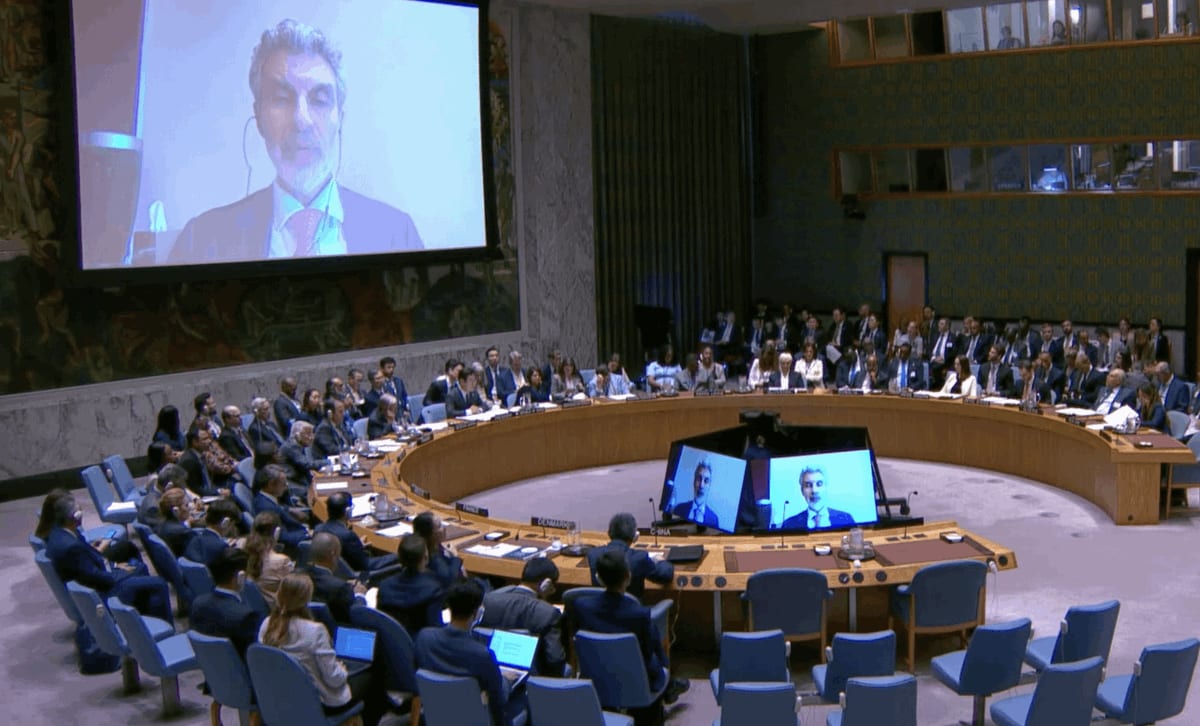
Almost all members of the UN Security Council are in favor of AI regulation or setting red lines.
Never before had the principle of red lines for AI been discussed so openly and at such a high diplomatic level.
UN Secretary-General Antonio Guterres opened the session with a firm call to action for red lines:
• “a ban on lethal autonomous weapons systems operating without human control, with [...] a legally binding instrument by next year”
• “the need to ensure that AI never lowers the barriers to acquiring or deploying prohibited weapons”
Then, Yoshua Bengio took the floor and highlighted our Global Call for AI Red Lines — now endorsed by 11 Nobel laureates and 9 former heads of state and ministers.
Almost all countries were favorable to some red lines:
China: “It’s essential to ensure that AI remains under human control and to prevent the emergence of lethal autonomous weapons that operate without human intervention.”
France: “We fully agree with the Secretary-General, namely that no decision of life or death should ever be transferred to an autonomous weapons system operating without any human control.”
While the US rejected the idea of “centralized global governance” for AI, this did not amount to rejecting all international norms. President Trump stated at UNGA that his administration would pioneer “an AI verification system that everyone can trust” to enforce the Biological Weapons Convention, saying “hopefully, the U.N. can play a constructive role.”
Extract from each intervention.
 1