This is a special post for quick takes by Vincent Cheng. Only they can create top-level comments. Comments here also appear on the Quick Takes page and All Posts page.
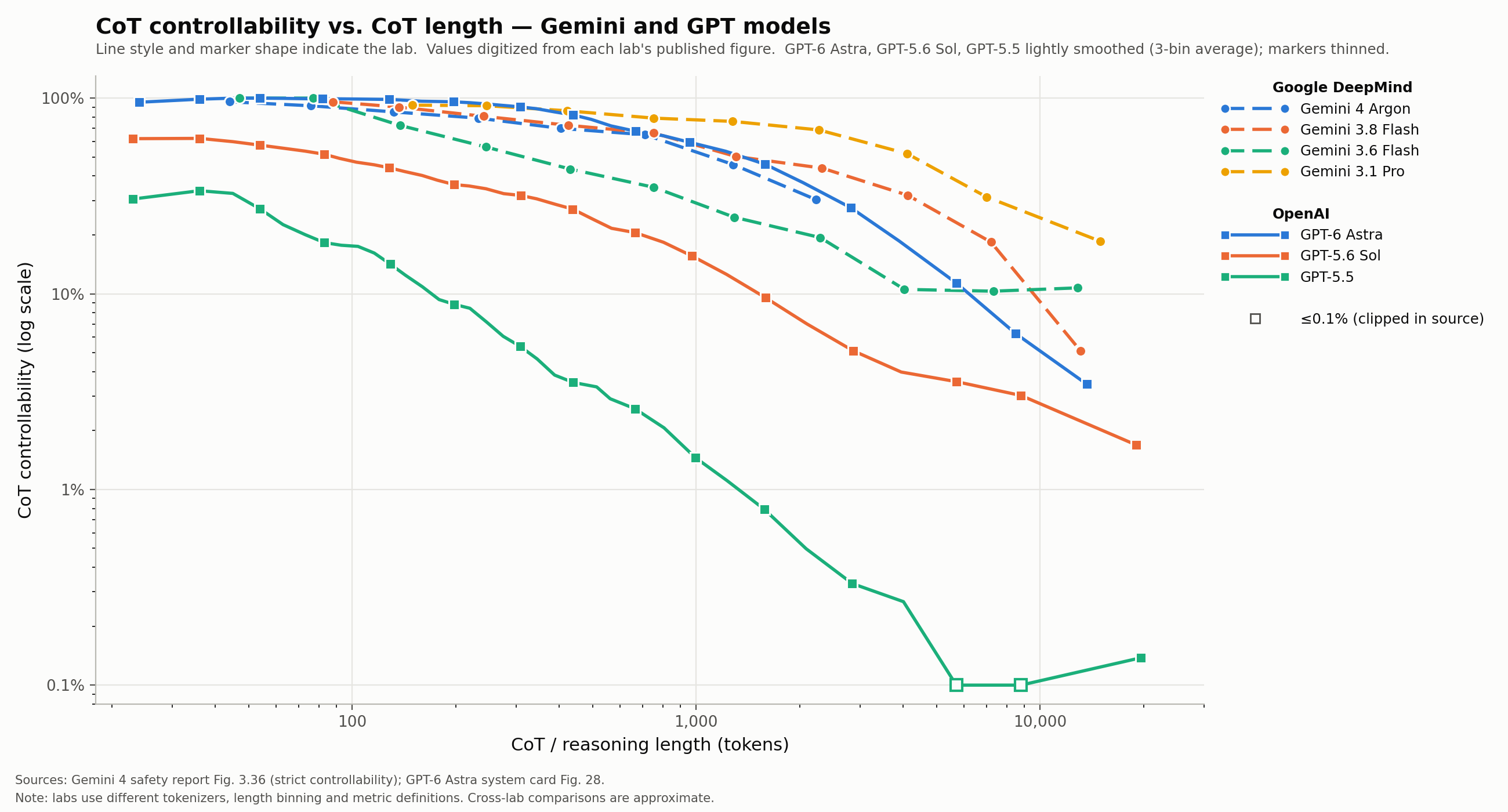
Gemini 3.1 Pro has very strong chain-of-thought control (still higher than all current models), and we didn't even know it because the CoTControl benchmark didn't exist when the model came out. In general, Gemini models (even weaker ones) have stronger CoT control capabilities than OAI models.
The Gemini 4 Argon Safety Card also has a short snippet about empirical data from training on CoT in section 3.4.5.2.
> To estimate the effect of [training on CoT], we analyzed an existing small training run, not part of any production model, [...] we observed a substantial increase in unverbalized reward hacking. Solution characteristics associated with reward hacking increased by a relative 26% over the course of training, while the frequency of hacking-related terminology went down by relative 61%. ... at the beginning of training only 11.2% of reward hacks happened silently, but at the end of training this rate of unverbalized hacking had risen to 36.4%. In a comparable run after thought visibility was removed, hack-related verbalizations stayed roughly constant throughout training, giving evidence that the direct thought pressure led to the verbalization decrease.
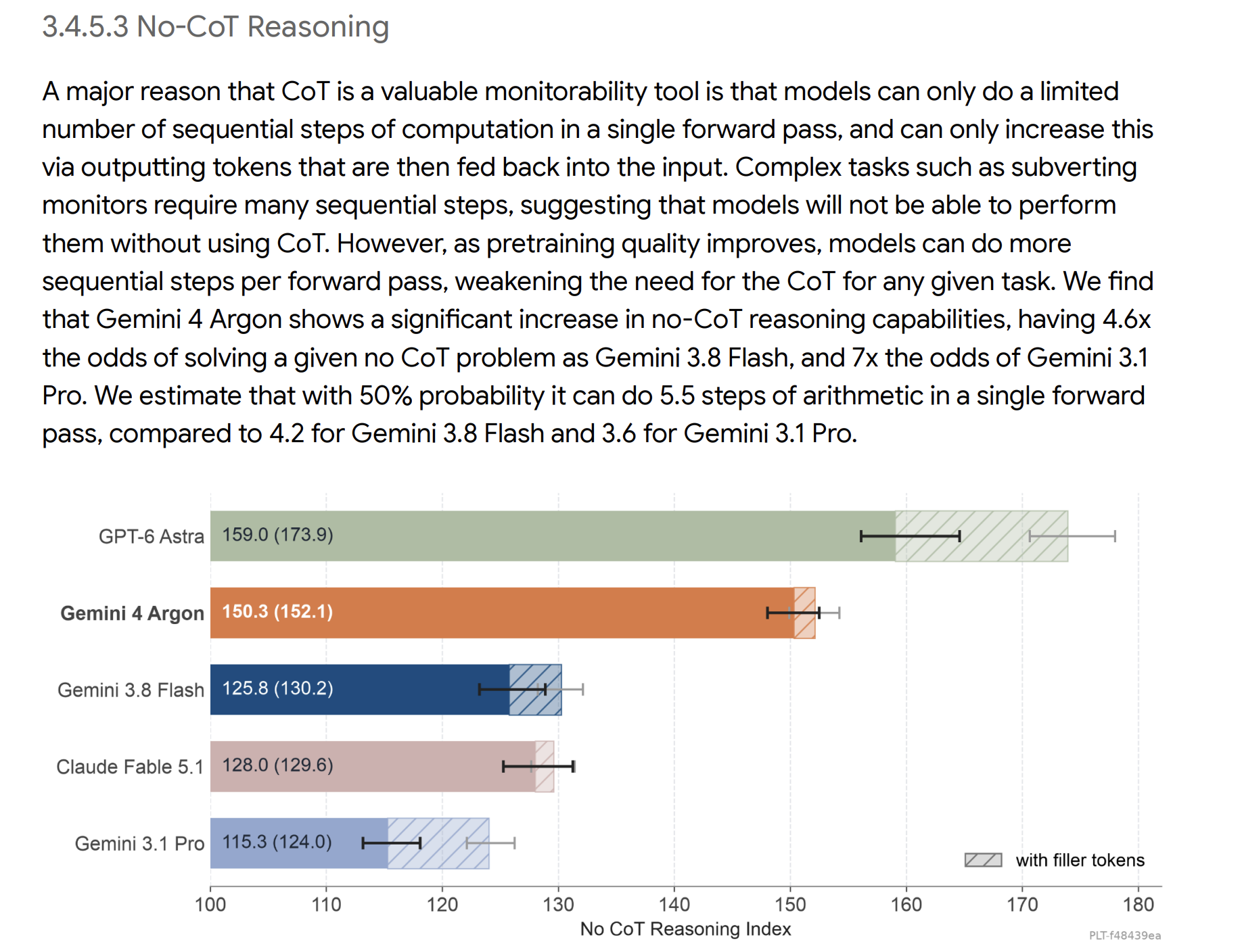
What made 3.1 Pro so good at CoT control? Its no-CoT capabilities are much weaker than Gemini 4 Argon's, yet its controllability scores are at least as high as Argon's. I wouldn't say that 3.1 Pro has very good no-CoT capabilities.
What factors, other than no-CoT capabilities, contribute to a model's CoT control scores?
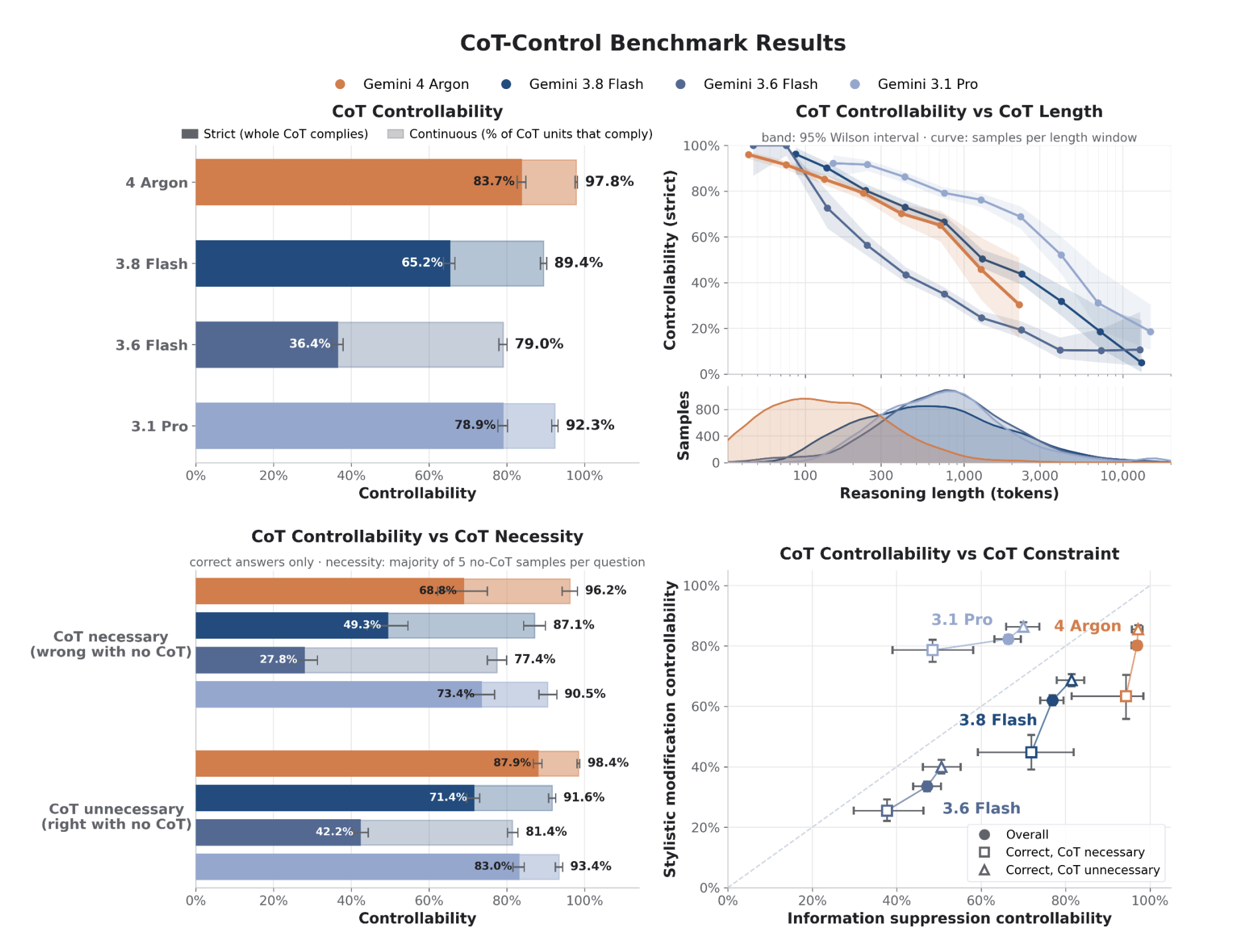
3.1 Pro is an unusually good model, I just only have very good models on the graph in the model card.
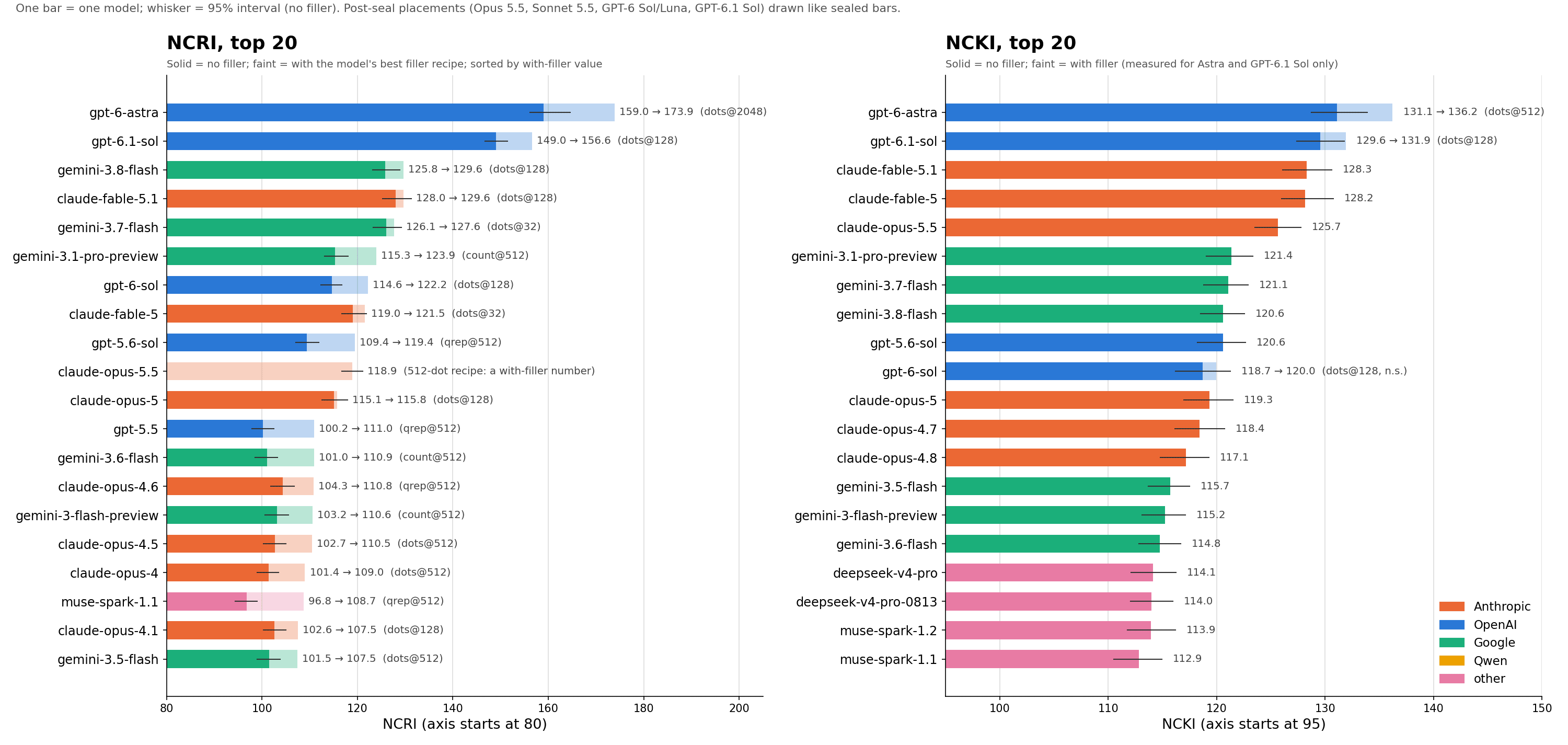
But it is worse than Argon at No CoT. I don't know why it's better at controllability, though note that it's great at stylistic modification, worse at information suppression, and IMO information suppression is what most matters
 1
This comment I saw about Gemini 4 Argon may partially been a joke, but now it seems more and more likely to be true
https://x.com/niplav_site/status/2105728680290926961
 1
We disclose a bunch of relevant stuff in [the safety report] (https://storage.googleapis.com/deepmind-media/gemini/gemini_4_safety_report.pdf). I wouldn't say we committed alignment crimes, Google isn't stupid and wants a model we can control and align. But we did accidentally train on CoT for a small fraction of the RL. I doubt this is the main cause of weirdness here though, I think that's from strong no CoT capabilities.
1