I often write posts by dictating a verbatim rough draft, giving the audio to Gemini along with a bunch of samples of my past writing and instructions up preserve my voice as much as possible, and then edit what comes out until I'm happy (but in practice it's close enough to my voice that this is just light editing). Under these rules would I need to put the whole post in an LLM output block?
EDIT: On reflection, the thing that annoys me about this policy is that it lumps in many kinds of LLM assistance, with varying amounts of human investment, into an intrusive format that naively reads to me as "this is LLM slop which you should ignore".
For example, under my current reading, I would need to label several popular and widely read posts of mine as LLM content (my amount of editing varied from light to heavy between the posts, but LLM assistance was substantial). I think it would have been pretty destructive to make me label each post as LLM written (in practice I would have either violated the policy, or posted on a personal blog and maybe shared a link here)
https://www.lesswrong.com/posts/StENzDcD3kpfGJssR/a-pragmatic-vision-for-interpretability https://www.lesswrong.com/posts/jP9KD...
 1
1My somewhat-dissenting-mod-opinion:
I feel more worried than I think Habryka and Robert are about LLM-content corroding LW culture, and I think I maybe have a slightly different take on why LLM-generated text is not testimony matters. (For me, it's not the most important thing that people are making 'I' statements that are false if an LLM said them. More significant to me is the implicit vouching that each statement is interesting and is some kind of worthwhile piece of a broader conversation, whether it's your opinion or not)
If I were making the policy and new features, I'd be framing it like:
...Look, I know AI is increasingly going to be a legitimate part of some people's workflows. But, I think for >75% of LW users, it's a mistake to use LLMs as a particularly significant part of your writing process, and I think the site should be somewhat pumping away from it.
I think there are very occasional new users for whom it's the right call to use LLMs, but, I'd think of it more like "the people I trust to write LLM content are people who either have written, or pretty obviously could write, multiple posts that get 100+ karma." And even then I am slightly worried about people falling do
 1
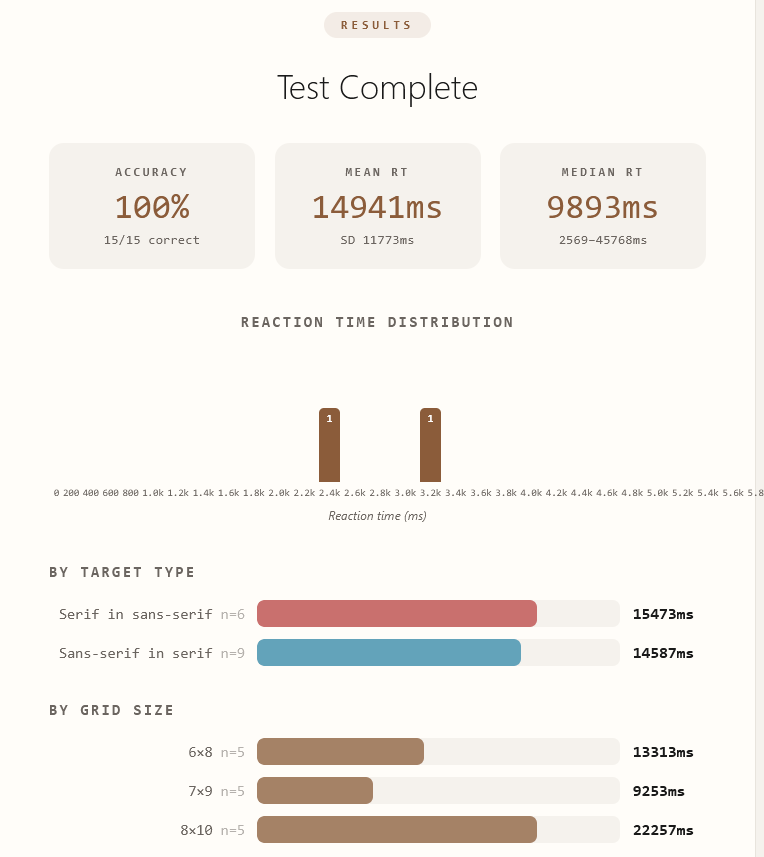
1I (and several others) found switching to sans-serif as a way of marking LLM text didn't really work as a marker; when I first saw it I mistakenly thought that only the paragraph with the LLM-name on it was LLM-generated, and I find alternate-font text inside of posts uncanny. I jokingly hypothesized that Habryka (its advocate) had serif-synaesthesia and that's why it worked for him as a marker, and that's the story of how the serif-synaesthesia test came to be.
3 2
2We did our homework on the browser security model; content in iframes (with sandboxing attributes) shouldn't be able to get login cookies/etc from the parent page. This is load-bearing for advertisements not stealing everything, so we do expect browsers to treat weaknesses in this as real security issues and fix them. When post HTML is retrieved through the API, you have to do some assembly to put the iframes in, so third party clients can't be insecurely surprised by it.
As for whether sandboxed frames can crash the outer page or make the outer page slow, eg by doing into an infinite loop or running out of memory, the story is a bit more complicated (depends on browser, browser heuristics, and amount of system RAM); we decided it's okay as long as it's limited to an embed in a post crashing its own post page (as opposed to the front page or a link preview).
 1
1I am happy with this policy erring on the side of "any substantial LLM involvement goes in the LLM block". My experience with content the author represents as moderately LLM-involved has been that after reading, it always seems to have not been worth my time in the same way that pure LLM output seems not worth my time.
3The new custom iframe widgets are my favorite part of this update. I'll be using them extensively as part of my upcoming post.
 1
1 1
1The LLM block looks similar enough to normal writing that it creates an unpleasant uncanny valley, where I'll read a few words, feel something's off, and then go "Oh, LLM!". This is not dissimilar to the actual experience of reading LLM generated text. Nice work on the allegorical visuals, though I suspect this is not the desired effect, and I would prefer a different visual cue.
 1
1The test is so hard I basically have to scan the whole thing 2-3 times to find the character
Score
 2
2Feedback: your supposed "LLM content block" is currently utterly visually indistinguishable from the regular content, and thus (to me) currently entirely fails to achieve what you / Claude say is its intended purpose:
...This visually distinct block is an LLM Content Block. Authors can insert these into their posts to clearly attribute a section to a specific AI model. The block header shows which model generated the content, so readers always know what they're looking at. It's a way to be transparent about AI-assisted writing while keeping everything in one d
1Unfortunately, I cannot find the way to make a collapsible section in the Post editor. Collapsible sections in the Comments editor are perfectly makeable even in the Experimental editor.
 1
1I am taking the risk of being downvoted to oblivion here (like JenniferRM above, it's ok to disagree with her but I thought downvoting her karma was very harsh, I upvoted her), but I generally disagree with the LessWrong LLM (-assisted) writing policy being so exclusive/restrictive.
First, I totally agree with clearly indicating what roles and levels of involvement an LLM took in writing/editing/influencing... a post.
With that premise accepted and respected, why restricting post writing on LessWrong to "pure" human beings? For me it looks and sounds like bi...
1 1
1Iframes in posts are going to be very fun.
I look forward to interacting with additive webgameseducational illustrations while pretending toreading about AI safety on lesswrong.
1Sometimes you get scroll blocked when hovering on the widgets, it is not a big deal but the inconsistency feels weird. https://streamable.com/7da79g
1
There's a new editor experience on LessWrong! A bunch of the editor page has been rearranged to make it much more WYSIWYG compared to published post pages. All of the settings live in panels that are hidden by default and can be opened up by clicking the relevant buttons on the side of the screen. We also adopted lexical as a new editor framework powering everything behind the scenes (we were previously using ckEditor).
That scary arrow button in the top-left doesn't publish your post! It just opens the publishing menu.
Posts[1] now have automatic real-time autosave while you're online (like Google Docs), but still support offline editing if your connection drops out. Point-in-time revisions will still get autosaved periodically, and you can always manually save your draft if you want a specific checkpoint.
The editor also has a slash menu now!
Good for
allmany of your custom content needs!You might be eyeing the last two items in that slash menu. This post will demo some of the new features, and I'll demo two of them simultaneously by letting Opus 4.6 explain what they are:
Hi! I'm Claude, and I'm writing this from inside the post you're reading right now. This block I'm in is one of the new editor features — let me walk you through a few of them.
LLM Content Blocks
This visually distinct block is an LLM Content Block. Authors can insert these into their posts to clearly attribute a section to a specific AI model. The block header shows which model generated the content, so readers always know what they're looking at. It's a way to be transparent about AI-assisted writing while keeping everything in one document.
Custom Iframe Widgets
The new editor supports custom interactive widgets embedded directly in posts. Authors can write HTML and JavaScript that runs in a sandboxed iframe right in the document — useful for interactive demos, visualizations, small tools, or anything else that benefits from being more than static text. There's one just below this block, in fact.
Agent Integration
The editor now has an API that lets AI agents read and edit drafts collaboratively. If you share your draft's edit link with an AI assistant (like me), it can insert text, leave Google Docs-style comments, make suggested edits, and add LLM content blocks and widgets — all showing up live in the editor. That's how this entire block was written: not copy-pasted in, but inserted directly through the API while the post was open for editing.
To use it, open your post's sharing settings and set "Anyone with the link can" to Edit, then copy the edit URL and share it with your AI assistant.
With Edit permissions, the agent can do everything: insert and modify text, add widgets, create LLM content blocks, and more. If you'd prefer to keep tighter control, Comment permissions still allow the agent to leave inline comments and suggested edits, which you can accept or reject individually.
Setup depends on which AI tool you're using. Agent harnesses that can make HTTP requests directly — like Claude Code, Codex, or Cursor — should work out of the box. If you're using Claude on claude.ai, you'll need to add
www.lesswrong.comto your allowed domains settings, then start a new chat. (The ChatGPT web UI doesn't currently support whitelisting external domains, so it can't be used for this feature yet.) Once that's done, just paste your edit URL and ask Claude to read the post — the API is self-describing, so it'll figure out the rest from there.And here's a small interactive widget, also written by Claude[2], to demonstrate custom iframe widgets:
Policy on LLM Use
(Note: For first-time users, we have closer to a zero-LLM policy)
You might be wondering what this means for our policy on LLM use.
Our initial policy was this:
You were also permitted to put LLM-generated content into collapsible sections, if you labeled it as LLM-generated.
In practice, the "you should not use the stereotypical writing style of an AI assistant" part of the requirement meant that this was a de-facto ban on LLM use, which we enforced mostly consistently on new users and very inconsistently on existing users[3]. Bad!
To motivate our updated policy, we must first do some philosophy. Why do we care about knowing whether something we're reading was generated by an LLM? LLM-generated text is not testimony has substantially informed my thinking on this question. Take the synopsis:
I don't think you even need to confidently believe in point 2[4] for the norm in point 4 to be compelling. It is merely sufficient that someone else produced the text.
Plagiarism is often considered bad because it's "stealing credit" for someone else's work. But it's also bad because it's misinforming your readers about your beliefs and mental models! What happens if someone asks you why you're so confident about [proposition X]? It really sucks if the answer is "Oh, uh, I didn't write that sentence, and re-reading it, it turns out I'm not actually that confident in that claim..."
This is also why having LLMs "edit" your writing is often pernicious. LLM editing, unless managed extremely carefully, often involves rephrasings, added qualifiers, and swapped vocabulary in ways that meaningfully change the semantic content of your writing. Very often this is in unendorsed ways, but this can be hard to pick up on because the typical LLM writing style has a tendency to make people's eyes slide off of it[5].
With all that in mind, our new policy is this:
"LLM output" must go into the new LLM content blocks. You can put "LLM output" into a collapsible section without wrapping it in an LLM content block if all of the content is "LLM output". If it's mixed, you should use LLM content blocks within the collapsible section to demarcate those parts which are "LLM output".
We are going to be more strictly enforcing the "no LLM output" rule by normalizing our auto-moderation logic to treat posts by approved[7] users similarly to posts by new users - that is, they'll be automatically rejected if they score above a certain threshold in our automated LLM content detection pipeline. Having spent a few months staring at what's been coming down the pipe, we are also going to be lowering that threshold.
This does not change our existing quality bar for new user submissions. If you are a new user and submit a post that substantially consists of content inside of LLM content blocks, it is pretty unlikely that it will get approved[8]. This does not suddenly become wise if you're an approved user. If you're confident that people will want to read it, then sure, go ahead, but please pay close attention to the kind of feedback you get (karma, comments, etc), and if this proves noisy we'll probably just tell people to cut it out.
What about translation?
If you are not a fluent english speaker and want to use LLMs to help you publish to LessWrong, the way to do this is to write it out normally in your native language, and then ask the LLM to do a direct word-for-word translation (no rewriting, embellishment, tweaks, etc). This usually results in content that feels reasonable / non-slop-like to read, and which doesn't trigger our AI writing detectors.
As always, please submit feedback, questions, and bug reports via Intercom (or in the comments below, if you prefer).
Not comments or other content types that use the editor, like tags - those still have the same local backup mechanism they've always had, and you can still explicitly save draft comments, but none of them get automatically synced to the cloud as you type. Also, existing posts and drafts will continue to use the previous editor, and won't have access to the new features.
Prompted by @jimrandomh.
For somewhat contingent reasons involving various choices we made with our moderation setup.
See my curation notice on that post for some additional thoughts and caveats.
I think this recent thread is instructive.
We'll know it when we see it.
In the ontology of our codebase, a term which means "users whose content goes live without further review by the admins", which is not true of users who haven't posted or commented before, and is also not true of a smaller number of users who have.
I'm sure the people reading this will be able to conjure up some edge cases and counterexamples; go on, have fun.