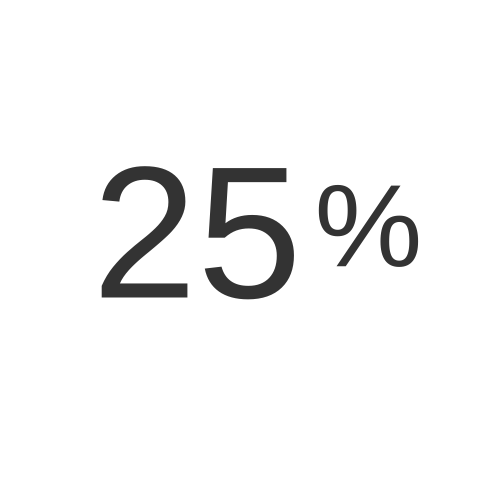
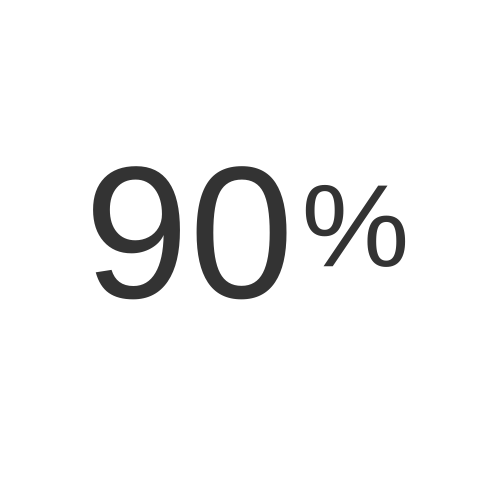
Edit: for clarification, this refers to only serving vegan/vegetarian food. No one cares or even notices if there are vegan options, but serving only terrible-tasting vegan food for the sake of moral purity is a horrible idea.
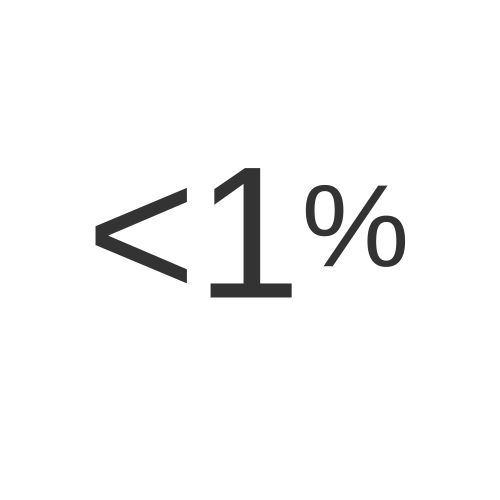
Evaluation from a Chinese perspective:
It isn't possible to convince EA people that serving vegan food at an outreach event is ~the wost possible thing for any group in China. I have given up on this.
It's really pathetic that EA chooses to be ineffective in such a stubborn way.
Yeah, let's make sure to save a few chickens, even if it increases by a few basis points the likelihood of human extinction. Really worth it.
This is the behavior of movements that really want to become cults, and that find satisfaction in virtue- holier than you signaling, rather than in pursuing their goals.

Really? You can't understand why an EA might choose to act this way? Why someone might choose to preserve a hard deontological boundary around meat?
Look, I believe Lao Mein when he says it's a really bad idea to serve vegan food at Chinese outreach events, and I'm happy to personally draw my own boundary between consequentialism and deontology further down, given how important Lao Mein claims this to be. But I don't feel like there's anything mysterious or pathetic about an EA making the choice described.
I don't think it is the case that it cannot be understood, but that it is ineffective as to be a mockery of the Effective part of EA.
Seriously, I can understand why an random person might choose to act that way, but I was extremely surprised the first time I saw the menu at an EA event.
I also understand that someone may not want to personally participate in harming animals, but there are so many ways to work around the boundary between consequentialism and deontology. You can just order takeaway pizza, even allowing attendees to select their own toppings, or just have a non-vegan EA handle the catering.
I think that anyone who wants to be effective at their altrustic attempts should have a clear distinction in mind between an EA event aimed at other EAs and an EA event aimed at engaging people outside.
I do think of EA as pretty strict utilitarian over deontological. At this point I just want to see what EAs actually think on this question though... no sense caricaturing a view I haven't even seen.
Also "they're not perfect and made a mistake" is not a bad guess...
As an animal-welfare-pilled EA, my view is that if Chinese AI researchers react so negatively to vegan food, it’s probably better to be pragmatic, serve the meat, and offset the suffering with donations to animal charities.
To animal-pilled people, being asked to serve meat in this situation is similar to being asked to purchase and offer slaves to people we’re courting in a slaveholding society. Maybe that’s what we need to do for the greater good, but maybe that helps pump the intuition for why animal-pilled EAs find offering meat to be distasteful (pun intended).
Of course, other EAs will have their own views.
Does this apply to American AI researchers who react negatively to vegan food as well? Following the intuition pump led me to that question, on the observation that America and China are about equally barbaric here. I would sum up American dietary culture with "hosts/caterers should respect everyone's dietary preferences," so a vegan-only event in America has the same problem we're worried about with China.
It even be harmful to host a vegan-only AI research event, creating or deepening a fissure we don't want or need.
I'm not sure why offset the suffering: if the AI research event is positive util in the first place, it's already offset.
Yes. In practice AI safety events in the USA all have both meat and vegan options.
I find it hard to believe that AI safety events in China don’t do the same.
The vegan thing is for “EA global”s which are meant to be ~cause neutral.
FWIW I've lived in the bay area for years, don't eat chicken for moral reasons and still default to eating elsewhere when there's an EA event with food, because more often than not it being vegan plus the other constraints on event food means it's not palatable to me.
It seems to me like the courting cost of vegan food for American events is much lower than the cost in China. If I went to an American event which served Indian food or chips & salsa or pretzels etc, I wouldn’t think much of it. Pizza is also popular for events and is lacto-vegetarian which is nearly neutral from an animal welfare perspective. I have a hard time imagining most meat-eating Americans getting that offended by these food options, though maybe this shows a lack of perspective on my part since I’ve been vegan for the past 5 years.
On offsetting, your argument seems to imply we should feel free to do whatever near term harm we want in pursuit of AI safety, because the ends justify the means. Most EAs would object to this. Also, most levels of risk aversion would recommend doing at least a little of the direct offset, because its payoff distribution much more precisely cancels the animal welfare harm, in contrast to AIS fieldbuilding which has a very different payoff distribution.
Has anyone tried making an offsets slush fund donation that other EAs can draw from when these one-off situations come up? The intent of the donation would be to abet various causes EAs participate in but for which an offsettable hang-up emerges they can't personally cover at the time. It would help keep in balance low-var and high-var.
Notes on food culture:
The slush fund is a cool idea and might make sense from a variance reduction (and ease of life) standpoint.
On food culture, I appreciate you keeping me in the loop on the latest omnivorous developments :)
I can imagine that some people join EA for the vibes, not because they are fully on board with consequentialism. For example, they are vegans, they see veganism popular among the EAs, so they treat EA as another vehicle to spread veganism.
(Generally, whenever we are interacting with a movement greater than us, there is a risk of being taken over by them.)
This seems like a pretty bad inference to me. People can care about animal suffering and not want to pay for it at their events. You can think they're making a bad trade-off, but I don't see how you can be so sure that they are doing it for status or to virtue-signal.
You could write the same comment about compromising on any ethical constraint, like lying to attendants. Like, it seems like with this reasoning, basically any ethical constraint can be made to sound like selfish moral posturing.
And there could be some diffuse benefits from serving vegan food that outweigh the costs (though to be clear, I don't know if that's actually the case). For example, maybe it makes any ethical commitments the organizers make more credible? Or maybe it helps sustain a community of morally ambitious people, or people who are willing to take non-normative moral ideas seriously?
You could write the same comment about compromising on any ethical constraint, like lying to attendants.
Well, this clearly not, because if attendants figure out that they are being lied to, this is extremely detrimental to the AI-safety cause.
However, I get that this is not the main point of your comment.
> People can care about animal suffering and not want to pay for it at their events.
I think what makes us disagree is that in my opinion these aren't "their events". The goal of an AI safety event is not to meet like-minded people and have a nice time, but rather to convince outside people to support the AI-safety cause.
I was a bit harsh in the previous comment, but this is what I am talking about. EAs know that most of them want to not hurt animals, and know that this menu choice makes them comfortable.
To me, if you make choices based on the preferences of the organizers rather than the attendants, it is clear that the goal of the meeting is for the organizers to have a nice time rather than for the attendants to be convinced.
For example, maybe it makes any ethical commitments the organizers make more credible?
I would argue the opposite. AI-safety shouldn't be bundled with the rest of EA beliefs just because a lot of people in EA bundle them together in their mind.
For a lot of people, AI-safety is important for other reasons, not necessarily ethical or altruistic. A lot of them have probably different political/social orientation, and the association of AI-safety to the other EA beliefs has the real risk of turning them off as soon as they get in contact with the community.
Well, this clearly not, because if attendants figure out that they are being lied to, this is extremely detrimental to the AI-safety cause.
When I wrote that
You could write the same comment about compromising on any ethical constraint, like lying to attendants. Like, it seems like with this reasoning, basically any ethical constraint can be made to sound like selfish moral posturing.
I meant by "the same comment" a comment that doesn't engage with trade-offs, or acknowledge that there are trade-offs, and treats its proposed approach as obviously correct and any other approach as obviously self-serving.
I mean yes, I agree that organizers shouldn't lie to attendees, in part (but not only) because it might backfire. But then we're (as Zvi likes to say) talking price. You didn't engage in any such weighing up of benefits and costs in your earlier comment.
EAs know that most of them want to not hurt animals, and know that this menu choice makes them comfortable.
I'm not sure what you mean by "EAs know that most of them want to not hurt animals" -- who are the "them" in this sentence? If it refers to EAs, then I think this can't always be so easily known. Especially as EA and AI safety attract more funding and become (in some ways) higher-status, you have to expect that they will attract more grifters too. (Though to be clear, I don't actually think this is the main reason why there's sometimes vegan food at AI safety events.)
I think what makes us disagree is that in my opinion these aren’t “their events”. The goal of an AI safety event is not to meet like-minded people and have a nice time, but rather to convince outside people to support the AI-safety cause.
There are many different kinds of AI safety events with many different goals, but I think it's pretty rare that the goal is "to convince outside people to support the AI-safety cause"? I think more often the goal is information sharing and networking.
I would argue the opposite. AI-safety shouldn’t be bundled with the rest of EA beliefs just because a lot of people in EA bundle them together in their mind.
I don't think any EA would object much to non-EA AI safety people organizing events with whatever food they find appealing. I'm assuming in these cases the events were organized by EAs with funding from EA organizations.
I'm not sure what you mean by "EAs know that most of them want to not hurt animals"
Sorry. Yes, I meant most the EAs themselves.
I agree that a bigger influx of grifters will happen, but that for now they are not yet influential.
You didn't engage in any such weighing up of benefits and costs in your earlier comment.
Yes, fair. I will engage now, and acknowledge that we need to accept/admit some limits.
For example, some discussion I saw on twitter was that some "good" AI researcher, should try to let AI cause some moderate catastrophe (comparable, in gravity, to some terrorist attack), while we are still in control, in order to push the public opinion in the right direction. I don't think any idea of this kind is moral or a good idea.
Regarding the "talking price", with the caveat that I'm making my argument with made up numbers (because of course there is no good way of calculating the odds of an AI-safety event slowing down Chinese R&D), I think that the rational behavior for most vegan EAs should be to appease the Chinese researchers with meat.
I'm just extrapolating from the daily behaviors of most vegans I spend time with. They won't eat animal products, nor use them, try to go to vegan restaurants, and sometimes try to convince me to not eat animal products. I haven't met them yet, but I also know that some vegans don't sit at table where people are consuming meat / animal products. And, of course, give some money to animal welfare organizations.
If I compare their behavior with me (and the rest of society) with their (theoretical) behavior with a homicide / serial killer / other violent criminal they know, it is quite mild. I also don't think there is a strong bias "I am not aware about the vegans avoiding me, because they are avoiding me". Happy to expand more about this, but I thought you would agree with these facts.
I think there is enough evidence (but here I may be wrong/misinterpreting) that the average vegan still discounts animal suffering strongly and quickly, as we move down the sentience/whatever axis, enough to push their talking price very far away from the cost-benefit ratio of "food for a conference"-"improving odds of AI pacing".
There are many different kinds of AI safety events with many different goals, but I think it's pretty rare that the goal is "to convince outside people to support the AI-safety cause"? I think more often the goal is information sharing and networking.
Okay, maybe it is not the explicit goal of the event. However, personally, what I'd mainly want to see, after an AI-safety event in China, is Chinese researchers being more concerned for AI-safety and starting to advise their leadership to regulate / slow down AI.
It's true that I may have assumed other people share the same desire, while that may not be the case. If so, I guess the EA behavior is consistent with their beliefs, and I am just in disagreement about their level of concern for an imminent AI takeoff.
I don't think any EA would object much to non-EA AI safety people organizing events with whatever food they find appealing. I'm assuming in these cases the events were organized by EAs with funding from EA organizations.
I agree that this is true. On the other hand, however, right now, the group that can make a difference in the promotion of the AI-safety discourse is EA. Waiting for someone else to do it may be much less effective at slowing down AI in time.
I think a lot of causes EA was interested in didn't require an excessive amount of compromise, because successful people with enough money could already have an impact. On the contrary, if you want regulation, and specifically in a field in which a lot of other influential people have vested interest in, you have to compromise on a lot of positions (or at least not making them part of the discussion) in order to get the political capital you need.
As an outsider (who is not vegetarian or vegan) it seems kind of simple really - you obviously cannot be a “true” effective altruist and also eat meat because it is an easy win staring you in the face. To be an “EA” and eat meat is to play Monopoly and refuse to place houses/hotels. I think dancing around that point is inefficient.
The question is whether it is, I guess, “effective” for a person like me to be completely cut out because of that. That is to say - is there a person out there like me that, say, eats a thousand burgers but saves a million human lives, or, to be strictly accurate, does the collective sum of people who are put off by veganism have a net positive contribution despite meat eating being a clear loss in the EA framework.
As an outsider (who is not vegetarian or vegan) it seems kind of simple really - you obviously cannot be a “true” effective altruist and also eat meat because it is an easy win staring you in the face.
How easy the win is depends on your utility function. If you take numbers from EA Animal welfare orgs about how valuable one person becoming vegan is in dollar amounts, paying to offset can be quite reasonable for many people.
How does that work? Are we saying - A eats meat, eating meat makes them more effective such that they can afford to pay N less effective people not to eat meat, A eating meat is therefore a net win?
If so - I agree, that makes sense to me and roughly aligns with how I feel about income inequality in general.
Effective Altruists have numbers for how much it's supposed to cost to save a human life from Malaria with betnets. It's been a while since I looked at the details, but Animal Rights EA's also have numbers about what their interventions cost and how much good those interventions bring animals.
Being vegan has a certain costs (which is different for different people) and you can compare that with the values you get from the Animal Right EA orgs.
Whether or not those numbers add up as a clear win depends very much on how costly it is for a certain person to be vegan.
This is the basic EA framework.
"Chinese people largely prefer their government to democracy. Many are militantly anti-political and will fight and die to not have to participate in popular politics. American politics are seen as supreme brain-rot."
Yes! I softened my post a lot to not seem very nihilistic, but yes, do not under any circumstances tell Chinese researchers you are engaging in democracy / doing it for any "ideology". Please just don't. In East Asia serving up identity politics will get you treated like you're rat poison.
a not perfectly matching but still illustrative example: see how both sides of the gender war discourse are silenced by the chinese govt. on online forums because I kid you not the toxicity in discourse degraded to be somehow 2x worse than of that in South Korea.
I think what I'm trying to convey is this:
Cultish or culturally toxic (at least viewed by outsiders) NGOs/ideas become suspect, especially if the NGOs/ideas comes from outside of China, and that is true even for causes that the CCP would ostensibly support. If you cause domestic public discourse to become factionalized and angry, then you are in danger.
I think that the rationalist community and rationalist causes would not seem to be outlandish or unreasonable to state officials at all; many state officials have an engineer mindset, which makes rationalism way, way less alien to them than say, introducing rationalism to Tehran or Pyongyang would be, and many cadres would even sympathize with it.
Focusing on teaching the ways of rationalist thinking would establish an excellent common ground and plausibly prevent toxicity, instead of, say, first trying to memetically influence Chinese domestic discourse to directly import certain rationalist causes without first teaching the ways of thinking.
I am somewhat surprised, cause when I lived in China, I would regularly eat the best vegetable-based food ever (vegetables in Hot Pot and Mala xiang guo are so tasty you don't really need meat), and it would be the only place in the world where I could conceivably live like a vegan or at least as a vegetarian. Westerners are incapable of cooking tasty vegetables.
Yes but they also have meat options, which I would easily believe are even more delicious. (I am vegan so haven’t tried.)
[Writing mainly in indicative mood for feeling even though that would otherwise be overconfident:]
Eating bad food to appease the host is humiliating
I think this part might be difficult for some Americans to understand. My own experience with this has some indirectly shared roots but is not primarily Chinese, so I'm not sure it's the same thing, but what I imagine is that the host and guests have more strongly asymmetrical etiquette expectations than in Western group meal type situations; is that right? And then also a stronger “guess culture” aspect, where a lot of direct feedback from guests would be inappropriate to their role. The host is expected to already know what they're doing and to lead the way, and to host properly is to partially absorb the guest's presumed-will into your actions in the process; if you instead impose something bizarre, then the guests have to suck it up to avoid being disrespectful (and would be reluctant to point it out or ask questions too, because that would be seen as aggressive), but their internal memory of the event will be stained with “what the hell happened there‽” afterwards.
It's possible for American hosts to put off their guests in an analogous way, but it's harder to trigger and the psychological emplacement of it is differently shaped; in the context I'm imagining, the expected guest emotion is more positive along a {violation − annoyance} vector than in the American context, or alternatively in the American case the guests are less ‘trapped’ (though that's too negative a word in general, because there's also a positive form of it when things go well).
The main reason I'm posting this is because I think some people will gloss over that list item without really interpreting it, so I want to gesture “the context may not be what you think” to them by spending enough words exploring in a certain direction, in a way that I hope might also have some broader transfer. I'm not at all confident that the elaboration itself is accurate.
As a life-long meat eater it puzzles me why vegetarians and vegans seem so intent on trying to recreate faux meat instead of focusing on good recipes that work with those dietary restrictions rather than strain at them. Put a plate of saag paneer or a vegetable curry in front of me and I’ll be quite happy, but every attempt I’ve seen at a veggie burger has left me saddened and unfulfilled.
I guess that people are strongly divided on the dimension of "openness to culinary experience". Some are happy exploring new meals, and the best way to make them go vegan is to show them new tasty vegan meals. Others only want more of the same, and the only way to make them go vegan is to create a hopefully indistinguishable version of the same (and probably even then they will complain, because placebo effect is an important component of taste, so even lab-grown meat will "taste different").
Anyway, the greater point here is that you have limited weirdness points, and if you spend them all on veganism, there is not enough left for anything else.
Alas, Chinese vegans are mostly Buddhists, and Chinese Buddhists are mostly superstitious civilians. Some monks are high status and even are scholars, but they are often caught to be corrupt. Religions generally have fairly negative associations among populace because they are often caught to be corrupt. People assume Buddhism for every veg*n at first glance lol.
I am Chinese, so let me offer an insider's perspective.
In China, when you mention vegetarianism, the vast majority of people immediately think of Buddhist fanatics, as well as some mothers who feed their children a strict vegan diet—known as "vegetarian from the womb" ("tai li su"),which leads to severe malnutrition. The concept also brings to mind "animal release" (fangsheng). The general public frequently sees reports in the media of extremely foolish release practices, such as releasing invasive species or even bottled water.
A very small number of people might think of animal protection, but that is an even worse topic. Over 90% of the domestic and international animal rights news people see in the media involves animal rights activists engaging in performative art or protests that disrupt the public. Almost no one has heard of animal ethics; instead, people interpret it through the lens of commercial interests or radical leftism. (As an aside, on video-sharing platforms, individuals and organizations that rescue various wild animals are extremely, extremely popular.)
If your vegetarian diet is nutritionally adequate and not expensive, people will welcome it very much. This is especially true when it comes to weight loss and fitness.
The primary issue is that it forces people to accept multiple dimensions of politics at the same time. It’s like, imagine if in order to attend a board game meetup, you had to accept that there is no God. You are excluding people for a reason that has nothing to do with the task at hand.
I'm gonna guess that it's because Chinese people tend to care a lot about the quality of food, including at events, and don't like vegan food and mostly don't give a shit about veganism, and Chinese food largely isn't amenable to being fully vegan (except for a few tofu/bean paste based dishes, but seriously everything else is flavored with shrimp/oysters/bullion/meat stock).
Can I get a your rough intuition on what the cultural fabric - to the extent that exists - in your university's various intellectual communities think of AI risks and AI benefits? does it adopt a specific worldview or some set of multifaceted worldviews?
in this case, even a nihilistic outlook of "I can't care because if this happens (and it could happen) we would all be very dead" or some passive one still counts as a worldview.
Second, It's uncommon to find a fellow Chinese individual discussing this! I'd enjoy have further conversations on both vibes and concrete topics in DMs if you like to.
Here in my university there's a student group about future humanity which is kind of formal and pretty active. I don't attend their events often, but they seem to be mundanely optimistic and cautious (will change the economics and society, has mundane ethics and legal issues like copyrights, not gonna destroy us) about AI. They're not like us lol.
This article claims that Chinese AI researchers are essentially being radicalized by Dario Amodei's anti-China rhetoric:
https://www.chinatalk.media/p/how-anthropic-became-chinas-goliath
Does that sound right to you?
Is there any strategy Anthropic could use to placate China and prevent a destructive AI race? For example, issuing stock and granting it to the PRC in exchange for a treaty which prohibits further open model releases, something like that?
A lot of AI safety money in the West comes from tech billionaire donations. What kinds of things do rich people in China like donating to?
Charity is not a major virtue here because lots of Chinese charities was caught to be corrupt and this really ruined the coordination. Though some rich people start their own foundations and a large proportion of charity money goes to education (I don't know why they like donating building to universities), anti-poverty, disaster relief and environment.
I have a grand, hard, meta question:
How does understanding Chinese culture or public even help me?
Understand American culture (basically the left/right feel existentially threatened by each other) => can reason about Congress, POTUS.
Understand Chinese culture (people proactively don't want to become like American politics) => specifically the thing I learned about Chinese culture, is that it minimally helps me reason about CCP.
Honestly the reason for understanding Chinese culture doesn't need to stop at the CCP. The Chinese collective consciousness can adopt a wide range of ideas and worldviews independently from the CCP, but would benefit you if you are to reason about the motives of Chinese geopolitical/socioeconomical action.
Additionally, many would argue that having a deep intuition of collectivist cultures would enrich an individual's ethical perspectives and allow for a more substantial reflective process. The Chinese view may also collide with US views and yield significant improvements to discourse sanity on anti-individualist perspectives instead of strawmans.
And many Chinese literature (specifically the Sanwen format) is great, and you may adopt a view after substantial engagement that Sanwen compliments western ideas like "blogging" or "personal essays" very nicely, while also adding in a lot of beautiful free prose flare.
Understanding Chinese culture or public is fun, it's a rabbit hole of lots of historical events and diverse cultures and local political views. Even I haven't understood all of the memes resonating within us, but I feel lucky every time I realize that Chinese is my mother tongue 😄 Also it definitely helps you understand CCP, which western ppl are likely biased about
it’s been a while since i read the TBP trilogy, but i remember it being an incredibly cynical portrayal of human nature. like it just totally stomps over idealism; and repeatedly gives you a tiny spark of hope before laughing in your face - you didn’t really think we were going to let you feel optimistic, now did you?
the craziness of the cultural revolution, nihilism/cultiness of the ETO, societal hubris after the wallfacer timeskip, the ships immediately cannibalizing each other, cheng xin being a well intentioned idealist who totally fucks everything up, public opinion being fickle and short sighted, repeated catastrophe due to failures to account for unknown unknowns, the crab-bucket mentality in the third book of people who would rather humanity all go extinct than some people being able to escape
i don’t want to do the thing where you generalize from one book to an entire culture; i think reading it made me better at security mindset, and i also had enough idealist cultural influence from other sources. but it definitely is a very bleak lens to think about AI x-risk in.
The book is hopelessly confused about the titular three body problem in ways that would be cleared up by spending ten minutes playing with an orbit simulator in Ti BASIC. I’m normally pretty patient about that kind of mistake in works like star wars but naming after a problem without ever looking at the problem paints a portrait of the author.
Like, it’s bad bad. The important instance of the three body problem in the book has four bodies, and this is the simplest issue to point out but not nearly the most severe
Point of tentative information: the trisolaran system of the novel is relevantly three-body-like in that the fourth body you're mentioning has negligible mass compared to the other three. (If I remember right. I read the book ten years ago.)
This matters in the same way that the 'three body problem' of Sun-Earth-Moon is in practice ~solved due to the relative mass ratios. Not a physicist, and I don't deny that the novel has other accuracy issues (though I remember finding it pretty interesting).
I think this is people's reaction — after growing tired of "wholesome family-friendly" fare and formulaic commercial sci-fi — to realistic, high-quality domestic sci-fi. Audiences don't actually enjoy pessimistic endings: the optimistic "IF timeline" of The Three-Body Problem racked up over a million views and tens of thousands of comments on a video platform within a single month.
[Three-Body IF Line: What If Wade Became the Swordholder — Bilibili] https://b23.tv/Z0yftUr.
China also has a few people writing "rationalist fiction," but there's no systematic culture of rationalism, transhumanism, or Effective Altruism — nor the communities that go with them.
I think it is substantially true that the Chinese intellectual community has the views of Liu's works - or at least, it speaks to a large part of the collective unconscious in a way that made the books incredibly well regarded.
On the other hand, one might look at Liu's movies such as the Wandering Earth series (the third one is rumored to include lots of AI loss of control speculation!) and see his positive outlook on human collective action to avoid disastrous consequences. I will probably write a blog on the Wandering Earth series later.
But for now, he's just a pawn in western discourse, a strawman that's categorically unable to speak out and to take any action except racing ahead
Is this post sarcasm? Are you trying to argue that we should think of Chinese researchers as more agentic? If so commendable, but the tone of the rest of the post makes it difficult to have this reading.
If you’re trying to argue that Chinese researchers are indeed “pawns in western discourse” ehhh… come on. They clearly do more than that (foremost advances in open source AI)
The anatomy of a Chinese AI researcher: two hands, two arms, two legs, one torso, two ears, one nose, hopefully a half-decent hairline
The Chinese AI researcher has read the Three Body Problem series of sci-fi novels since high school, and understand the concept of existential risk vaguely.
He is fascinated by Ye Wenjie, the researcher that turned against humanity in that book, and decides that in the future if AI progress leads to a superior intelligence, he might be tempted to become Ye if there's no good alternative.
He performs the duties of capabilities research in a Chinese frontier lab, seeking to one day achieve parity with Western companies, though he knows this is difficult. He has a mentality of hillclimbing, believing that the progress of a future technology is highly uncertain and even unknowable, and so him and his peers could only tread one step at a time.
He looks at the western world and sees what is typical when a great technology is developed: the first mover will decide to impose restrictions to further their lead, while latecomers should use whatever means necessary to widen access to the whole world. He thinks of the AI chip restrictions as evidence of this.
He uses Anthropic and OpenAI models regularly in his day to day work. He already got two of his Claude accounts banned in the past, and today his third, currently used account is banned.
"Why would a company ever treat their paying customers like shit just because they're from a foreign country?", he ranted on a forum like LinuxDO, Zhihu, and CSDN, where Chinese AI developers frequent.
He knows China is not a supported region. But Claude has become part of his daily intellectual and technical life.
Other users joined in and pointed fingers to Dario, accusing Dario and Anthropic leadership of conducting safety brainwashing and being hostile towards China. He was angry that people like Dario only discusses people like him as sources of risk but never as participants to be potentially trusted in managing it.
He saw the OpenAI-Huggingface incident news on social media. At first, he didn't believe it. Then it was published on People's Daily. Now, he is only barely able to believe it. Reality is becoming quite sci-fi indeed, he thought.
He feels a looming threat in the horizon that's not just a standard safety (as in cybersecurity or trust and safety) concern. But he doesn't consider conducting safety research even after this, because there's nothing to support such a career change, and his company benefits from conducting capabilities research.
He doesn't know what effective altruism is. He would enjoy being an Individual that's a careful trailblazer that's uniquely positioned to warn institutions of emerging risks, but Western EA Institutions and Western Intellectuals seems to never directly reach out in a culturally appropriate way.
He fantasized about a world where he could work on making a world where AIs and humans could prosper together.
"I would like that", he thought quietly to himself.
But for now, he's just a pawn in western discourse, a strawman that's categorically unable to speak out and to take any action except racing ahead.