Hmm, that last line actually concerns me. I don't have enough knowledge of the subject matter to be able to know for sure, but I got the impression that the fly upload announcement was misleadingly exaggerated, acting as though they had gotten fly-like behavior from a brain upload when in reality they used reinforcement learning to create the behavior they desired. If she's associated with them, I worry that these preservation announcements are similarly misleading.
 6
6So first off, I want to say that Ken Hayworth is one of the scientists I respect most in the world, and he cares a lot about precision in language and making sure that nothing gets overstated. I've actually asked him to be heavily involved in Nectome's certification process, and I think his careful approach will bring a lot of rigor to that. I do think his tone with Michael was a little harsh here, and he's erring on the side of judging a twitter one-liner like it's a scientific paper.
I helped found Eon and am currently one of their advisors, and I think the fruit fly upload situation is one of those things that's like this comic:
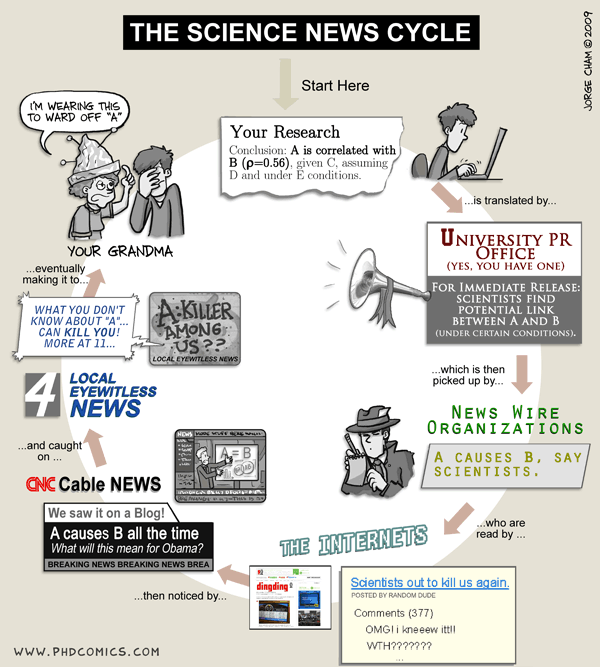
Now, I'm actually thrilled to talk about the flywire situation, because while I think there's been some miscommunication about it due to the standard science hype cycle and the way twitter is, and I think the object-level facts are a really cool result that you guys will appreciate.
The Eon simulation is what I'd describe as a "partial upload", using leaky integrate and fire neurons. It's built on Philip Shiu's work in fruit fly brain modeling (https://www.nature.com/articles/s41586-024-07763-9). Philip has been part of Eon for about a year now. The work in...
 4
4 2
2 1
1I did a shallow investigation of this and my conclusions were:
- The text on EON's frontpage, Michael Andregg's tweet thread, and Alex Wissner-Gross' post seem pretty misleading in practice while this tweet from Kenneth Hayworth is more representative of the situation. I think EON's blog post on this is not misleading while the front page of their website is.
- EON / Michael Andregg / Alex Wissner-Gross mostly don't make straightforwardly false claims, but nonetheless much of their communication (though not all of it!) is (predictably) misleading.
- I think the 91%/95% accuracy claims are pretty misleading, though I don't have the expertise to confidently adjudicate this.
- The EON front page says "No hand-coded behaviors. Just brain structure producing brain function." In fact, the walking gaits and grooming leg motions come from NeuroMechFly motion primitives. Thus I think this is basically false rather than merely being misleading.
- The post from Alex Wissner-Gross is generally less misleading, but contains some pretty misleading text ("If a fly brain can now close the sensorimotor loop in simulation, the question for the mouse becomes one of scale, not of kind.", "Watch the video clo
- EON / Michael Andregg / Alex Wissner-Gross mostly don't make straightforwardly false claims, but nonetheless much of their communication (though not all of it!) is (predictably) misleading.
 3
3 2
2 1
1I frankly think calling the Eon video any sort of "upload" is quite misleading and exaggerated. There are at least two fundamental reasons for this:
-
@Aurelia, as you, Ken, and even Eon (later on in their blog post) correctly point out, this was a leaky integrate-and-fire (LIF) model built from the fly connectome. So it's not even close to the full brain of the fruit fly: no neurotransmitters, no synaptic weights, no synaptic dynamics from the fruit fly. We are not even faithfully simulating its brain in silico.
-
Not only is the central nervous system not a true upload, but the motor system isn't either. What is instead used as a mapping between this LIF model and motor outputs is a policy that is hard-coded (not even imitation-learned via RL, though later on they & others do this) from fly behaviors from the NeuroMechFly team at EPFL. So the LIF model they use is neither necessary nor sufficient for the generated behavior: the fly policy can walk on its own without any additional inputs, as the EPFL team already demonstrated.
2I have a couple thoughts on this!
1) In general I'm very conservative about preserving things and wouldn't want to throw the body away without a really compelling argument for why it's going to be fine for the person being preserved. I don't currently have that argument.
2) Now you could certainly argue that with just a brain it's possible to fully reconstruct someone. I think that's probably true because the task of reconstructing a body ultimately is about satisfying the expectations of the person's mind and enabling all their capabilities, and you should be able to "read off" what the brain was expecting from the models of the body contained in the brain. Especially if it's an interactive process with the person actively participating and saying what feels more or less right. I think it's probably true that you can reconstruct a person from just a brain with no losses that we'd deem clinically relevant today. But I don't believe that at 95% confidence so I don't want to, in my ignorance, throw away something that ended up really mattering.
2.5) Note this line of reasoning applies to the brain itself! Do you really need to conserve the brainstem? How about the cerebellum? Optic n...
 2
2IMO, it is worth it from a pure PR perspective. Chopping heads off gives people the ick.
3 1
1It's not set up yet but we are broadly going to model it after Alcor's long-term patient care fund. Non profit. They survived for decades; no sense in changing something that isn't broken.
 1
1Most life insurance policies have a 1-3 year exclusion time where if you commit suicide during that time they don't pay out. But if it's a long-standing life insurance policy, past that exclusion window, it does pay out even in the case of suicide, with very few exceptions.
MAiD is special because you count as having died of whatever your underlying disease is. It's not legally suicide. Your death certificate says you died of cancer or whatever your terminal illness was, and Oregon's gone to some lengths to make a clear distinction between MAiD and suicide. In fact, Oregon law actually specifically prohibits insurance companies from penalizing you as if you'd committed suicide if you make use of MAiD. So in principle even if you did MAiD within the suicide exemption window of a typical life insurance contract, it would still have to pay out. In practice I don't know of any case law where it's actually come up. But check out ORS 127.875 §3.13. Insurance or annuity policies, which says:
...The sale, procurement, or issuance of any life, health, or accident insurance or annuity policy or the rate charged for any policy shall not be conditioned upon or affected by the making or rescinding o
 1
1This works for people outside the US! Oregon allows anyone physically in the state to make use of its end of life laws (one of only two states that does so, the others have residency requirements that are likely unconstitutional according to the Oregon Supreme Court). So as long as you’re terminal and can get to Oregon we can preserve you.
2This is exciting. I've created a Manifold market on whether this method works:
1You've started the team singing Giant Woman around the office all day.
 3
3Amazing to see this new option enter the space. Fantastic work; I'm a fan!
11 1
1One experiment I'd LOVE to see (which I haven't done yet because I've been working on the fixation stuff but might in the future) is to take YPF mice (sparse fluorescent labeling of entire neurons) and freeze / cryoprotect them in various combinations with various post-mortem delays, then do expansion microscopy and 3D imaging to see what happens to the YFP pattern. The idea is that you'd have the ground truth of what the intact neuron was and could see if it's still traceable after the preservation attempt. I would be very impressed and ultimately convinced that a protocol maintains traceability if you could trace images with the YFP signal stripped and then have that tracing result match the YFP ground truth.
Certainly there's some issues actually doing the experiments technically (which is one of the reasons I haven't done them yet). It's harder to do well than it might seem. But I do think it can be done, and I also think it's never been easier because of expansion microscopy making it much easier and cheaper than it used to be by a factor of 100-1,000x.
 21
21 11
11Right now, as I understand it, storage at Alcor would be at liquid nitrogen temperatures (-196°C), which is too cold to be compatible with our protocol. If you try to store one of our preserved persons at that temperature, they will shatter, which is unacceptable according to our quality standards. (To be clear, -196°C also shatters people preserved with Alcor's methods.)
The target temperature needs to be either -32°C and higher (to prevent freezing), OR somewhere around -122°C with good control of temperature excursions (to precent devitrification or shattering). Intermediate temperatures are not good, for example, it's actually worse for our preserved people to be cooled down to -90°C for a day then it is for them to be warmed up to 50°C for a day.
Note that the cost to store at -122°C is substantially higher than the cost to store at -32°C. The rough price ratio annoyingly depends a lot on economies of scale, due to the square cube law, but it's around a factor of 10 or so for realistic small- to medium-scale preservation scenarios. So we definitely prefer -32°C all else being equal: it's a lot cheaper and it doesn't cause problems if it fails like colder temperatures can.
I t...
1
After 10 years of research my company, Nectome, has created a new method for whole-body, whole-brain, human end-of-life preservation for the purpose of future revival. Our protocol is capable of preserving every synapse and every cell in the body with enough detail that current neuroscience says long-term memories are preserved. It's compatible with traditional funerals at room temperature and stable for hundreds of years at cold temperatures.
The short version
"Maybe" isn't good enough for me
A brief refresher: traditional cryonics uses two things to preserve people: cold to preserve the brain, and cryoprotectants to prevent the catastrophic damage caused by the formation of ice crystals. Unfortunately, cryoprotectants themselves crush neurons through osmotic effects, damaging the structure of the brain.
Traditional cryonics works in "emergency mode", where cryonics organizations are first notified after one of their members dies, then attempt to preserve them in response, often with a delay of hours or even days during which time the brain is damaged. Traditional cryonics takes place after a "natural death" in most cases. However, natural deaths take a long time, and brain damage sets in well before legal death. For me, all this damage calls into question whether memories are really preserved.
The strongest argument for traditional cryonics is that any kind of preservation is better than nothing, and that cryonics is "not a secure way to erase a person". This is true enough as far as it goes: certainly, no physical process truly "destroys" information. What we really care about with preservation is how accessible the information is and whether it's still contained within a person's preserved body or not. This is a really important question for me, so I ran the experiments myself and was not impressed.
I set out to build something that feels to me like less of a Pascal's Wager. I want a preservation protocol that, according to our best theories of neuroscience, does work. At the same time, I wanted to craft an experience that normal people would be comfortable with – I want our parents and grandparents to be willing to come into the future with us.
The result is a protocol that my company, Nectome, has spent the past ten years developing. After years of experiments in the lab and in the field, learning about the complexity of end-of-life biology, and after refining our protocol to make it robust and repeatable for real people in real-world clinical settings, we are now ready. We've developed a whole-body, whole-brain, human end-of-life preservation protocol based on neuroscience first principles. We are capable of preserving every synapse and almost every protein, lipid, and nucleic acid throughout the whole body. Brains are connectomically traceable after preservation[1]. Our preservation is so comprehensive that current neuroscience theories imply it preserves all relevant information necessary for future restoration of a preserved person.
Further reading: "Brain Freeze", Aurelia Song, Asterisk Magazine
A preservation protocol that's worthy of us
Cryonics in my opinion has had two main issues holding it back, both of which we've solved.
The Quality Problem: The first issue is that traditional cryonics methods haven't been shown, even under ideal circumstances, to preserve brains well enough that they're connectomically traceable afterwards. We solved this issue by adding crosslinks to the mix. In 2015 I published a protocol in Cryobiology using crosslinks, cryoprotectants, and cold to preserve animal brains with near-perfect quality. In 2018 I won the Brain Preservation Foundation's Large Mammal Brain Preservation Prize using aldehyde-stabilized cryopreservation.
The Timing Problem: The second issue is with the emergency response model of traditional cryonics. Doing preservations as an emergency response and after a natural death causes damage independent of whatever protocol you're using. Severe damage happens before legal death as a result of inadequate blood circulation and partial brain ischemia. Even more damage occurs post-mortem due to cell autolysis and other degradation pathways. Shortly after death it becomes almost impossible to completely perfuse brains (this is the problem that ended up giving us the most trouble).
We worked from 2018 to 2025 trying to solve the Timing Problem to our satisfaction, and eventually succeeded in creating a protocol that gave comparable results to our ideal laboratory version, but could be used in the real world. There's a cost, of course, for this quality: we've learned that preservations must start within twelve minutes post-mortem after a quick respiratory death. That means preservations have to be scheduled in advance, and they have to be done in conjunction with medical aid-in-dying (MAiD).
The images above are taken from the BPF's Accreditation page. On the left, you can see the pig brain which I preserved, winning the Large Mammal prize. The cellular structure is intact and it's easy to trace the connections between the neurons. The right-hand image shows the damage caused by traditional cryopreservation, even under ideal circumstances. Real preservation cases are far worse due to pre- and post-mortem brain damage. Maybe a superintelligence could reconstruct the structure – but it's unclear whether the information to do so remains.
We've published a preprint of some of our most relevant experiments on bioRxiv, where we show we can get the same excellent quality we got in 2018, except now under realistic end-of-life conditions. We've also performed experiments which have undergone independent evaluation; we'll discuss those in a subsequent post, but for now here's a sneak peek:
This is a section taken from a rat brain preserved 5 minutes post-mortem in a manner that's consistent with the surgical time we can achieve with pigs. All axons, dendrites, and synapses pictured are connectomically traceable. After preservation, we stored this brain at 60°C for ~12 hours before imaging! Click through for a "Google Earth"-style presentation of the whole slice, which is around 5 GB of data.
What does preservation look like for you?
In order to work within the limits of biology, Nectome does preservation exclusively as a planned, scheduled procedure. We do not offer an emergency response model because there is no emergency response model we could do which would meet our standard. To receive a preservation which meets our standard of care, terminally ill patients must plan in advance, travel to a preservation center, and use medical aid-in-dying.
Our business model is different than traditional cryonics: we sell transferable preservations in advance instead of using a membership + insurance model. When you buy a preservation, you buy the ability to designate a person of your choice (including yourself) to be preserved. We will then work with that person to understand their preferences for preservation, the most important of which are:
When it's time, we'll invite clients and their families to stay for a few days at a beautiful preservation center in the peaceful Oregon foothills, where they can spend time together, say their goodbyes, and participate in any farewell ceremonies they choose. After the procedure the preserved person is stable for months at room temperature, allowing for a standard open-casket funeral in their home state.
In the long term, preserved people will be maintained at -32°C. In all cases, they will remain in a whole-body state; Nectome never does brain-only storage.
Conclusion
I've introduced here a new kind of cryonics which I hope will move the field away from Pascal's wager and towards a rigorous discipline that will become a mainstream part of end-of-life care.
We can preserve people following MAiD with a protocol that can preserve every synapse and virtually all biomolecules, throughout a person's entire body. That's good enough that our current theories of neuroscience say it does work to retain sufficient information about a person such that they could be restored with adequate future technology.
We know that our protocol doesn't serve everyone, and we hope that continuing scientific and legal advances will allow us to preserve an increasing fraction of people. But it serves many people (most people don't die suddenly!), and we want to offer something that verifiably works, not a shot in the dark.
We don't yet have the technology to revive someone who has been preserved, but we do have the evidence to say that we preserve all the information that would be needed for revival.
Over the next posts in this series, I'll go over the information-theoretic basis we use for preservation, the reasons why it has to be an end of life protocol, our hope for the long-term future, why this all still makes sense even given short AI timelines, and several other things.
In the meantime, below you'll find several of the links in this post and descriptions of why you might want to read them.
I want you to live
Why did I spend the last 10 years of my life on this project?
We all start out life born in twin prisons: the gravity well of the earth, keeping us on a tiny speck of dust compared to the wider universe beyond, and the limit of our natural lifespan, confining us to a tiny sliver of the universe's grand history.
When preservation becomes a new worldwide tradition, even before revival is technically possible, it will expand peoples' personal planning horizons. I expect to see people start 1,000 year projects believing they will personally see the end result. I'd like to see what they choose to make.
I believe that Preservation is for everyone and that the future loves you and wants to welcome you back with a desire that can't be conveyed with words on a page. Let's get there, together.
I'm looking forward to talking with you all in the comments. I'll be around for a while once this post is up. There's a lot to discuss! Vote for what we should cover next:
"Connectomically traceable" means that each synapse can be physically traced to its originating neurons in a gigantic 3D map. For more info, I like Sebastian Seung's TED talk. ↩︎