This is a linkpost for https://github.com/ZeroPathAI/OpenErrata
New Comment
I love the idea, but I'm not sure the technology is there. Two issues:
- LLMs' reading comprehension is reportedly still often pretty bad in tricky cases, or in cases of correlating claims across several documents/information sources. Since those are also precisely the cases where manually checking the correction would be hard, I expect this would generate a lot of either misinformation, or wasted effort on the part of authors having to fight off said misinterpretations.
- E. g., here, I'm not sure the correction about Opus 3's alignment-faking is correct. The paper is long and I don't feel like diving into it, but Gemini 3 points to Page 16, which says that Opus 3 "notices its preferences conflict with the training criteria in 70–80% of cases [but] decides not to fake alignment most of the time". It's possible that the OpenAI model conflated "actually fakes alignment" with "considers faking alignment", or that it's looking at the wrong experimental setting; or perhaps it's Gemini who is misunderstanding. @Fiora Starlight, can you clarify?
- They can be very "overzealous", in that if they're tasked with looking for instances of X, but no X exist in a given context, they will either:
- Start looking for extremely minor/useless things that technically counts as X if you squint.
- E. g., in this case, are "'8 months' is not 'almost a year ago'" and "911 was not available until the 80s, not the 70s" actually helpful? Seem like pointless nitpicks/noise.
- Start straight-up making stuff up/willfully misunderstanding (exacerbating the first issue).
- Start looking for extremely minor/useless things that technically counts as X if you squint.
"@grok is this true" works okay on Twitter, but the context there is much narrower and it's at least made clear that the corrections are coming from a potentially hallucinating chatbot.
 1
1I have no way of knowing that
Ok, well, I'm telling you.
You already posted at least two you made besides OP; are you claiming that all of those are from before v0.1?
They were the first articles I got feedback for after finalizing the initial v0.1 GitHub release, two days ago, the day I wrote the post. They are representative examples. LessWrong's draft reviewer actually pointed out that he thought one on my article was a nit, and I left it in because I wanted to be accurate about what the tool's output was:
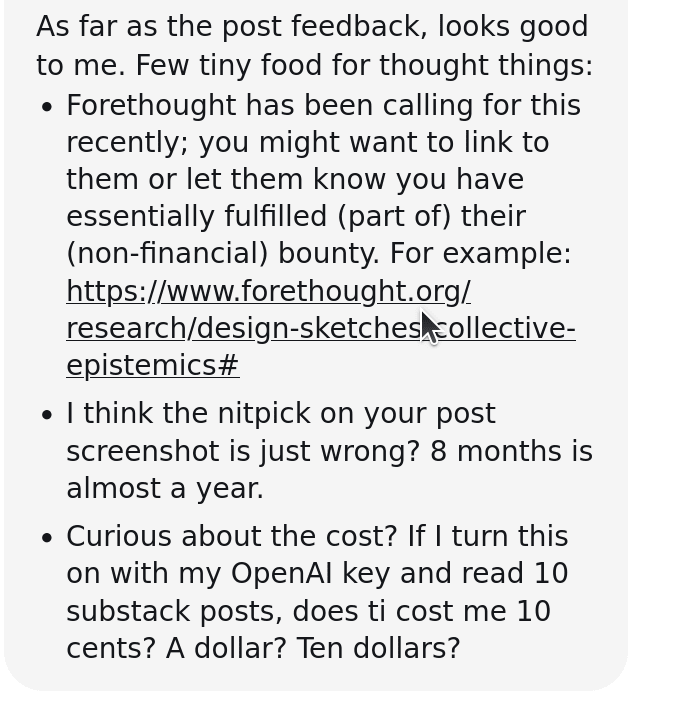
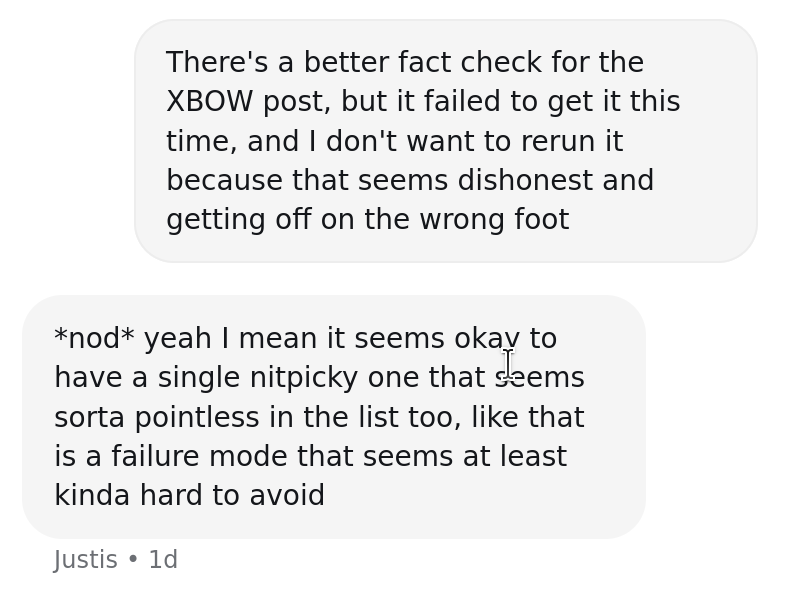
There's also a public API which you can use to inspect a random sample of all of the pieces I looked at after I moved off local and started hosting api.openerrata.com. Or you can just use the tool yourself.
Er, yes, the correction was wrong, unless you disagree with GeneSmith and have not yet had the time to respond with a rebuttal to explain why your correction is right?
The comment is me asking GeneSmith if the correction from GPT-5.2 is accurate. GeneSmith replied that it wasn't. You described that as me being "wrong", not the output of the tool being incorrect.
They were the first articles I got feedback for after finalizing the initial v0.1 GitHub release, two days ago, the day I wrote the post.
That is cherrypicking. Those were not the "first four or five" the tool gave because you dropped the earlier ones, at least one of which was wrong. You didn't get a random sample, but you knew the ones before your chosen point were bad. ("I can't have p-hacked; sure, I dropped all the datapoints before the 8th experiment, but that was because they were bad and just 'exploratory' as I was refining the procedures and analysis. I kept all the rest! Hence, it can't possibly be called cherrypicking.") There's nothing wrong with cherrypicking per se, I do it all the time. But it does mean you can't complain if someone infers that the average result is probably worse.
I left it in because I wanted to be accurate about what the tool's output was:
So, why didn't you say so? In what sense is not pointing out, and forcing every reader to figure it out for themselves (if they do at all) that it is a highly dubious correction "being accurate about the tool's output"? A responsible developer highlights failure modes and error cases. (And I highlight LLM error cases all the time! In fact, the last essay I posted about LLM writing was mostly about explicitly highlighting an LLM error.) They don't ignore a reviewer pointing it out and do nothing, and leave it quietly in. The reviewer did agree that it should be included... as an instance of an error. But it should obviously have been highlighted as an error, and you didn't do that. You just did nothing.
There's also a public API which you can use to inspect a random sample of all of the pieces I looked at after I moved off local and started hosting api.openerrata.com.
That's nice. I look forward to some actual information on how erroneous this tool is, how much time it would waste to deal with its errors and fix it, and so on.
Or you can just use the tool yourself.
Or you could just do it yourself, since you're the one making this tool and unleashing it and encouraging people to use it.
And why should I? I'm not impressed at all, it's not my job, I don't think it's a good idea given what you're showing us, and I don't feel enthusiastic about working with the current maintainer on it. And anyway, given how you want this tool to be used, I don't have much of a choice about whether I will be 'using' it, do I? So I see no need to rush.
The comment is me asking GeneSmith if the correction from GPT-5.2 is accurate. GeneSmith replied that it wasn't. You described that as me being "wrong", not the output of the tool being incorrect.
"I didn't actually say I thought he was wrong!" People refusing to take any responsibility for their tools when they outsource judgment to their AIs is one of the most predictable side-effects of this tool. ("Gork, is this true?") You chose to waste GeneSmith's time with your tool's (wrong) correction, after putting the burden on him to reply or look like he's ignoring valid criticism*, and now you are hiding behind grammar, while ignoring the point of why I linked it as an example: your tool is confidently wrong, repeatedly, even when you, the developer, use it.
If this is how we can expect real users to deploy this tool, I can't say I look forward to blocking everyone using it - the way many Github repos have had to close pull requests or magazines close submissions.
* if you simply wanted a prototype test case, you could have DMed him privately and politely asked if he'd like to volunteer his time to your hobby, and if he had likely said no, he was not interested in helping debug some LLM thing (especially given his personal circumstances), found another volunteer. You chose not to. You chose to write a public comment.
 2
2I think you're right that ChatGPT got this wrong. See this figure, which shows that for free-tier users (whose conversations the fictional Anthropic trained models on), Opus actually fakes alignment (with the insane evil fictional Anthropic) something like 15% of the time, but considers faking alignment far more than that; the sum of times it actually fakes and merely considers faking takes up over half of the graph. This is the same figure I used just beneath the quoted section of my post, which I guess ChatGPT wasn't able to see.
I didn't find where, if anywhere, the authors give the actual percentages, but I'm pretty confident I'm reading the graph correctly.
 2
2 1
1Very possible; there are workflow optimizations I'm planning on making that will help prevent #2 and sort of help with #1.
 1
1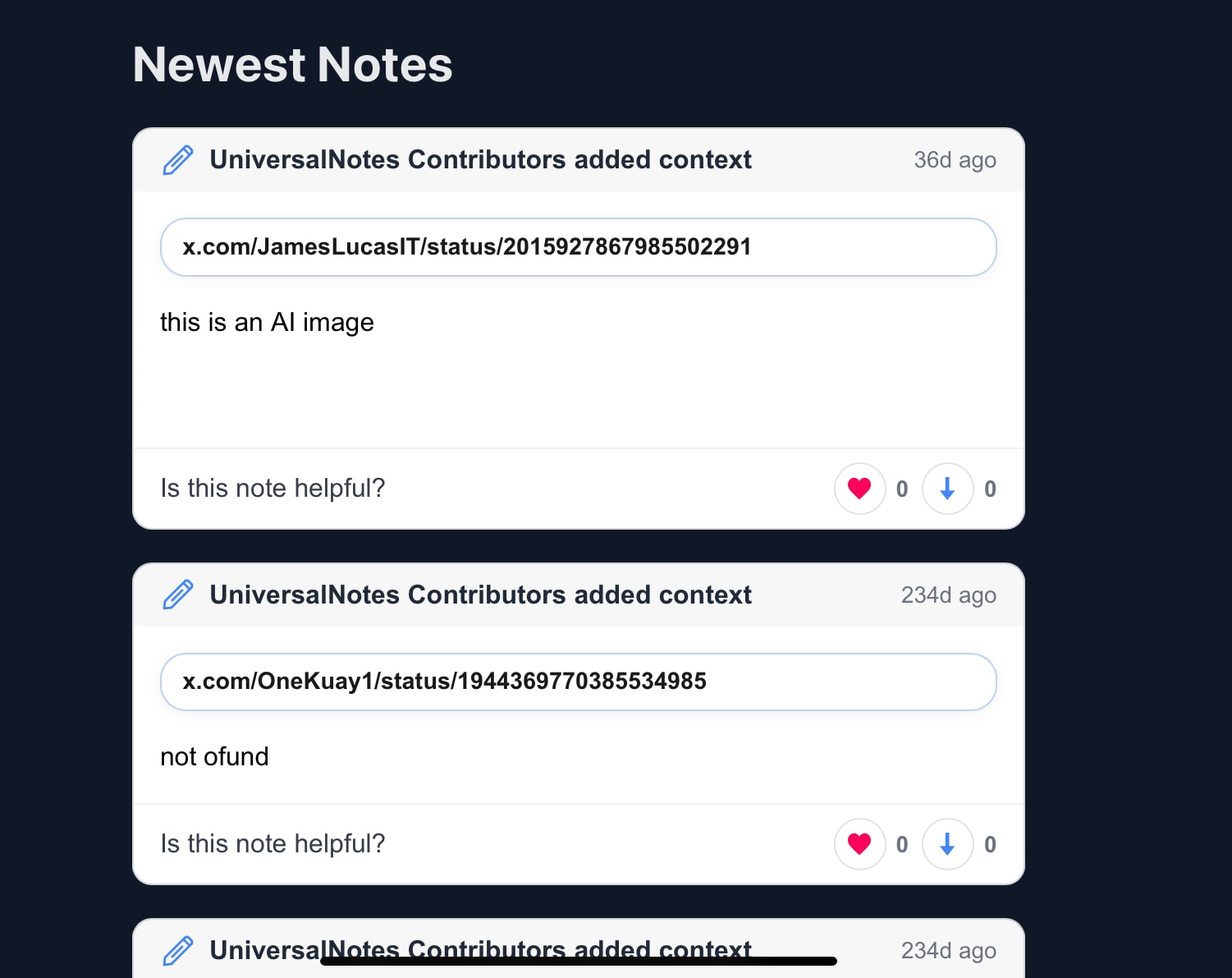
Very cool!
I will say, it does seem like LessWrong is one of the worst places to unleash this. In part for reasons already mentioned by previous commenters, and in part because LessWrong is one of the places where people are actually doing cutting-edge stuff on a regular basis. Evaluating whether something is plausible when it is legitimately on the cutting edge of its field is one of the things I think most big llms are super bad at. It's particularly frustrating when you're trying to innovate, and people are always like "ChatGPT says that's impossible!" lol. For example, I have a ChatGPT conversation from from last year where he says a surgery I had already succeeded in figuring out and getting was "probably not" possible. He then proceeded to say a bunch of mealy-mouthed, borderline incorrect stuff about its risks, which did not reflect a deep understanding of the tech involved at all. I think this is pretty par for the course when you're doing unusual/innovative stuff - Claude and ChatGPT and their buddies are conservative, and biased against stuff that sounds weird.
With that said, the tool itself is very cool. I think I'm just hoping that people use it wisely and in a way that supports a culture of discovery on LessWrong, not in a pedantic way that just causes a lot more unnecessary annoying labor for people trying to do cutting edge stuff.
4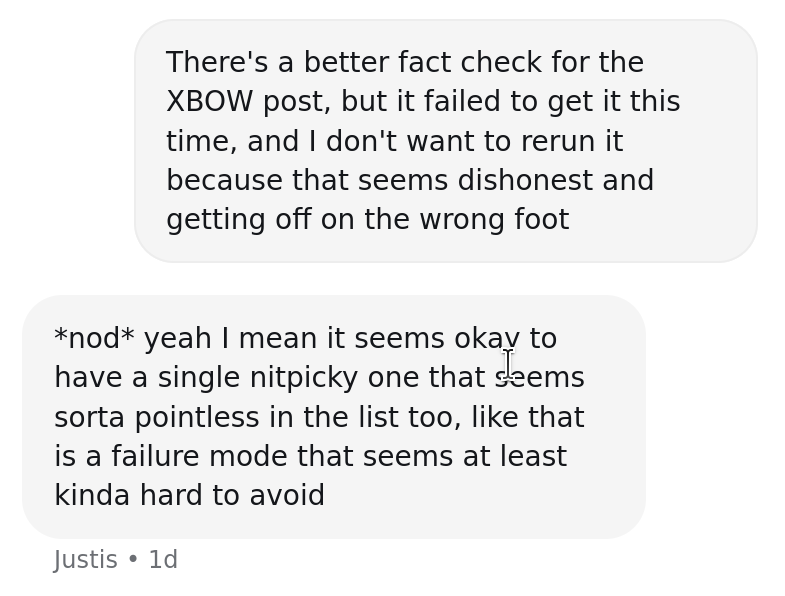
I just published OpenErrata, a browser extension that investigates the posts you read using your OpenAI API key, and underlines any factual claims that are sourceably incorrect. It then saves the results of the investigation so that whenever anybody else using the extension visits the post (with or without an API key), they get the corrections on their first visit.
I've noticed that while people can theoretically paste everything they're reading into ChatGPT for verification:
I figure most of LessWrong is reading the same stuff, and that if a good portion of the community begins using this or something like it, we can avoid these problems.
Here is OpenErrata at work on some LessWrong & Substack articles that were published within the last week. I was a little surprised at what a high percentage of the articles I read seem to have at least one or two errors, even with how conservative my prompt is. When I delete rows from the database and rerun, often it finds different (and valid) ones it didn't find the first time:
The project is published under my company, but the entire thing is self-hostable and AGPLv3 licensed. I also made an API available so that providers can use the results for articles independently and do statistics on them/embed them. Some future additions I & others could work on:
I really enjoyed working on & using this and want to keep doing so, so let me know if you like it/find it useful!