Vote of confidence: I have signed up with Nectome and am keeping my eyes open for ways to support their work.
Thanks! Can you say a bit more about how they got your vote of confidence? I'm intrigued but don't know the people involved and don't know anything about the relevant physics / chemistry / neuroscience.
Sure thing. A friend who had met with the team and was impressed offered to set up a meeting. When I met them I was impressed by detailed answers to both my questions around the science and the questions around the incentives that surround such an org, and what long term viability looks like. Often when I speak with founders I have to be a little forgiving and see whether I think their strengths will render them enough resources and non terrible incentive environment to be able to pay for their weaknesses. In the case of Nectome I got the sense they are paying attention to past failures and not falling prey to too much hopeful thinking. I think this is reflected in the scenario analysis of the post.
The particulars that got me interested:
My reaction is more mixed than Romeo's, but I see enough promise that I'm leaning toward buying their $100k full preservation pre-sale.
I'm moderately confident that their technology is better than Alcor's. I haven't investigated it as carefully as Romeo has. I've paid enough attention to this field that I think I would have heard of significant problems if people saw them, and there seem to be no criticisms of its suitability for uploading.
Aurelia seems smart. I have some concerns about her business skills.
She tried to get me to invest in Nectome in June. I declined, evaluating it primarily on Nectome's financial prospects. Her revenue forecasts seemed wildly optimistic, disagreeing with my impressions much more than is normal for a startup.
But this winter I've been shifting to thinking of doing something to support Nectome financially, in order to increase the chance that they'll be available if I need them. This shift is largely a result of increased wealth from AI-related investments, not any new information about Nectome.
Aurelia, could you estimate the minimum revenues required for Nectome to maintain its ability to perform preservations?
Note that the 2015 paper that Aurelia me...
Hmm, that last line actually concerns me. I don't have enough knowledge of the subject matter to be able to know for sure, but I got the impression that the fly upload announcement was misleadingly exaggerated, acting as though they had gotten fly-like behavior from a brain upload when in reality they used reinforcement learning to create the behavior they desired. If she's associated with them, I worry that these preservation announcements are similarly misleading.

So first off, I want to say that Ken Hayworth is one of the scientists I respect most in the world, and he cares a lot about precision in language and making sure that nothing gets overstated. I've actually asked him to be heavily involved in Nectome's certification process, and I think his careful approach will bring a lot of rigor to that. I do think his tone with Michael was a little harsh here, and he's erring on the side of judging a twitter one-liner like it's a scientific paper.
I helped found Eon and am currently one of their advisors, and I think the fruit fly upload situation is one of those things that's like this comic:
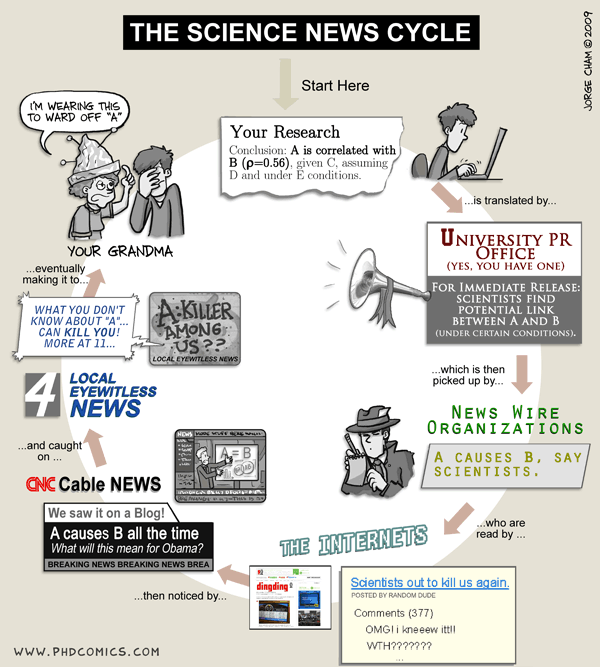
Now, I'm actually thrilled to talk about the flywire situation, because while I think there's been some miscommunication about it due to the standard science hype cycle and the way twitter is, and I think the object-level facts are a really cool result that you guys will appreciate.
The Eon simulation is what I'd describe as a "partial upload", using leaky integrate and fire neurons. It's built on Philip Shiu's work in fruit fly brain modeling (https://www.nature.com/articles/s41586-024-07763-9). Philip has been part of Eon for about a year now. The work in...

I did a shallow investigation of this and my conclusions were:
Oh boy! I've been waiting for this to become commercially available since I first heard the possibility discussed in Eric Drexler's apartment in 1980! Sign me up!
Well, on second thought, sign me up after a few other people have signed up, and the organization has some proven longevity. I'm signed up for cryopreservation, even though I think it has only a 5% chance of working. I'm not going to drop that, because it protects me if I die unexpectedly. But presumably I could avail myself of Nectome's services if I had a slow illness. I'd need enough time to sign up with Nectome, cancel my existing coverage, move to Vermont, convince two doctors of my seriousness, wait 15 days, and lightly kill myself.
It's funny-- when I first heard of this possibility, 45 years ago, gluteraldehyde was the cross-linking preservative that was mentioned. And it's the one Nectome actually uses. Has chemistry not moved on in 45 years?
(Right now we're only in Oregon but Vermont is top three for future expansion)
I love Engines of Creation! But somehow, I managed to invent ASC first and THEN I read about it in Drexler's book. Might have saved me some time had I read about it earlier (though he's missing the critical blood brain barrier permeabilization step so as written in that book it doesn't work)!
What makes sense to do now?
If you want to prepare a bit now, I would keep your insurance and your cryonics membership and add a rider that makes your insurance pay out early if you're diagnosed terminally ill. I can get you the language if you want, I have it on my insurance policy. Then you buy the preservation if and when you need it.
In the meantime, you might be interested in our pre-sales. They're transferrable and as cheap as they'll ever be.
The MAiD aspect of preservation might seem intimidating at first, but we're committed to working with our clients to make it a smooth and positive experience. Our clients won't be on their own when trying to navigate the logistics.
Why haven't we found something better than glutaraldehyde?
You know it's really funny: Here's a quote from Hayat's amazing book "Fixation for Ele...
I have a couple thoughts on this!
1) In general I'm very conservative about preserving things and wouldn't want to throw the body away without a really compelling argument for why it's going to be fine for the person being preserved. I don't currently have that argument.
2) Now you could certainly argue that with just a brain it's possible to fully reconstruct someone. I think that's probably true because the task of reconstructing a body ultimately is about satisfying the expectations of the person's mind and enabling all their capabilities, and you should be able to "read off" what the brain was expecting from the models of the body contained in the brain. Especially if it's an interactive process with the person actively participating and saying what feels more or less right. I think it's probably true that you can reconstruct a person from just a brain with no losses that we'd deem clinically relevant today. But I don't believe that at 95% confidence so I don't want to, in my ignorance, throw away something that ended up really mattering.
2.5) Note this line of reasoning applies to the brain itself! Do you really need to conserve the brainstem? How about the cerebellum? Optic n...

I was somewhat skeptical of the importance of the spinal cord for general cognition, but I did find a few articles that have me reconsider and become somewhat agnostic:
https://pmc.ncbi.nlm.nih.gov/articles/PMC9165403/
>The impact of the anatomic level of injury in the spinal cord on cognitive function has also been investigated. In a study carried out by Wecht et al. (2018), it was shown that patients with SCI at or above the T1 level have a lower performance on cognitive tasks (Wecht et al., 2018). On the other hand, given the fundamental role of the spinal cord in the functions of the autonomic nervous system, it has been suggested that hemodynamic events after SCI (chronic hypotension and orthostatic hypotension), particularly in individuals with high spinal cord lesions (i.e., above T6), may contribute to the development of distinct patterns of cognitive impairment (Chiaravalloti et al., 2020a). In line with these findings, Chiaravalloti et al. (2020a, b) also identified a relationship between some cognitive functions and hemodynamic changes, concluding that, an increase in cerebral vascular resistance leads to the worsened performance of the individual in tasks that involve cognitive activity.
It's far from cut and dry. After all, serious spinal cord injuries can ruin QOL, and are usually due to some form of trauma. But I do find this to be surprising and suggestive.
It definitely goes over well with normies. Plus, since aldehyde preservation is stable at room temperature, it opens up the possibility of a completely standard open-casket funeral, which is really nice for people whose families aren't necessarily sold on the whole preservation thing.
It was absolutely a huge surprise. Obviously not everyone is into it, but I'd say that the median reaction I get when I chat with random people is closer to "huh, I didn't realize the science was that good yet" than "how dare you defy the natural order."
People who've been in the business longer than I have tell me that this is a big change over the last ten years. I think those of us who've been into preservation for a long time may have some cached views on the popular attitude which aren't as accurate as they used to be.
I'm going to be in the comments section too, so I wanted to introduce myself briefly -- I'm Charlie, I'm Nectome's chief of ops. I'm really excited to be sharing this with the community!
This sounds really cool!
Do you know how it would work if someone not living in America wanted to use your services?
This works for people outside the US! Oregon allows anyone physically in the state to make use of its end of life laws (one of only two states that does so, the others have residency requirements that are likely unconstitutional according to the Oregon Supreme Court). So as long as you’re terminal and can get to Oregon we can preserve you.
What does the future have to look like for high confidence that your business will still be around in 20 years? 50 years? 100 years?
I have been signed with Alcor for almost 20 years. What is the case to switch, irrespective of the science and process (those matter, but what is the business survivorship case)?
I think Nectome's business case is very strong and that preservation is going to become a new global tradition soon. I think within the next decade we're going to see very impressive uploading results which will validate that our preservation method works (whether you want to be uploaded or not, compelling uploads that start with aldehyde fixation show that the information was successfully preserved). At that point I think 0.1% - 1% of people will seriously consider preservation, and Nectome will be very successful.
In the case where it takes a long time for preservation to become popular, Nectome will also be fine: we're already making pre-sales and have a plan that works for a variety of demands.
That being said, I also think there's a lot of scenarios where Nectome goes out of business, but the people who've been preserved are still maintained:
Nectome goes out of business, preservation becomes popular: If preservation becomes a new global tradition, then there will be whole political classes that vote based on the treatment of preserved people, because people they love are preserved people. I hope that one day we'll have a separate legal category for preserved people that respec...
What's the structure, finance, and governance for the graveyard-like part of Nectome?
non-profit? perpetual board?
what fraction of the cost is put into a trust for long-term preservation?
It's not set up yet but we are broadly going to model it after Alcor's long-term patient care fund. Non profit. They survived for decades; no sense in changing something that isn't broken.

The total amount in the endowment, and plans about its changes over the next several years, please.
Gotcha!
There's no endowment currently because we haven't preserved anyone yet.
With each preservation, we'll set aside enough money to cover 100 years of storage at the time of preservation and those funds will be invested in something like index funds. I don't think that we will actually need 100 years of storage, but a 1% drawdown should be conservative and long-term sustainable, especially since we expect advancements in refrigeration technology, the preservation technology itself, and energy production (like fusion power) to reduce the cost of preservation maintenance over time.
Our constraint regarding the endowment is that it needs to be true that the whole arrangement with the endowment is appealing enough that another company would be interested in assuming responsibility for continued care of preserved people because it would be profitable, in the case where for some reason we had to hand off long-term care to another entity.
The preservation endowment will grow with each preservation and be highly dependent on sales, but I think we will be getting to thousands of preservations per year in a few years and that will translate to > $10 M in the endowment in total at that time.
Some people voted this down with disagreement but didn't voice the disagreement. I am curious about which part they are disagreeing with. Is it that they see the story as implausible, or imagine a case that isn't covered, or something else?
Hi! Thank you so much for your work. I have been wanting to ask some questions ever since I read your Asterisk article!
Given that we actually can restore vitrified brain tissue back to life right now (mouse brain hippocampus slices, ~70% functionality, synapse plasticity restored; much less consistently whole brains), does this mean Alcor and CI's vitrification-only approaches are not so hopeless?
Doesn't glutaraldehyde permanently damage some of the chemistry of the cell? If engrams are an important part of information storage in the brain, and engrams are encoded chemically, and thus the connectome isn't the whole picture, doesn't this mean that fixation by that method could destroy important information?
Why aren't Alcor and CI doing MAiD? If you are right about the 12 minute window, and they believe you, wouldn't they want to set up their own clinics in Oregon for this, and to offer preparatory services as well? Have you reached out to them? Have they responded?
What do you think the prices will be in 5, 10 years? Will this always cost as much as a house?
I see no pushback about the actual science of it in the comments, which seems surprising. It's great that there is a new brain preservation company around, but I think the results are somewhat over-claimed. I'm not an expert in biochemistry, but if I understand correctly, your (new) preprint is basically: take n=5 pigs, try to have their brains preserved, which fails in the first two of them because of incorrectly placed cannula, then succeeds in the next three, in particular the last one with t=14 mins gap. Then look at the damage on a few sites under microscope and judge them to be OK. For reference, the abstract says that you develop "connectomically traceable whole brains [...] and establish that 14 min is the approximate length of the perfusability window". The new preprint is not peer-reviewed, and the old paper is from more than 10 years ago. (I see that it's actually has 61 citations in google scholar, it would be useful to know what was the progress / assessment from the scientific community since then.)
Tiny sample size, imperfect experimental setup, no published actual quantitative data, as well as obvious conflict of interest on top of this makes it hard for me to fully believe in the results. FWIW I asked one biochem PhD friend of mine for opinion, and then also ChatGPT, both seem to strongly agree that this is a cool proof of concept, but significantly over-claimed as far as scientific evidence goes.
How much it cost?
How much damage if the body temporary returned to room temperature?
What do you think about other methods of chemical preservation which do not require cryogenics?
Other methods of chemical preservation:
The ones I know of are the body-world's-style wax infiltration technique, resin embedding as is used for electron microscopy, and various kinds of fluid preservation mostly involving alcohols but sometimes involving spicy things like mercury compounds, etc. A really good book on this stuff is Fluid Preservation, a comprehensive reference, though physical copies are hard to come by.
The body worlds version is a non-starter because it doesn't preserve nanostructure. It prioritizes color and visible structure, but if you looked at that tissue under an electron microscope there would be a lot of damage. (the reason it causes damage is gas bubbles + a bunch of other stuff. Also the last time that I checked on this method was 12 years ago, I'm only 75% certain I remember this part correctly.)
Resin embedding does preserve nanostructure. It doesn't preserve lipids nearly as well as glutaraldehyde (because lipids are more soluble in the resin than in water), but you can partially stabilize the lipids by crosslinking them with osmium tetroxide or other related compounds. But unfortunately, no one knows how to infiltrate osmium tetroxide or resins in...
Do you have any plans to offer a "planned emergency response" method, where people who expect to die soon but do not want to kill themselves can pay a team to be stationed nearby until they have their heart attack/stoke/whatever?
This is fantastic news, thank you for posting this! I have several questions detailed below, some of which probably will be answered by reading the materials you linked, but figure I'd ask anyway:
1) Does this solution apply to all neuronal tissue (spinal cord, distal motor neurons), or just brain? If it hasn't been evaluated yet, would you expect it to?
2) What does storage look like in terms of location? What is Nectome's strategy to pay for storage in ~perpetuity/plan for right-tail events (ex. an energy price shock of 10x+ due to AI datacenter buildout that lasts for several years, or major natural disaster at storage location)?
3) As (I'm assuming) the lead of Nectome, are there any major efficiencies or economies-of-scale that you can foresee several years out? How do you imagine the 100,000th preservation compared to the 1st in terms of price, cost, etc?
4) The cumulative discount card says "Purchase a full preservation pre-sale with this discount schedule based on the market price (initially $250k) at any time" - if the market price changes, are the discount percentages held constant?
Thanks again!
How do you see yourself fitting into the existing cryonics ecosystem. Ultimately a competitor to Alcor, Cryonics Institute, etc.? Provider of services to them?
I ask because I and many other people already have arrangements with existing orgs, and if there's better tech we likely want to switch to that, but financially switching providers seems likely to be non-trivial.
We will do only high quality, regulated, scheduled preservations and don't offer emergency services. I think people who have existing emergency arrangements should keep them and use them if they need emergency services. We're not competitive in that sense.
I do think it makes sense to put a rider on your insurance policy so you can access the money earlier and pay for a planned preservation, and if you happen to need emergency services to instead use that money for emergency services.
In the long run I hope that the entire tradition of end-of-life care will change and people will consider scheduled preservation to be a critical part of end-of-life planning. Eventually I hope that emergency preservation that can meet our high quality standards is invented and deployed in every ambulance and hospital in the world, by popular demand. To get there, we're offering what we can right now that will meet our quality standards, and that means pre-scheduled.
Fair enough. I'll be honest, though, sorting out all the details seems complicated, especially when I already am set up for one thing (Alcor) that's much better than nothing. Given I expect many of your best potential customers are in the same situation, finding a simple solution that integrates with existing cryonics providers is likely a strong way to grow your customer base, and I hope you pursue it.
The images above are taken from the BPF's Accreditation page. On the left, you can see the pig brain which I preserved, winning the Large Mammal prize. The cellular structure is intact and it's easy to trace the connections between the neurons. The right-hand image shows the damage caused by traditional cryopreservation, even under ideal circumstances. Real preservation cases are far worse due to pre- and post-mortem brain damage. Maybe a superintelligence could reconstruct the structure – but it's unclear whether the information to do so remains.
There's got to be some way to see how much info we can reconstruct from brains which were cryopreserved a few hours after death. Perhaps if we could grow brains in a vat, we could make two copies of the same brain, and cryopreserve one brain properly and let another degrade before cryopreserving it. Then the former copy serves as a ground truth for reconstruction attempts. Of course, that's replacing one hard problem with another hard problem. But it seems worth spending more than literally 5 minutes on this problem.
One experiment I'd LOVE to see (which I haven't done yet because I've been working on the fixation stuff but might in the future) is to take YPF mice (sparse fluorescent labeling of entire neurons) and freeze / cryoprotect them in various combinations with various post-mortem delays, then do expansion microscopy and 3D imaging to see what happens to the YFP pattern. The idea is that you'd have the ground truth of what the intact neuron was and could see if it's still traceable after the preservation attempt. I would be very impressed and ultimately convinced that a protocol maintains traceability if you could trace images with the YFP signal stripped and then have that tracing result match the YFP ground truth.
Certainly there's some issues actually doing the experiments technically (which is one of the reasons I haven't done them yet). It's harder to do well than it might seem. But I do think it can be done, and I also think it's never been easier because of expansion microscopy making it much easier and cheaper than it used to be by a factor of 100-1,000x.

How much warning would you need to get a team together to do this, for the case of someone being taken off a ventilator or other kinds of life support? Most US states don't allow MAID, but my mom suffered from a bad pneumonia infection and probably could have survived another few weeks if she hadn't declined a ventilator, and presumably if she had been put on a ventilator she could have precisely scheduled her "death" by turning it off. Could she have been a candidate for your services? And would she have had to travel to Oregon while still alive to get them?
Incidentally, my wife and her brother both died of heart attacks that happened while they were in a hospital for other reasons.
Sure! First, to be clear, I fully agree with you that legal death via MAID followed by perfusion fixation offers (clearly) the best preservation quality available today.
I think of the BPF traceability criteria by contemporary volume EM as more of a rule-in than rule-out standard for preservation quality. Just because it's not possible to trace all of the processes today doesn't mean that a sufficient amount of information isn't still present in the preserved brain that would allow connectivity to still be traced by future inference techniques. Briefly, this is because I think that it is very likely that in the future we will be able to use combinations of biomolecules that are (combinatorially) unique to each cell/cell process to solve ambiguities caused by discontinuities in cell process tracing. See: https://brainpreservation.github.io/Inference
I suspect that we probably agree on most things, so let's try to find something we disagree about!
I think we probably agree about the following (let me know if I'm wrong about any of these):
Thank you so much for explaining where you think we agree and disagree. I totally agree that finding disagreements is more interesting, even though we overall seem to agree on this topic more than the vast majority of people in the world.
I agree with all of your bullet points with the partial except of the 7-15 minute perfusion one. I don’t think there’s necessarily a physical change that occurs in the vasculature within that time window that absolutely prevents subsequent perfusion. To me it seems more complicated on both the higher and lower ends of the range. For example, my understanding is that animals have been revived after global cerebral ischemia for up to 30 minutes. I think it depends on the perfusion system used and there also seems to be a significant amount of currently unexplained biological variability. But this is a topic I’d like to learn more about and I don’t pretend to totally understand it, so I’m curious to hear more of your reasoning.
Regarding standards for brain preservation, I find the discussion very important but not yet settled. To use an analogy from clinical medicine, we are discussing the use of surrogate endpoints to predict whether or not someone...
Similar to what Alcor has done, will you create patient/case reports once you start having your first patients, and make them public? I think it's great news to have a new player in the cryonics space, and the relative lack of friction is very nice, now just comes the long haul of establishing trust.
Is it possible to get a body preserved by Nectome, and then stored by Alcor? (I don't know if this is a good idea, but I'm trying to understand the options)
Right now, as I understand it, storage at Alcor would be at liquid nitrogen temperatures (-196°C), which is too cold to be compatible with our protocol. If you try to store one of our preserved persons at that temperature, they will shatter, which is unacceptable according to our quality standards. (To be clear, -196°C also shatters people preserved with Alcor's methods.)
The target temperature needs to be either -32°C and higher (to prevent freezing), OR somewhere around -122°C with good control of temperature excursions (to precent devitrification or shattering). Intermediate temperatures are not good, for example, it's actually worse for our preserved people to be cooled down to -90°C for a day then it is for them to be warmed up to 50°C for a day.
Note that the cost to store at -122°C is substantially higher than the cost to store at -32°C. The rough price ratio annoyingly depends a lot on economies of scale, due to the square cube law, but it's around a factor of 10 or so for realistic small- to medium-scale preservation scenarios. So we definitely prefer -32°C all else being equal: it's a lot cheaper and it doesn't cause problems if it fails like colder temperatures can.
I t...
When do you expect to begin offering these services? Like, if someone dies at time X, and is signed up with you and goes to Oregon and does it all correctly, what's the earliest X for which you can preserve them?
very cool! always exciting to see new stuff in cryonics. i’m curious to hear takes from people who know more about the details of the technology what they think of these new techniques.
I made some Manifold markets to bet on Nectome!
Let me know if you have an idea for a market and you want me to make it.
Is there any hope/indication that this process can be reverted? For example, has this ever been reverted in a single cell? Or do you think this treatment is only relevant for uploading?
I guess the presale is like a bet on Nectome's future; you have a risk of losing your money if Nectome goes under + risk of being locked in if your preferred provider changes, in exchange for a future discount. At 3% inflation, 20k today is like ~27k in 10 years. I'm curious about the unit economics.
Two points on why it's such an extreme deal:
1) the presales themselves are limited in the total amount we'll sell
2) we did the math and that price worked out to worth it for us given (1), and some conservative assumptions on when people would need to use them during the 10-year discount period (if someone uses the discount 5 years in, for example and the preservation market price is $250,000, then they would still pay $112,500 at that time. But yeah, I think it's a good deal and priced fairly given that people buying it now are taking a risk buying it before we open.
I know you linked to places that appear to explain it - but can you give the short summary of how your approach differs/what it even is that you are doing? Just reading the post makes it unclear - do you still pump them with cryoprotectant and then cool? Do you chemically fixate the brain? Third thing?
Are the preservation and the discount card both fully transferrable, not just in the sense of [designating someone else to be preserved], but [designating someone else to control them as if they'd bought them] (so that they're resellable assets)?
Assuming you don’t do this until you are terminally ill, what is the chance of having enough time to plan this, rather than needing emergency service?
Nectome is fantastic! The crosslinking approach made sense to me the second Aurelia explained it to me last year. Better preservation through better chemistry. And even with the 12 minute window, I know they are actively developing systems to make that operationally doable in real world settings.
My question is about the policy and adoption side. Aurelia mentions the end goal of making this part of standard end-of-life care, even Medicare. What does the lobbying and regulatory strategy actually look like right now? Who are the key stakeholders you are work...
Very happy to see an advancement in cryonics, and would use Nectome if I was expecting to die, but I don't see why I'd buy the 100k pre-sale besides as a charitable act. Most people expect to die in 10+ years, and 100k grows to ~200k in the market, and if the company succeeds, you'll probably lower prices by quite a bit anyways. Your net marginal cost must be a lot lower, isn't it?
Maybe at the current stage, these pre-sales should come with a stake in the company: investing 100k with a perk of getting cryopreserved at net cost (if needed) would sound much more compelling I think.
how is using cryoprotectant and storing at lower temperature better than using fixative and storing at room temperature?
how does that compare with sparks brain preservation's method?
Hi Aurelia! I think the recent news about the "uploaded" fruit fly (mentioned in a previous comment) add to the available evidence (without proving, at least not yet) that your brain preservation method works.
But $250K seems too much to me. Many people who would otherwise be interested couldn't even consider it. For example I couldn't, not without winning the lottery.
I hope, however, that advances in technology and reductions of operational costs will make this a viable option for younger people.
Is the email address I have to you still valid, or do you have a new one?
Very cool progress in cryopreservation!!
Questions:
I have not seen discussion of S risks related to this subject, which I think is a huge omission, even if only from a utiltarian perspective.
If there is even a 2% chance that a misaligned AI / autocratic government will utilize preservation and life extension technology (of any kind, including mind uploading, if possible) to make one suffer hellishly for a billion years, how does this change the picture? Should one prefer death? Should one make sure their brain connectome is disintegrated after death just to make sure? Or go forward with it?
After 10 years of research my company, Nectome, has created a new method for whole-body, whole-brain, human end-of-life preservation for the purpose of future revival. Our protocol is capable of preserving every synapse and every cell in the body with enough detail that current neuroscience says long-term memories are preserved. It's compatible with traditional funerals at room temperature and stable for hundreds of years at cold temperatures.
The short version
"Maybe" isn't good enough for me
A brief refresher: traditional cryonics uses two things to preserve people: cold to preserve the brain, and cryoprotectants to prevent the catastrophic damage caused by the formation of ice crystals. Unfortunately, cryoprotectants themselves crush neurons through osmotic effects, damaging the structure of the brain.
Traditional cryonics works in "emergency mode", where cryonics organizations are first notified after one of their members dies, then attempt to preserve them in response, often with a delay of hours or even days during which time the brain is damaged. Traditional cryonics takes place after a "natural death" in most cases. However, natural deaths take a long time, and brain damage sets in well before legal death. For me, all this damage calls into question whether memories are really preserved.
The strongest argument for traditional cryonics is that any kind of preservation is better than nothing, and that cryonics is "not a secure way to erase a person". This is true enough as far as it goes: certainly, no physical process truly "destroys" information. What we really care about with preservation is how accessible the information is and whether it's still contained within a person's preserved body or not. This is a really important question for me, so I ran the experiments myself and was not impressed.
I set out to build something that feels to me like less of a Pascal's Wager. I want a preservation protocol that, according to our best theories of neuroscience, does work. At the same time, I wanted to craft an experience that normal people would be comfortable with – I want our parents and grandparents to be willing to come into the future with us.
The result is a protocol that my company, Nectome, has spent the past ten years developing. After years of experiments in the lab and in the field, learning about the complexity of end-of-life biology, and after refining our protocol to make it robust and repeatable for real people in real-world clinical settings, we are now ready. We've developed a whole-body, whole-brain, human end-of-life preservation protocol based on neuroscience first principles. We are capable of preserving every synapse and almost every protein, lipid, and nucleic acid throughout the whole body. Brains are connectomically traceable after preservation[1]. Our preservation is so comprehensive that current neuroscience theories imply it preserves all relevant information necessary for future restoration of a preserved person.
Further reading: "Brain Freeze", Aurelia Song, Asterisk Magazine
A preservation protocol that's worthy of us
Cryonics in my opinion has had two main issues holding it back, both of which we've solved.
The Quality Problem: The first issue is that traditional cryonics methods haven't been shown, even under ideal circumstances, to preserve brains well enough that they're connectomically traceable afterwards. We solved this issue by adding crosslinks to the mix. In 2015 I published a protocol in Cryobiology using crosslinks, cryoprotectants, and cold to preserve animal brains with near-perfect quality. In 2018 I won the Brain Preservation Foundation's Large Mammal Brain Preservation Prize using aldehyde-stabilized cryopreservation.
The Timing Problem: The second issue is with the emergency response model of traditional cryonics. Doing preservations as an emergency response and after a natural death causes damage independent of whatever protocol you're using. Severe damage happens before legal death as a result of inadequate blood circulation and partial brain ischemia. Even more damage occurs post-mortem due to cell autolysis and other degradation pathways. Shortly after death it becomes almost impossible to completely perfuse brains (this is the problem that ended up giving us the most trouble).
We worked from 2018 to 2025 trying to solve the Timing Problem to our satisfaction, and eventually succeeded in creating a protocol that gave comparable results to our ideal laboratory version, but could be used in the real world. There's a cost, of course, for this quality: we've learned that preservations must start within twelve minutes post-mortem after a quick respiratory death. That means preservations have to be scheduled in advance, and they have to be done in conjunction with medical aid-in-dying (MAiD).
The images above are taken from the BPF's Accreditation page. On the left, you can see the pig brain which I preserved, winning the Large Mammal prize. The cellular structure is intact and it's easy to trace the connections between the neurons. The right-hand image shows the damage caused by traditional cryopreservation, even under ideal circumstances. Real preservation cases are far worse due to pre- and post-mortem brain damage. Maybe a superintelligence could reconstruct the structure – but it's unclear whether the information to do so remains.
We've published a preprint of some of our most relevant experiments on bioRxiv, where we show we can get the same excellent quality we got in 2018, except now under realistic end-of-life conditions. We've also performed experiments which have undergone independent evaluation; we'll discuss those in a subsequent post, but for now here's a sneak peek:
This is a section taken from a rat brain preserved 5 minutes post-mortem in a manner that's consistent with the surgical time we can achieve with pigs. All axons, dendrites, and synapses pictured are connectomically traceable. After preservation, we stored this brain at 60°C for ~12 hours before imaging! Click through for a "Google Earth"-style presentation of the whole slice, which is around 5 GB of data.
What does preservation look like for you?
In order to work within the limits of biology, Nectome does preservation exclusively as a planned, scheduled procedure. We do not offer an emergency response model because there is no emergency response model we could do which would meet our standard. To receive a preservation which meets our standard of care, terminally ill patients must plan in advance, travel to a preservation center, and use medical aid-in-dying.
Our business model is different than traditional cryonics: we sell transferable preservations in advance instead of using a membership + insurance model. When you buy a preservation, you buy the ability to designate a person of your choice (including yourself) to be preserved. We will then work with that person to understand their preferences for preservation, the most important of which are:
When it's time, we'll invite clients and their families to stay for a few days at a beautiful preservation center in the peaceful Oregon foothills, where they can spend time together, say their goodbyes, and participate in any farewell ceremonies they choose. After the procedure the preserved person is stable for months at room temperature, allowing for a standard open-casket funeral in their home state.
In the long term, preserved people will be maintained at -32°C. In all cases, they will remain in a whole-body state; Nectome never does brain-only storage.
Conclusion
I've introduced here a new kind of cryonics which I hope will move the field away from Pascal's wager and towards a rigorous discipline that will become a mainstream part of end-of-life care.
We can preserve people following MAiD with a protocol that can preserve every synapse and virtually all biomolecules, throughout a person's entire body. That's good enough that our current theories of neuroscience say it does work to retain sufficient information about a person such that they could be restored with adequate future technology.
We know that our protocol doesn't serve everyone, and we hope that continuing scientific and legal advances will allow us to preserve an increasing fraction of people. But it serves many people (most people don't die suddenly!), and we want to offer something that verifiably works, not a shot in the dark.
We don't yet have the technology to revive someone who has been preserved, but we do have the evidence to say that we preserve all the information that would be needed for revival.
Over the next posts in this series, I'll go over the information-theoretic basis we use for preservation, the reasons why it has to be an end of life protocol, our hope for the long-term future, why this all still makes sense even given short AI timelines, and several other things.
In the meantime, below you'll find several of the links in this post and descriptions of why you might want to read them.
I want you to live
Why did I spend the last 10 years of my life on this project?
We all start out life born in twin prisons: the gravity well of the earth, keeping us on a tiny speck of dust compared to the wider universe beyond, and the limit of our natural lifespan, confining us to a tiny sliver of the universe's grand history.
When preservation becomes a new worldwide tradition, even before revival is technically possible, it will expand peoples' personal planning horizons. I expect to see people start 1,000 year projects believing they will personally see the end result. I'd like to see what they choose to make.
I believe that Preservation is for everyone and that the future loves you and wants to welcome you back with a desire that can't be conveyed with words on a page. Let's get there, together.
I'm looking forward to talking with you all in the comments. I'll be around for a while once this post is up. There's a lot to discuss! Vote for what we should cover next:
"Connectomically traceable" means that each synapse can be physically traced to its originating neurons in a gigantic 3D map. For more info, I like Sebastian Seung's TED talk. ↩︎