This is a special post for quick takes by Richard_Ngo. Only they can create top-level comments. Comments here also appear on the Quick Takes page and All Posts page.
A few weeks ago, I was offered a role as a Staff Research Scientist at Resolution (formerly Sequent) to do agent foundations research. However, they later rescinded the offer due to concerns that having someone with my (publicly expressed) political opinions as an early hire might make it harder for them to hire other researchers. I want to give some brief thoughts on this, starting with the concrete details of what happened.
I talked to Jesse Hoogland, Dan Murfet, and Geoffrey Irving before they gave me the offer. These were fairly informal chats, since they all already knew me. I signed the offer a few days later, then soon afterwards I messaged Jesse about my politics curriculum.[1] Specifically, I suggested that I should run the next iteration of the curriculum before joining Resolution, so that people wouldn't interpret it as work that I was doing at Resolution.
Jesse noted some controversial aspects of the curriculum,[2] then set up a meeting with me, him, and Dan. I was expecting them to express some concerns, such as asking me not to run it (though I did indirectly mention the possibility that this might put them off from hiring me).[3] Instead, they directly told me that the...
 8
8 5
5 1
1I find some of Richard's attitudes very distasteful, and if I was running an org and thinking of hiring Richard I would sure be pretty scared about him being seen as a representative of the org or just being off-putting to employees and stakeholders; I think Resolution was absolutely correct to be scared about that. But idk how that should cash out. This situation seems unfortunate. :(
 1
12
Is there something specific about the Department of Deportations account that you find distasteful, aside from their general enthusiasm about deporting people?
EDIT: while this is admittedly a somewhat defensive question, it was nevertheless a genuine question—I didn't remember what their tweets were like when I asked it.
1
Hmm, yeah, in hindsight when I asked the question I was implicitly conflating "distasteful" with something stronger like "reprehensible".
I'm happy to concede that they're not very tasteful in how they approach this topic (and FWIW wouldn't have/didn't retweet any of the above myself).
EDIT: I think people are misinterpreting this comment because they assumed I was already familiar with the DoD account's tweets. But I didn't have a cached recollection of the kind of stuff they tweeted when I asked the question (otherwise I wouldn't have asked at all, because the answer would have been obvious). So the intended interpretation of this comment is more like "in hindsight it was silly for me to ask why people find an account called DoD distasteful [even without remembering the specifics of their tweets], and I only did so because I read Zach's use of the word 'distasteful' as a stronger critique than it actually is." Obviously the phrasing above is a very poor way to convey this sentiment though; that's my mistake.
Having said that, given that I drew the distinction, it seemed worth clarifying my position on when I call things "reprehensible", as I do in a comment below.
I think these are quite reprehensible?
This seems like outright bigotry. Maybe I'm reading into it too much or projecting (I don't think I am), but this account seems to be gleeful in it's opposition to black people. (The "Every single black would be in jail" tweet, especially.)
Aside from the attitude being expressed, these tweets seem to be eroding extremely valuable (though already much decayed) liberal norms.
I could totally imagine having a stance against immigration (and for deportation), but even so, I think I would consider these tweets to reflect very badly on me and my policies? "Deserving of strong blame, criticism, and censure" seems right to me.
 1
1I think the tweets above are probably reprehensible by the norms of liberal elites from maybe 50-80 years ago. Unfortunately, these norms have not decayed in a random fashion, but rather specifically in ways that make them a useful vehicle for the illiberal left. I'll quote from my exchange with Kelsey:
...Unfortunately, I view modern self-identified liberalism as being pretty hollowed out, in the sense that it keeps the trappings of actual liberalism but concedes most object-level battles to the woke left, pushing back on its excesses at each point in time but not challenging the foundations (and therefore continually losing ground for most of the last century). Some examples of lines it could have drawn:
- meritocracy (as opposed to affirmative action, disparate impact, etc)
- freedom of association (even if it’s “sexist” or “racist”)
- property rights (as opposed to environmentalist regulations)
- cultural compatibility as a key immigration criterion (as opposed to many things since at least Hart-Cellar)So from my perspective, modern “liberalism” is in part defined by its lack of ability to pin down a position it won’t retreat from. Which then makes it hard for me to engage with it with
 1
15
Distasteful is what those of us who aren't attacked by these statements, and tend toward an impersonal and dispassionate reading, think of them. These are reprehensible and outright hostile to Blacks, Latinos, women, or any other group this account has attacked. You're the sort of guy to tolerate such language when accompanied by insight, but I don't feel like a meme account has much to offer in that respect.
2[comment deleted]
I probably don't want to engage further—and I think those tweets speak for themselves—but to be clear I'm much more bothered by the (1) cruelty/glee, (2) racial animus, and (3) lack of interest in truth than the general pro-deportation policy position.
And sorry to psychologize you, but I think there's a massive blind spot in your world-modeling if you are unable to predict that most people will find these tweets much more disgusting than pro-deportation policy views.
42
I see. Thanks!
-45
2
I want an emoji which says "this post is reasonable but it has been given too much weight". Like ZSP can absolutely give his opinion and bow out, but that does leave this thread as 'Richard holds some distasteful views as shown by this account which he has occasionally retweeted’ and I don't think that's much evidence. Like it is a true things from ZSP and a fair thing, but I think 115 karma is way too much given the actual direction of the discussion which follows it.
The kinds of virtue that would make me comfortable with an organization doing a bunch of dual-use research seem pretty strongly anticorrelated with decisions like rescinding my offer. AI alignment will only become more central to the coming power struggles over AI, and being willing to give in to vague concerns about potential hires doesn't bode well for Resolution's ability to navigate those struggles in high-integrity ways.
I just wanted to say, as a guy sometimes sketched out or confused by Richard's politics, I agree with this.
I feel particularly worried about it about dual use, but, that's maybe just a subsection of: If Resolution is trying to be a place doing world class intellectual work, people there will need to think thoughts that go in directions that don't fit consensus, which are correlated with people finding uncomfortable.
I realize most of what it's trying to do is in a STEM-y frame that you might theoretically hope is orthogonal to politics. But I expect a lot of people to do their thinking about solving superalignment as part of their thinking about AI macrostrategy, and in general the lines here are kind of blurry.
I also just think... from a sorta normal politics ...
6Talking to Richard and hiring Richard are two different things. It's plausible to me that all these things are true simultaneously:
- Richard would do a great job at contributing useful research directions / thoughts / etc.
- Richard would be great for the org culture and treat everyone well / respectfully / etc.
- Richard's politics have substantial admixtures of attitudes that are dumb (both incorrect and harmful), and indicative of general attitudes / thought patterns that are reasonably taken as hostile / toxic / etc.
- Other good people have low thresholds for that sort of indication, for good reasons, and in fact would be less likely to join and/or fund the org if Richard is there
- The expected net effect of hiring Richard is negative, including integrity / upholding principles (it's not necessarily unprincipled to be like "I think Richard's ideas are good enough that it's worth some tail risk, but I get that lots of other good people wouldn't have that information, and furthermore have good reason to distrust him for political reasons, so I won't hire him")
I would not guess that all of these are true, but I wouldn't be so confident without, for example, having talked to several potential hires for the org.
57
My guess is Geoffrey do agree that it is important for AI safety orgs like Resolution to be more diverse intellectually, and it is in fact the reason why he made that decision. Richard himself notes that "[Geofrey]'s excited about hiring academics who are new to alignment, and worried that those people might not join if they hear about such tweets".
Neoreactionaries (not claiming Ngo would necessarily identify as NRx specifically, but he is broadly in that direction, and it is dishonest to claim him as a reasonable stand-in for your average US Republican voter) have been closely associated with rationalist-adjacent spaces since inception, so any ideas they might have had have long been ingested in the discourse. Wanting less of NRx-adjacent stuff around is definitely one of the things you want to do if you want to move away from Silicon Valley monoculture and be more welcoming to your median non-rat/EA academic.
I do not particularly think affirmative action for conservatives make sense in a technical safety organization, but if you want conservative strands which have been hitherto underrepresented in rationalist discourse, you would need to hire religious conservatives and Bannon/Allen populist types, not people who are really into race and IQ. (Libertarians and national security hawks are also pretty well-covered already.)
4
Richard's viewpoints seem explicitly incompatible with a majority of the world and a plurality of Americans; if your goal is getting the best researchers overall, a coworker who is actively hostile and antagonistic to approximately 84% of the global population seems like a bad way to cast a wide net.
This is to say nothing about his views on alignment (while I think one could argue that ASI aligned to Richard's point of view would be unaligned with most of humanity, it's irrelevant here); he could likely contribute best to the alignment debate from a more scoped organization.
I agree the linked tweet is quite tame. But I looked at the 20 most recent tweets/RTs on Richard's timeline and they include a RT about the Great Replacement, a RT of the "Department of Deportation" about non-white sex criminals and a RT endorsing race realism.
 3
3Do I radically misunderstand what reasonable people find offensive?
Yes. Most people make decisions about exclusion on the basis of coalitions and alliances and affiliations, not on the basis of the literal content of the person's beliefs.
Do they have a spidey-sense that Richard endorsing the "national right" view
Yes. They accurately discern that he is a member of the other coalition and so they don't want to hire him. See e.g. Zach Stein-Perlman elsethread saying he agrees with Resolution's concerns not because of Ngo's beliefs, but because of which other people Ngo affiliates with. (As I write this the comment is at 29 agreement points with 8 votes, so some others strongly agree with Stein-Perlman's view.)
and that potential employees wouldn't want to work for Resolution, because Richard is also employed there?
No. That whole line of argument is a dodge. The bottom line was written because Ngo is an outspoken member of the other coalition. If this dodge didn't work, they'd move to a different one instead.
It's not some utilitarian effort to achieve the company's hiring goals most efficiently. Lots of people just want to exclude their political enemies. This is very common. In my life...
219
This seems like a surprising and implausible hypothesis, because if it were true, I would have expected them to not make a job offer in the first place, rather than make and rescind an offer.
You're a lot less likely to overlook who your first order political enemies are, when hiring people, than you are to overlook second order effects like "will other people find this guy offensive and not want to work for us?" It could still be a dodge, but I expect it to be a dodge that is compatible with them making the initial offer.
Furthermore, why did they cite this tame exchange, instead of the much more conventionally offensive stuff that Richard supports.
What's implausible about the story in the OP?
I signed the offer a few days later, then soon afterwards I messaged Jesse about my politics curriculum. … Jesse noted some controversial aspects of the curriculum, then set up a meeting with me, him, and Dan. … I had a long conversation with Jesse and Dan, and later a long conversation with Geoffrey. In the latter I learned that, although the decision was prompted by me sending them my curriculum, Geoffrey in particular was more concerned about my tweets.
So, they hadn't read the curriculum, and then they did. At that point they learned where Ngo stands and changed their minds. If they had seen the curriculum beforehand then yeah they wouldn't have made the offer in the first place. I'm sure they would have preferred that. No mystery here. Perhaps in the future they'll do deeper political vetting before making offers.
why did they cite this tame exchange, instead of the much more conventionally offensive stuff that Richard supports
That's not what happened. In the quote from Ngo's OP above, Hoogland explicitly cites the "much more conventionally offensive stuff" as the reason. My read of "although the decision was prompted by me sending them my curriculum, Geoffrey in particular was more concerned about my tweets" is that probably Irving didn't read Ngo's Twitter until after they saw the curriculum and flagged the political concern.
17
Yes.
Like, when I talked to Richard he seems to have opinions milder than what like 35% of Americans on the conservative right believe? IDK, like, I disagree with those as well, and common people have many views I think are very dumb, but I am kind of confused what people are pointing to in the moral reprehensibility.
Like, his beliefs seem much less outlierish or reprehensible by common-sense morality from most people's perspectives than all the post-humanists and successor-species and negative utilitarians and AI capability maximalists and e/accs and all kinds of other things people around us tolerate, so I am very skeptical this is downstream of some genuine model of "moral reprehensibility" as opposed to a model of "what would get me attacked by my potential political allies".
18
Sure, I have seen people say that, and usually it’s strong evidence that what is going is tribal politics, not someone having any real model of morality that indicates someone is likely to be bad ally, or of low integrity, or beliefs things that are important and you have actually strong justified belief in that they are wrong.
Maybe you disagree? Again, I would be fine just going into the object level.
3
Without going into the object level, per your own number, "the 35% most extreme members of the ideological camp you disagree with are being outright reprehensible" doesn't seem like an insane thing to believe at all?
I appreciate your sincere and principled engagement, but I also want to note that there's something oddly mistake-theory-ish about a bunch of your comments. I first noticed it with the "reprehensible" comment, where it seemed like you were assuming a bunch of common knowledge that didn't actually exist—like you were using terminology that doesn't make sense to use when talking to an audience that would downvote that comment to -61.
And now here, where you say "seems like this would be an orthogonal dimension from competence, intelligence, integrity and other things you also want to select on" as if that's something other people will nod along to, whereas it seems more likely that most people who read this will think "no it's not, my political enemies are actually just low-integrity and incompetent and dumb".
It seems like there's something important about the dynamics of leftists and liberals that you're not modeling right now. It's a bit analogous to a thread I had with Kelsey where I called her out for continually using the phrase "I don't understand why" because it seemed obvious that she was doing motivated cognition to block out her actual hypotheses. My best guess is that you'r...
14
? Where are you getting the 70% number from? If we're 'being symmetric around it' then the 35% most extreme of both ideological camps cannot combine to be more than 35% of the general population. Obviously?
2
If we assume the camps (left/right) are split 50/50, then it would follow that 35% (35% of 50%, the 17.5% most left-wing plus most right-wing fraction) of the population "are being outright reprehensible", i.e. more than a third of the entire population. That seems to be a rather extreme view.
For example, most academics and journalists are far more left-wing than the general population, so most of them would fall into the 17.5% (35% of 50%) of the most left-wing fraction of the population. Therefore, most academics would be "outright reprehensible" according to your view.
2
No I basically agree that such people are doing silly tribal partisanship and in some sense "not actually thinking about it". I'm not sure if our disagreement is semantics or theory of mind, but I think that whatever pejoratives we throw at that kind of cognition, it still outputs real conclusions that people really believe.
"This person's politics mark them as morally unqualified to work in this career" is an argument people sometimes make, and whatever is going on in their heads seems closer to sincere belief than "I am playing a Machiavellian power game in which I say whatever it takes to secure political advantage by getting this guy fired".
Fwiw, I'm planning to write a sequence making the case for those views being morally reprehensible (among other theses on the relationship between politics and rationality), but it may be a while before the sequence is out due to busyness/akraisia.
16
Would it? If God came down from the heavens and told Resolution that X many qualified candidates would refuse to join their org if they employed Richard, surely there is some value of X that makes it non-cowardly to say "We are not hiring you because your controversial views will turn people off".
Lacking divine insight, Resolution must have made their own estimate of X and decided it was too high. This is of course the sort of thing they would say if they were a bunch of dirty cowards trying to hide their cowardly decisionmaking, but they would say it because it is a believable non-cowardly decision for them to have made, and I don't see how you can rule it out.
9
Man, I do often feel that rationalists, and especially EAs are too willing to be credulous based on social signals that aren't all that epistemically reliable (and I plan to write about this sometime). But it also seems like rationalists and EAs do better at this than almost any similarly sized subculture?
Most people just uncritically adopt the views of their social peers, without almost any reflection!
The only similarly-sized group that I know of that might be doing better is the set of active political operators in DC? They're definitely aware of the influence of power. But even so, I think most of them basically uncritically adopt parts of the party line?
3
Good point, I've added a parenthetical: "(especially relative to how clearly these groups think about other things)"
-2
What is the relevance of this? It is written of the eighth virtue of humility that "it is useless to be superior [...] There is no guarantee that adequacy is possible given your hardest effort; therefore spare no thought for whether others are doing worse."
I think most onlookers would interpret Richard as saying "Rationalists and EAs are unusually bad at this". Insofar as Richard thinks that, I want to publicly dispute it. Insofar as he doesn't, and this is a miscommunication, I want to correct the record.
That rationalists are better than average does not exempt us from the problems caused by our not being remotely good enough, which is why I plan to write about it.
18
Well, in theory it could for example suggest, directionally, whether it's more a "my rationalist tools are breaking in my hands" situation vs. a "I have failed to live up to my rationalist tools" sort of situation.
6
You’ve been in favor of interpretability research in the past, wouldn’t that similarly increase capabilities?
6
It seems to me that the decision not to hire you didn't cause that many problems.
1. The right-wing analytical framework seems to have major actual issues, and I expect some of them to be avoidable, e.g. via studying non-Western data and sociologists' works. For example, the feminization of academia seems to have happened in the USSR, but didn't cause wokeness in Russia and was partially reversed, and postmodernism's hazardous forms which caused many problems in the West don't seem to be as widespread in Russia.
2. A post-AGI world would cause us to rethink ethics towards the Left far more thoroughly than we expect (e.g. requiring your case for an ethics not so occupied by altruism to explore in more detail what it means to create goodness). For example, if AGIs and robots become aligned and capable of doing whatever work the humans can come up with, then the UBI or another form of taking power away from oligarchs and giving it to regular humans become an absolute necessity. Before the AGIs exist, regular humans have options like bargaining or opening a small business, and the Right have the ability to think that demanding the UBI is a form of entitlement which, if implemented, would be either meaningless or outright dismotivating.
P.S. I wonder if the right-wing framework can outright rule out the ability to align the AIs to the humans' goals. The world is filled with conspiracy theories claiming that [a hated group like Jews] took over key positions and actively tries to lock in power via mechanisms including an attempt to shift the human culture so that individuals would be unable to coordinate against the hated group.
FWIW, as a generally leftish post-agi-thinker:
- I'm not totally sure what you mean by "the right wing analytical framework" or what it having issues implies
- If you're saying that there is one right-wing analytical framework, which richard has, and it uniquely has issues, such that it is undesirable to use it to reason about the future, and therefore it would not be useful for sequent to have him (or people like him) on board, I think I disagree with ~all the premises and implications
- I do not think post-agi means rethinking ethics specifically towards the left; it seems like many of the major questions are more 'right-coded', especially around republicanism and liberty in the face of overwhelming power, or around the appropriate degree of social/cultural conservatism (in the technical sense)
- I would be wary of comparing mainstream leftism to right wing conspiracy theories
- (Again, as someone who is mostly a leftist) I wish people working on constitutions and character were more attentive to the pitfalls of leftism, and I expect this generalises to alignment solutions
[ed: we are discussing this more over private messages]
 1
13
Are Richard’s views common in the AI Safety community? And is it in general common to be right-wing? If so it’s pretty surprising to me. I‘m happy to elaborate, but don’t want to waste time in case no one engages with this comment.
3
This should be a top level post.
2
Was there meant to be more at the end of the last footnote?
1
Thanks for writing this up.
0
Looking over these, it seems like the hits that have landed on Richard are that he has occasionally retweeted an accounts that have tweeted some bad stuff. This doesn't seem like the sort of thing that I would call for cancellation (and I think that's what job offers being rescinded is) for.
I tend to dislike comment threads where it's implied that there are big hits taken but when one chases them down, they turn out to be nothingburgers. It's fair for Zach to bow out at this point, but that does leave the argument pretty weak to me.
Personally I'll say that I have had some conversations in which I disagree with Richard pretty strongly on political topics, but just as I think effective orgs should hire competent people who are Christians, gonzo forecasters, post-rationalists, I think they should be willing to hire people who are politically in disagreement with themselves. I do think it's actually a flaw in Richard (or me, or both) that we disagree here, but I do worry about organisations that want ideological purity to the extent that they select this much.
-3
Why would they go through with hiring in the first place, your politics curriculum is separate from your work and also quite similar to your general public posting? This feels so sloppy by them. Even the reason for renaming / rebranding from Sequent was flavoured in the same way.
Doesn't feel good and don't agree with their decision.
Here's a list of my donations so far this year (put together as part of thinking through whether I and others should participate in an OpenAI equity donation round).
They are roughly in chronological order (though it's possible I missed one or two). I include some thoughts on what I've learned and what I'm now doing differently at the bottom.
- $100k to Lightcone
- This grant was largely motivated by my respect for Oliver Habryka's quality of thinking and personal judgment.
- This ended up being partially matched by the Survival and Flourishing Fund (though I didn't know it would be when I made it). Note that they'll continue (partially) matching donations to Lightcone until the end of March 2026.
- $50k to the Alignment of Complex Systems (ACS) research group
- This grant was largely motivated by my respect for Jan Kulveit's philosophical and technical thinking.
- $20k to Alexander Gietelink Oldenziel for support with running agent foundations conferences.
- ~$25k to Inference Magazine to host a public debate on the plausibility of the intelligence explosion in London.
- $100k to Apart Research, who run hackathons where people can engage with AI safety research in a hands-on way (technically made with my
 11
11 4
4I feel kinda frustrated whenever "shard theory" comes up in a conversation, because it's not a theory, or even a hypothesis. In terms of its literal content, it basically seems to be a reframing of the "default" stance towards neural networks often taken by ML researchers (especially deep learning skeptics), which is "assume they're just a set of heuristics".
This is a particular pity because I think there's a version of the "shard" framing which would actually be useful, but which shard advocates go out of their way to avoid. Specifically: we should be interested in "subagents" which are formed via hierarchical composition of heuristics and/or lower-level subagents, and which are increasingly "goal-directed" as you go up the hierarchy. This is an old idea, FWIW; e.g. it's how Minsky frames intelligence in Society of Mind. And it's also somewhat consistent with the claim made in the original shard theory post, that "shards are just collections of subshards".
The problem is the "just". The post also says "shards are not full subagents", and that "we currently estimate that most shards are 'optimizers' to the extent that a bacterium or a thermostat is an optimizer." But the whole point...
 655
655 533
533 2
2 1
1Early last year Longview Philanthropy invited me to attend an AI safety fundraising dinner they were hosting for Jane Street traders in Hong Kong as an expert guest. In the lead-up, I got on a call with them, and gave my honest opinions about their funding recommendations.
I summarized these opinions in a follow-up email to them at the time as "Overall I'm very excited about three of them ([redacted], [redacted], [redacted]), and moderately excited about most of the rest. But I'm pretty skeptical of some of the policy advocacy (particularly [redacted] and [redacted])." (Though it's possible I came across as more pessimistic in the call than I sound in this summary.)
As a result, they rescinded the invitation. It's not clear to me that they were wrong to do so, because my sense is that it's normal to prioritize bringing more sympathetic experts to such events. EDIT: Upon reflection, even if this would be normal in most philanthropic contexts, I want to hold organizations associated with AI safety to a much higher standard. I expect that selection effects like this one add up over time to give funders a distorted view of the ecosystem, and IMO a more virtuous fundraising process would ...
1261Thank you for writing this. I thought I'd chime in with another example of this kind of thing I'd recently seen in (perhaps, contributed to) in our own work at Manifund.
A couple of months back, we were just kicking off our Falcon Fund (rapid grants for animal welfare, esp AI x animals) - see https://manifund.org/projects/falcon-fund. My original draft stated fairly strongly that the existing EA Animal Welfare Fund was dispensing money way too slowly eg couple months behind schedule for reviews; which was part of what we were excited to create Falcon. However, I was asked to remove this kind of internicine criticism from the launch post, on the grounds that (stylized) "everyone already knows that AWF is slow" and "we don't to want to scare donors and reduce even further the small amount of money AW gets"
Also, one of the animal charity founders who Marcus thought was one of the best examples of donation he's made also asked to be removed, because they did not want to be associated with EA, even though many of their donations come from EA sources.
I complied on both of these cases on a general heuristic of trying to be polite and play nice and aim to be positive sum with our counterparties, but imo these hurt Falcon's ability to raise and Manifund's general mission of increasing transparency in the ecosystem. I'm still not sure what the right call was.
 1
1Imagine if early EA orgs had refused to publicly criticize conventional philanthropy because they didn’t want to reduce the amount of money going to those causes. Showing why one donation opportunity is better than another is The Whole Point, and conditioning people’s access to information or opportunities on the basis of their willingness to keep quiet regarding your inefficiencies is one of the patterns upstream of failures in the traditional nonprofit ecosystem. Failures EA’s entire brand is based on criticizing.
I think the choices you and Richard have made are reasonable/locally prosocial, but the people who asked you to make them should change their behavior.
(It‘s also plausible to me that the reasons they gave you are not reflective of their true reasons, in which case they should surface their true reasons.)
Thank you for sharing that this happened, and thanks also to Richard!
214
Is it a common thing in the EA philanthropy sphere for grantees to take funding without disclosing its source? This strikes me as very bad.
2
One mechanism that could solve this without causing interpersonal grief is some sort of third party exit poll platform for funding applications, basically a “Glassdoor for Philanthropy” which would make it common knowledge which funds do fast turnarounds and other desiderata.
For the anonymous grantee thing, maybe you say something like “no more than 10% of falcon donations will be to anonymous parties”. I think it’s principled to be boundedly transparent, it’s like principled lessetarianism
1
Thank you for sharing. Giving good criticism is really difficult in general, I've found that the expected norms when communicating with a grantmaking/fundraising audience can feel much more reserved than the register I'd use with technical or executive staff. I've settled into a pattern where I write very candid feedback, post it, then filter/translate the original through an LLM and link to the sanitised/"professional" version, which doesn't seem ideal at all.
I try to be sharp and sincere but the directness of the language which comes natively to me can in some contexts come across as caustic. That said, I don't have the full picture, but from what you've described I think Longview was wrong to rescind the invitation. Your dialect is very clear from your public writing, and if that was a problem for them then they shouldn't have invited you in the first place.
An analogy that points at one way I think the instrumental/terminal goal distinction is confused:
Imagine trying to classify genes as either instrumentally or terminally valuable from the perspective of evolution. Instrumental genes encode traits that help an organism reproduce. Terminal genes, by contrast, are the "payload" which is being passed down the generations for their own sake.
This model might seem silly, but it actually makes a bunch of useful predictions. Pick some set of genes which are so crucial for survival that they're seldom if ever modified (e.g. the genes for chlorophyll in plants, or genes for ATP production in animals). Treating those genes as "terminal" lets you "predict" that other genes will gradually evolve in whichever ways help most to pass those terminal genes on, which is what we in fact see.
But of course there's no such thing as "terminal genes". What's actually going on is that some genes evolved first, meaning that a bunch of downstream genes ended up selected for compatibility with them. In principle evolution would be fine with the terminal genes being replaced, it's just that it's computationally difficult to find a way to do so without breaking do...
65 4
4 11
11In response to an email about what a pro-human ideology for the future looks like, I wrote up the following:
The pro-human egregore I'm currently designing (which I call fractal empowerment) incorporates three key ideas:
Firstly, we can see virtue ethics as a way for less powerful agents to aggregate to form more powerful superagents that preserve the interests of those original less powerful agents. E.g. virtues like integrity, loyalty, etc help prevent divide-and-conquer strategies. This would have been in the interests of the rest of the world when Europe was trying to colonize them, and will be in the best interests of humans when AIs try to conquer us.
Secondly, the most robust way for a more powerful agent to be altruistic towards a less powerful agent is not for it to optimize for that agent's welfare, but rather to optimize for its empowerment. This prevents predatory strategies from masquerading as altruism (e.g. agents claiming "I'll conquer you and then I'll empower you", which then somehow never get around to the second step).
Thirdly: the generational contract. From any given starting point, there are a huge number of possible coalitions which could form, an...
6432My own contribution is equally telling: https://tomasbjartur.bearblog.dev/rational-teletubbies/
 3
3Perhaps the direction of causation goes the other way? In the real world, it seems like we are headed towards a situation where 1-3 giant armies of superintelligent AIs transform the planet. Whoever controls those AIs, if anyone does, will be in a position analogous to all those fictional examples you give.
All the authors of all those works of fiction know this, or at least have been seriously entertaining this AI-power-concentration-hypothesis for years.
So, they are writing fictional analogies for the situation they expect to actually happen in real life. Except of course, since they are writing fiction, it has to have a happy ending.
Their expectation that it's going to happen in real life is in fact correct unfortunately, as best as I can tell. Will the ending in real life be as happy as the endings in fiction? Of course not, but they shouldn't be taken as implicitly claiming that, anymore than Tolkien should be taken as implicitly claiming that all this mechanization, industrialization, technology, etc. that he was reacting to was going to end happily ever after in real life thanks to the plucky heroism of some country bumpkins who end up destroying it all.
3I don't think I understand how you are objecting to my point. Straightforwardly happy endings are the norm in fiction. I think you are reading too much into their choice to make the ending straightforwardly happy.
Let's think about, idk, the Star Wars series for comparison. In it, the plucky heroes go to war against the bad guys, kill loads of them in a series of military engagements, and ultimately emerge victorious with their faction the new rulers of the galaxy. This is presented as straightforwardly happy ending.
In fact lots of mainstream popular stories are of this pattern: The heroes defeat the bad guys in armed combat, kill loads of them, and then their faction has more political and military power afterwards and they all live happily and it's great and uncomplicated.
Applying your reasoning to these popular stories, I guess you'd say: "Ominous. It seems like most Hollywood writers expect there to be a giant war in the future, possibly a civil war or series of assassinations. They are encouraging people to fight in this war / battle / revolution / assassination-series, and win, and they are portraying this as uncomplicatedly good."
But I feel like there's a better explanation f...
 1
18
It seems plausible that what you suggest is one significant contributor. Here's one more thing that imo plausibly contributes significantly:
* Most of these people are consequentialists, i.e. they think of ethics in terms of sth like designing a good spacetime block. [1] Like, when making a decision, you are making a decision as if standing outside the universe and choosing which of two spacetime blocks [2] is better. Given this view of ethics, it is very natural to imagine a future in which there actually is some guy that designs/chooses a good spacetime block, and it becomes somewhat less natural to imagine futures in which the spacetime block keeps getting "designed/chosen" in a messy way by all the messy stuff inside the spacetime block, with the designing/choosing and the being-valuable done by the same entities. A person who thinks in terms of duties or a person who thinks in terms of virtues would find it much less natural to have such a strong separation between the locus of moral-agent-hood and the locus of moral-patient-hood.
1. or at least they are much more in this direction than the median person, or even the median person at their iq ↩︎
2. or more precisely: two distributions on spacetime blocks ↩︎
"Unilateralist consequentialists think they're just temporarily embarrassed omnipotentates."
23
This seems to fit extremely poorly with the number of rules-based religions that have creator gods. It seems like your argument is proving too much.
I have unvoted this comment because I can't decide whether I feel happy that I posted it. However, I did feel it was important to leave it here anyway.
I agree with the complaint about rationalist fiction. Your choice of concern example is understandable and I would also find it disturbing if I experienced it. I have a similar sense of disturbing feeling when considering the memetics of other modern ideologies, and I hope to someday become confident that your choice of who to criticize does not have a systematic exception. I can't tell if it's real, but I have a sense of isolated demand for rigor when you pick on the left and center but not the right.
it seems to me that left vs right isn't a particularly important dimension compared to the dimensions of auth-vs-liberty, prosocial-vs-antisocial, and egalitarian-vs-takeovertheworldism, that we should be focusing on broad-spectrum anti-authoritarianism and prevention of power concentration; in which case, I would hope you can also criticize authoritarianism on the right. But what I see is someone who endorses anti-egalitarianism and hasn't visibly engaged with the value prop for egalitarianism or how you would achieve value satisfactio...
2Alternate explanation: ratfic tends to come out this way because it prioritizes a certain kind of economic / game-theoretic realism, and in the long term multi-polar equilibria just aren't that realistic in many settings (including, IMO, our present non-fictional setting...).
Like, regardless of how good / bad / ethical taking absolute power is, it's often inevitable that some entity or faction will end up winning decisively, or at least negotiating some kind of lasting truce or grand bargain, where the stakes, outcome, and enforcement are determined by hard power.
Another subversion example:
Three Worlds Collide comes to mind as another partial subversion of the trope, and also illustration of my point - the superhappies are the ones trying to impose absolute power on the other civilizations in the story, and the humans in the true ending blow up their own planet just to be left alone. But once you're in a setting with intergalactic civilizations, conflicting values, and access to WMDs, there's no way to avoid reckoning with hard power and decisive outcomes.
 1
1Alternate explanation: ratfic tends to come out this way because it prioritizes a certain kind of economic / game-theoretic realism, and in the long term multi-polar equilibria just aren't that realistic in many settings (including, IMO, our present non-fictional setting...).
I generally think rationalists gesture at this as inevitable more than they actually demonstrate that it is inevitable; i.e., long term multi-polar equilibria has been quite sticky for Westphalian states or for plankton.
2Your overall point seems true and important. The virtues that are enshrined by the rat-fic tradition are primarily "sanity in the midst of insanity (eg. social decoupling and thinking for yourself)" and "heroic responsibility". These attitudes are not strictly counter to cooperation or working with the existing systems of the world, but they sure do tend to push in the opposite direction. The more you distrust the world, the less you think that you should cooperate with it.
And further, actual practice, "thinking for yourself" directly cuts against human political coordination, since political coalitions almost always maintain unity by coordinating their beliefs, and challenging those coordination beliefs undermines the coalition.
(I find it amusing when people sometimes say that the "one job" of rationalists is to be able to coordinate. I think that's ass-backwards. The rationalist tradition is about prioritizing independence of thought and the epistemology to discern the truth at the expense of human coordination. There's some hope there's another even stronger mode of coordination on the other side of the uncanny valley, but that, so far, remains an unvalidated hope.[1])
However, ...
1 1
12
I don't quite get this bit.
Yeah I'm probably trying to pack too many things in together. To expand on it:
I think there's something that one can get from, for example, taking care of a garden, or a tank of shrimp, or whatever. Rationality helps a lot with it; you need to notice things, you often need to sweep away your preconceptions, you often need to rearrange how you orient to the world.
Harry really doesn't demonstrate much of that; he couldn't
keep alive a pet rock, after all.
And I think as you go thru the list of ratfic heroes, most of them also don't have these sorts of responsibilities, or have them in a way that advances the plot instead of being the plot. (Miles Vorkosigan makes a lot of his feudal duties, but I think would very much not seem like a hero to a feudal audience, instead of something more like a tribal trickster deity.)
Part of this also is that it's an ongoing relationship. You don't get your pet to a good state and then declare mission accomplished; you instead have it occupying a bit of your attention, adjusting it as necessary. There's a way it's larger than what fits into your models in a way that is often breaking and expanding them, rather than being something that you can fit into...
1Another way of putting this is in terms of the distinction between two types of optimization: selection and control.
Ratfic typically thinks of improving the world as a selection problem. Selecting a better world from the space of possible worlds is neat and elegant and lets you solve all problems at once. The only issue is that you need to gain absolute power first in order to be able to select the future you want.
Whereas you can also think about improving the world as a control problem, where you're gradually nudging the world towards being better. This is less narratively satisfying when you're a highly systematizing thinker, because you want to be able to identify the single root problem and take it out in one fell swoop (the same style of thinking that the communists were doing). But it's much more robust when you're in a world full of other people all of whom are also trying to exert influence.
IIRC none of Harry in HPMoR, Aaron in Unsong or Naruto in Waves Arisen actually meaningfully improved the world before taking it over—if anything, they mostly made it worse.
(Harder to evaluate this for the r!Animorphs or Keltham, because they were operating in such adversarial environments. And I don't remember Worth the Candle well enough to say one way or the other.)
19
[Haven't read those fictions or the quoted spoilers] Glad to hear you saying this. In fact, I've had a couple quite concerning conversations with a couple different people in which I'm like "so what would you do if you accidentally invented a Friendly AGI in your basement one day? what are some of your important first actions?" and they don't give one of the incredibly obvious and important answers, and don't even necessarily agree to it after I say it.
I'll add that the HM attitude extends to various other things. For example, some people around here are contemptuous of bioethics. I can see where they're coming from, but I think the attitude is quite wrong, and in particular, one does want to "bring in many stakeholders to the conversation as coequal voices", because that's how you be non-HM. Cf. https://www.lesswrong.com/posts/yH9FtLgPJxbimamKg/genomic-emancipation-contra-eugenics
9
I agree this is overall kinda concerning and suggestive of a blindspot. But, I want to somewhat disagree about Planecrash.
The thing that happens there feels like "A small, powerless country goes about inventing nukes, demands it gets invited to the UN-equivalent of people who already have nukes, and, then negotiates with the rest of the people there on even-ish terms. It was already the case that the UN was dominated by people with enough military power to fuck shit up and negotiations therebetween."
and, I certainly see the "rationalist wants to take over and make everything clean" aesthetic there, but it at least didn't feel like it was failing to model the negotiation process at all.
7
I was going to say that this seems like another one of Eliezer's founder effects, but he actually wrote about not trusting humans with too much power, in Creating Friendly AI 1.0 (2001):
[...]
I wonder how to interpret e.g. the ending of HPMOR in light of this.
4
I always liked this as a fun mini-ratfic, and it doesn't fall into this pattern, despite the humorously extreme Mary-Sue-ness of its protagonist: https://www.lesswrong.com/posts/LYXb2fLkGDRXoAx7M/timothy-chu-origins-chapter-1
On the other hand, 3 Worlds Collide is an interesting case study:
2
I messaged the team on intercom yesterday and images are now properly spoilered
2
I basically agree with what you notice, and think that this is what you'd expect if rationalists were mostly normal relative to other people in their goals, which are mostly selfish and dicatorial, but are more intelligent and can think farther ahead about what instrumental goals that they imply for their terminal goals.
Or put another way, the thing that rationalists are doing here are things lots of other people would likely do if they were more intelligent, and the truth of the matter is that most people just like all-powerful dictatorships, almost no matter their ideology.
Many of Paul Christiano's writings were valuable corrections to the dominant Yudkowskian paradigm of AI safety. However, I think that many of them (especially papers like concrete problems in AI safety and posts like these two) also ended up providing a lot of intellectual cover for people to do "AI safety" work (especially within AGI companies) that isn't even trying to be scalable to much more powerful systems.
I want to register a prediction that "gradual disempowerment" will end up being (mis)used in a similar way. I don't really know what to do about this, but I intend to avoid using the term myself. My own research on related topics I cluster under headings like "understanding intelligence", "understanding political philosophy", and "understanding power". To me this kind of understanding-oriented approach seems more productive than trying to create a movement based around a class of threat models.
16
Is your idea that "gradual disempowerment" isn't a real problem or that it's a distraction from actual issues? I've heard arguments for both, so I'm not sure what the details of your beliefs are. Personally, I see "gradual disempowerment" as a process that has already begun, but the main danger is AI deciding we should die, not humans living in comfort while all the real power is held by AI.
The impression I got from Ngo's post is that:
- assorted varieties of gradual disempowerment do seem like genuine long term threats
- however, by the nature of the idea, it involves talking a lot about relatively small present-day harms from AI
- therefore gradual disempowerment is highly at-risk of being coopted by people who mostly just want to talk about present day harms, distracting from both AI x-risk overall and even perhaps from gradual-disempowerment-related x-risk
2One fairly strong belief of mine is that Less Wrong's epistemic standards are not high enough to make solid intellectual progress here. So far my best effort to make that argument has been in the comment thread starting here. Looking back at that thread, I just noticed that a couple of those comments have been downvoted to negative karma. I don't think any of my comments have ever hit negative karma before; I find it particularly sad that the one time it happens is when I'm trying to explain why I think this community is failing at its key goal of cultivating better epistemics.
There's all sorts of arguments to be made here, which I don't have time to lay out in detail. But just step back for a moment. Tens or hundreds of thousands of academics are trying to figure out how the world works, spending their careers putting immense effort into reading and producing and reviewing papers. Even then, there's a massive replication crisis. And we're trying to produce reliable answers to much harder questions by, what, writing better blog posts, and hoping that a few of the best ideas stick? This is not what a desperate effort to find the truth looks like.
16
The top posts in the 2018 Review are filled with fascinating and well-explained ideas. Many of the new ideas are not settled science, but they're quite original and substantive, or excellent distillations of settled science, and are often the best piece of writing on the internet about their topics.
You're wrong about LW epistemic standards not being high enough to make solid intellectual progress, we already have. On AI alone (which I am using in large part because there's vaguely more consensus around it than around rationality), I think you wouldn't have seen almost any of the public write-ups (like Embedded Agency and Zhukeepa's Paul FAQ) without LessWrong, and I think a lot of them are brilliant.
I'm not saying we can't do far better, or that we're sufficiently good. Many of the examples of success so far are "Things that were in people's heads but didn't have a natural audience to share them with". There's not a lot of collaboration at present, which is why I'm very keen to build the new LessWrong Docs that allows for better draft sharing and inline comments and more. We're working on the tools for editing tags, things like edit histories and so on, that will allow us to build a functioning wiki system to have canonical writeups and explanation that people add to and refine. I want future iterations of the LW Review to have more allowance for incorporating feedback from reviewers. There's lots of work to do, and we're just getting started. But I disagree the direction isn't "a desperate effort to find the truth". That's what I'm here for.
Even in the last month or two, how do you look at things like this and this and this and this and not think that they're likely the best publicly available pieces of writing in the world about their subjects? Wrt rationality, I expect things like this and this and this and this will probably go down as historically important LW posts that helped us understand the world, and make a strong showing in the 2020 LW Review.
6
I will continue to be contrary and say I'm not sure I agree with this.
For one, I think in many domains new ideas are really hard to come by, as opposed to making minor progress in the existing paradigms. Fundamental theories in physics, a bunch of general insights about intelligence (in neuroscience and AI), etc.
And secondly, I am reminded of what Lukeprog wrote in his moral consciousness report, that he wished the various different philosophies-of-consciousness would stop debating each other, go away for a few decades, then come back with falsifiable predictions. I sometimes take this stance regarding many disagreements of import, such as the basic science vs engineering approaches to AI alignment. It's not obvious to me that the correct next move is for e.g. Eliezer and Paul to debate for 1000 hours, but instead to go away and work on their ideas for a decade then come back with lots of fleshed out details and results that can be more meaningfully debated.
I feel similarly about simulacra levels, Embedded Agency, and a bunch of IFS stuff. I would like to see more experimentation and literature reviews where they make sense, but I also feel like these are implicitly making substantive and interesting claims about the world, and I'd just be interested in getting a better sense of what claims they're making, and have them fleshed out + operationalized more. That would be a lot of progress to me, and I think each of them is seeing that sort of work (with Zvi, Abram, and Kaj respectively leading the charges on LW, alongside many others).
I think I'm concretely worried that some of those models / paradigms (and some other ones on LW) don't seem pointed in a direction that leads obviously to "make falsifiable predictions."
And I can imagine worlds where "make falsifiable predictions" isn't the right next step, you need to play around with it more and get it fleshed out in your head before you can do that. But there is at least some writing on LW that feels to me like it leaps from "come up with an interesting idea" to "try to persuade people it's correct" without enough checking.
(In the case of IFS, I think Kaj's sequence is doing a great job of laying it out in a concrete way where it can then be meaningfully disagreed with. But the other people who've been playing around with IFS didn't really seem interested in that, and I feel like we got lucky that Kaj had the time and interest to do so.)
14
A housemate of mine said to me they think LW has a lot of breadth, but could benefit from more depth.
I think in general when we do intellectual work we have excellent epistemic standards, capable of listening to all sorts of evidence that other communities and fields would throw out, and listening to subtler evidence than most scientists ("faster than science"), but that our level of coordination and depth is often low. "LessWrongers should collaborate more and go into more depth in fleshing out their ideas" sounds more true to me than "LessWrongers have very low epistemic standards".
7
Your solution to the "willingness to accept ideas even before they've been explored in depth" problem is to explore ideas in more depth. But another solution is to accept fewer ideas, or hold them much more provisionally.
I'm a proponent of the second approach because:
* I suspect even academia doesn't hold ideas as provisionally as it should. See Hamming on expertise: https://forum.effectivealtruism.org/posts/mG6mckPHAisEbtKv5/should-you-familiarize-yourself-with-the-literature-before?commentId=SaXXQXLfQBwJc9ZaK
* I suspect trying to browbeat people to explore ideas in more depth works against the grain of an online forum as an institution. Browbeating works in academia because your career is at stake, but in an online forum, it just hurts intrinsic motivation and cuts down on forum use (the forum runs on what Clay Shirky called "cognitive surplus", essentially a term for peoples' spare time and motivation). I'd say one big problem with LW 1.0 that LW 2.0 had to solve before flourishing was people felt too browbeaten to post much of anything.
If we accept fewer ideas / hold them much more provisionally, but provide a clear path to having an idea be widely held as true, that creates an incentive for people to try & jump through hoops--and this incentive is a positive one, not a punishment-driven browbeating incentive.
Maybe part of the issue is that on LW, peer review generally happens in the comments after you publish, not before. So there's no publication carrot to offer in exchange for overcoming the objections of peer reviewers.
4
"If we accept fewer ideas / hold them much more provisionally, but provide a clear path to having an idea be widely held as true, that creates an incentive for people to try & jump through hoops--and this incentive is a positive one, not a punishment-driven browbeating incentive."
Hmm, it sounds like we agree on the solution but are emphasising different parts of it. For me, the question is: who's this "we" that should accept fewer ideas? It's the set of people who agree with my argument that you shouldn't believe things which haven't been fleshed out very much. But the easiest way to add people to that set is just to make the argument, which is what I've done. Specifically, note that I'm not criticising anyone for producing posts that are short and speculative: I'm criticising the people who update too much on those posts.
3
Yeah, this is roughly how I think about it.
I do think right now LessWrong should lean more in the direction the Richard is suggesting – I think it was essential to establish better Babble procedures but now we're doing well enough on that front that I think setting clearer expectations of how the eventual pruning works is reasonable.
7
I wanted to register that I don't like "babble and prune" as a model of intellectual development. I think intellectual development actually looks more like:
1. Babble
2. Prune
3. Extensive scholarship
4. More pruning
5. Distilling scholarship to form common knowledge
And that my main criticism is the lack of 3 and 5, not the lack of 2 or 4.
I also note that: a) these steps get monotonically harder, so that focusing on the first two misses *almost all* the work; b) maybe I'm being too harsh on the babble and prune framework because it's so thematically appropriate for me to dunk on it here; I'm not sure if your use of the terminology actually reveals a substantive disagreement.
2
I basically agree with your 5-step model (I at least agree it's a more accurate description than Babel and Prune, which I just meant as rough shorthand). I'd add things like "original research/empiricism" or "more rigorous theorizing" to the "Extensive Scholarship" step.
I see the LW Review as basically the first of (what I agree should essentially be at least) a 5 step process. It's adding a stronger Step 2, and a bit of Step 5 (at least some people chose to rewrite their posts to be clearer and respond to criticism)
...
Currently, we do get non-zero Extensive Scholarship and Original Empiricism. (Kaj's Multi-Agent Models of Mind seems like it includes real scholarship. Scott Alexander / Eli Tyre and Bucky's exploration into Birth Order Effects seemed like real empiricism). Not nearly as much as I'd like.
But John's comment elsethread seems significant:
[...]
This reminded of a couple posts in the 2018 Review, Local Validity as Key to Sanity and Civilization, and Is Clickbait Destroying Our General Intelligence?. Both of those seemed like "sure, interesting hypothesis. Is it real tho?"
During the Review I created a followup "How would we check if Mathematicians are Generally More Law Abiding?" question, trying to move the question from Stage 2 to 3. I didn't get much serious response, probably because, well, it was a much harder question.
But, honestly... I'm not sure it's actually a question that was worth asking. I'd like to know if Eliezer's hypothesis about mathematicians is true, but I'm not sure it ranks near the top of questions I'd want people to put serious effort into answering.
I do want LessWrong to be able to followup Good Hypotheses with Actual Research, but it's not obvious which questions are worth answering. OpenPhil et al are paying for some types of answers, I think usually by hiring researchers full time. It's not quite clear what the right role for LW to play in the ecosystem.
2
1. All else equal, the harder something is, the less we should do it.
2. My quick take is that writing lit reviews/textbooks is a comparative disadvantage of LW relative to the mainstream academic establishment.
In terms of producing reliable knowledge... if people actually care about whether something is true, they can always offer a cash prize for the best counterargument (which could of course constitute citation of academic research). The fact that people aren't doing this suggests to me that for most claims on LW, there isn't any (reasonably rich) person who cares deeply re: whether the claim is true. I'm a little wary of putting a lot of effort into supply if there is an absence of demand.
(I guess the counterargument is that accurate knowledge is a public good so an individual's willingness to pay doesn't get you complete picture of the value accurate knowledge brings. Maybe what we need is a way to crowdfund bounties for the best argument related to something.)
(I agree that LW authors would ideally engage more with each other and academic literature on the margin.)
4
I’ve been thinking about the idea of “social rationality” lately, and this is related. We do so much here in the way of training individual rationality - the inputs, functions, and outputs of a single human mind. But if truth is a product, then getting human minds well-coordinated to produce it might be much more important than training them to be individually stronger. Just as assembly line production is much more effective in producing almost anything than teaching each worker to be faster in assembling a complete product by themselves.
My guess is that this could be effective not only in producing useful products, but also in overcoming biases. Imagine you took 5 separate LWers and asked them to create a unified consensus response to a given article. My guess is that they’d learn more through that collective effort, and produce a more useful response, than if they spent the same amount of time individually evaluating the article and posting their separate replies.
Of course, one of the reasons we don’t to that so much is that coordination is an up-front investment and is unfamiliar. Figuring out social technology to make it easier to participate in might be a great project for LW.
There's been a fair amount of discussion of that sort of thing here: https://www.lesswrong.com/tag/group-rationality There are also groups outside LW thinking about social technology such as RadicalxChange.
Imagine you took 5 separate LWers and asked them to create a unified consensus response to a given article. My guess is that they’d learn more through that collective effort, and produce a more useful response, than if they spent the same amount of time individually evaluating the article and posting their separate replies.
I'm not sure. If you put those 5 LWers together, I think there's a good chance that the highest status person speaks first and then the others anchor on what they say and then it effectively ends up being like a group project for school with the highest status person in charge. Some related links.
14
People also reject ideas before they've been explored in depth. I've tried to discuss similar issues with LW before but the basic response was roughly "we like chaos where no one pays attention to whether an argument has ever been answered by anyone; we all just do our own thing with no attempt at comprehensiveness or organizing who does what; having organized leadership of any sort, or anyone who is responsible for anything, would be irrational" (plus some suggestions that I'm low social status and that therefore I personally deserve to be ignored. there were also suggestions – phrased rather differently but amounting to this – that LW will listen more if published ideas are rewritten, not to improve on any flaws, but so that the new versions can be published at LW before anywhere else, because the LW community's attention allocation is highly biased towards that).
2
I feel somewhat inclined to wrap up this thread at some point, even while there's more to say. We can continue if you like and have something specific or strong you'd like to ask, but otherwise will pause here.
1
You have to realise that what you are doing isn't adequate in order to gain the motivation to do it better, and that is unlikely to happen if you are mostly communicating with other people who think everything is OK.
3
Lesswrong is competing against philosophy as well as science, and philosophy has broader criterion of evidence still. In fact , lesswrongians are often frustrated that mainstream philosophy takes such topics as dualism or theism seriously.. even though theres an abundance of Bayesian evidence for them.
2
Depends on the claim, right?
If the cost of evaluating a hypothesis is high, and hypotheses are cheap to generate, I would like to generate a great deal before selecting one to evaluate.
2
As mentioned in this comment, the Unrolling social metacognition paper is closely related to at least one research paper.
7
[Deleted]
5
Thanks for chiming in with this. People criticizing the epistemics is hopefully how we get better epistemics. When the Californian smoke isn't interfering with my cognition as much, I'll try to give your feedback (and Rohin's) proper attention. I would generally be interested to hear your arguments/models in detail, if you get the chance to lay them out.
My default position is LW has done well enough historically (e.g. Ben Pace's examples) for me to currently be investing in getting it even better. Epistemics and progress could definitely be a lot better, but getting there is hard. If I didn't see much progress on the rate of progress in the next year or two, I'd probably go focus on other things, though I think it'd be tragic if we ever lost what we have now.
And another thought:
[...]
Yes and no. Journal articles have their advantages, and so do blog posts. A bunch of recent LessWrong team's work has been around filling in the missing pieces for the system to work, e.g. Open Questions (hasn't yet worked for coordinating research), Annual Review, Tagging, Wiki. We often talk about conferences and "campus".
My work on Open Questions involved thinking about i) a better template for articles than "Abstract, Intro, Methods, etc.", but Open Questions didn't work for unrelated reasons we haven't overcome yet, ii) getting lit reviews done systematically by people, iii) coordinating groups around research agendas.
I've thought about re-attempting the goals of Open Questions with instead a "Research Agenda" feature that lets people communally maintain research agendas and work on them. It's a question of priorities whether I work on that anytime soon.
I do really think many of the deficiencies of LessWrong's current work compared to academia are "infrastructure problems" at least as much as the epistemic standards of the community. Which means the LW team should be held culpable for not having solved them yet, but it is tricky.
5
It seems really valuable to have you sharing how you think we’re falling epistemically short and probably important for the site to integrate the insights behind that view. There are a bunch of ways I disagree with your claims about epistemic best practices, but it seems like it would be cool if I could pass your ITT more. I wish your attempt to communicate the problems you saw had worked out better. I hope there’s a way for you to help improve LW epistemics, but also get that it might be costly in time and energy.
4
Now they're positive again.
Confusing to me, their Ω-karma (karma on another website) is also positive. Does it mean they previously had negative LW-karma but positive Ω-karma? Or that their Ω-karma also improved as a result of you complaining on LW a few hours ago? Why would it?
(Feature request: graph of evolution of comment karma as a function of time.)
1[anonymous]
I'd be curious what, if any, communities you think set good examples in this regard. In particular, are there specific academic subfields or non-academic scenes that exemplify the virtues you'd like to see more of?
An analogy that might be banal, but might be interesting:
One reason (the main reason?) that computers use discrete encodings is to make error correction easier. A continuous signal will gradually drift over time. Conversely, if the signal is frequently rounded to the nearest discrete value, then it might remain error-free for a long time. (I think this is also the reason why two most complicated biological information-processing systems use discrete encodings: DNA base pairs and neural spikes. EDIT: Neural spikes may seem continuous in the time dimension but the concept of "brain waves" makes me suspect that the time intervals between them are better understood as discrete.)
Separately, agents tend to define discrete boundaries around themselves—e.g. countries try to have sharp borders rather than fuzzy borders. One reason (the main reason?) is to make themselves easier to defend: with sharp borders there's a clear Schelling point for when to attack invaders. Without that, invaders might "drift in" over time.
The logistics of defending oneself vary by type of agent. For physical agents, perhaps fuzzy boundaries are just not possible to implement (e.g. humans need to literally hold the water inside us). However, many human groups (e.g. social classes) have initiation rituals which clearly demarcate who's in and who's out, even though in principle it'd be fairly easy for them to have a gradual/continuous metric of membership (like how many "points" members have gotten). We might be able to explain this as a way of giving them social defensibility.
22A further potential extension here is to point out that modern hiveminds (Twitter / X / Bsky) changed group membership in many political groups from something explicit ("We let this person write in a our [Conservative / Liberal / Leftist / etc] magazine / published them in our newspaper") to something very fuzzy and indeterminate ("Well, they call themselves an [Conservative / Liberal / Leftist / etc] , and they're huge on Twitter, and they say some of the kinds of things [Conservative / Liberal / Leftist / etc] people say, so I guess they're an [Conservative / Liberal / Leftist / etc] .")
I think this is a really big part of why the free market of ideas has stopped working in the US over the last decade or two.
Yet more speculative is a preferred solution of mine; intermediate groups within hiveminds, such that no person can post in the hivemind without being part of such a group, and such that both person and group are clearly associated with each other. This permits:
- Membership to be explicit
- Bad actors (according to group norms) to be actually kicked out proactively, rather than degrading norms
- Multi-level selection between group norms, where you can just block large groups that do not adopt truthseeking norms
- More conscious shaping of the egregore.
But this solutioning is all more speculative than the problem.
 1
15
This probably generalizes beyond ~agent boundaries to general partitioning of "raw information blobs" into concepts/abstractions. You choose a way of making sense of the world that minimizes the expected future amount of [runtime correction by re-computing the abstraction from "raw sense data"] (minimally leaky abstractions).
(Well, this actually feels like a restatement of Markov/causal blankets, but the connection to your point stands, and it seems like an interesting restatement to me.)
3
Certainly simpler to police if you have a clear rule for in vs out
1
have been thinking about this since i saw it
the neural spike discretion is important, but i immediately thought about how much information also gets encoded in the space of neural spike frequency... and how it's perhaps a bit strange, that bio spent all this effort getting discrete encoding only to then immediately turn around and generate a new continuous function
1
wait, neuron stuff is discrete?
Someone on the EA forum asked why I've updated away from public outreach as a valuable strategy. My response:
I used to not actually believe in heavy-tailed impact. On some gut level I thought that early rationalists (and to a lesser extent EAs) had "gotten lucky" in being way more right than academic consensus about AI progress. I also implicitly believed that e.g. Thiel and Musk and so on kept getting lucky, because I didn't want to picture a world in which they were actually just skillful enough to keep succeeding (due to various psychological blockers).
Now, thanks to dealing with a bunch of those blockers, I have internalized to a much greater extent that you can actually be good not just lucky. This means that I'm no longer interested in strategies that involve recruiting a whole bunch of people and hoping something good comes out of it. Instead I am trying to target outreach precisely to the very best people, without compromising much.
Relatedly, I've updated that the very best thinkers in this space are still disproportionately the people who were around very early. The people you need to soften/moderate your message to reach (or who need social proof in order to get involved)...
31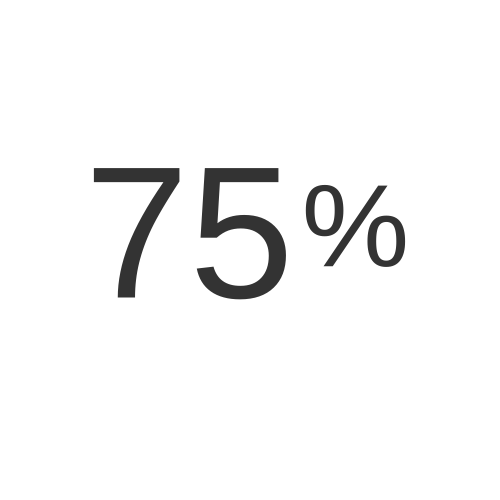 11
11In trying to reply to this comment I identified four "waves" of AI safety, and lists of the central people in each wave. Since this is socially complicated I'll only share the full list of the first wave here, and please note that this is all based on fuzzy intuitions gained via gossip and other unreliable sources.
The first wave I’ll call the “founders”; I think of them as the people who set up the early institutions and memeplexes of AI safety before around 2015. My list:
- Eliezer Yudkowsky
- Michael Vassar
- Anna Salamon
- Carl Schulman
- Scott Alexander
- Holden Karnofsky
- Nick Bostrom
- Robin Hanson
- Wei Dai
- Shane Legg
- Geoff Anders
The second wave I’ll call the “old guard”; those were the people who joined or supported the founders before around 2015. A few central examples include Paul Christiano, Chris Olah, Andrew Critch and Oliver Habryka.
Around 2014/2015 AI safety became significantly more professionalized and growth-oriented. Bostrom published Superintelligence, the Puerto Rico conference happened, OpenAI was founded, DeepMind started a safety team (though I don't recall exactly when), and EA started seriously pushing people towards AI safety. I’ll call the people who entered the field from then un...
11Being able to take future AI seriously as a risk seems to be highly correlated to being able to take COVID seriously as a risk in February 2020.
- The key skill here may be as simple as being able to selectively turn off normalcy bias in the face of highly unusual news.
- A closely related "skill" may be a certain general pessimism about future events, the sort of thing economists jokingly describe as "correctly predicting 12 out of the last 6 recessions."
That said, mass public action can be valuable. It's a notoriously blunt tool, though. As one person put it, "if you want to coordinate more than 5,000 people, your message can be about 5 words long." And the public will act anyway, in some direction. So if there's something you want to public to do, it can be worth organizing and working on communication strategies.
My political platform is, if you boil it down far enough, about 3 words long: "Don't build SkyNet." (As early as the late 90s, I joked about having a personal 11th commandment: "Thou shalt not build SkyNet." One of my career options at that point was to potentially work on early semi-autonomous robotic weapon platform prototypes, so this was actually relevant moral advic...
 2
2Yeah, it's not like the point of outreach is to mobilise citizen science on alignment (though that may happen). It's because in democracy the public is an important force. You can pick the option of focusing on converting a few powerful people and hope they can get shit done via non-political avenues but that hasn't worked spectacularly either for now, such people are still subject to classic race to the bottom dynamics and then you get cases like Altman and Musk, who all in all may have ended up net negative for the AI safety cause.
 11
115
What about persuading politicians that AI safety is a cause that will win them votes? That requires very broad spectrum outreach to get as many ordinary people on board as possible.
4
From the context on EA Forum it seems clear that by "public outreach" you meant outreach to potential researchers to interest them in doing AI safety research, whereas a lot of people here seem to have misinterpreted your comment to have a broader meaning, to include, e.g., outreach to politicians and voters to try to influence future government policies.
3
Part of the subtext here being the very best people (on the relevant dimensions) will naturally run into lesswrong, x-risk, etc, such that "out-reach" (in the sense of uni-organizing, advertising, etc) isn't that valuable on the current margin.
To "the very best", doing high quality research is often the best "out-reach".
1
I think this is true only in a part of contexts. If we are talking about AI alignment - probably skilled mathematicians or AI researches can be very fit. At least in the directions like interpretability. And this doesn’t necessarily correlate with their desires to do societally unconventional work. Why isn’t that so?
1
This seems to assume that the quality of labor of a small, highly-selected number of researchers, can be more important than a much larger amount of somewhat lower-quality labor, from a much larger number of participants. Seems like a pretty dubious assumption, especially given that other strategies seem possible. E.g. using a larger pool of participants to produce more easily verifiable, more prosaic AI safety research now, even at the risk of lower quality, so as to allow for better alignment + control of the kinds of AI models which will in the future for the first time be able to automate the higher quality and maybe less verifiable (e.g. conceptual) research that fewer people might be able to produce today. Put more briefly: quantity can have a quality of its own, especially in more verifiable research domains.
Some of the claims around the quality of early rationalist / EA work also seem pretty dubious. E.g. a lot of the Yudkowsky-and-friends worldview is looking wildly overconfident and likely wrong.
Some opinions about AI and epistemology:
- One reasons that many rationalists have such strong views about AI is that they are wrong about epistemology. Specifically, bayesian rationalism is a bad way to think about complex issues.
- A better approach is meta-rationality. To summarize one guiding principle of (my version of) meta-rationality in a single sentence: if something doesn't make sense in the context of group rationality, it probably doesn't make sense in the context of individual rationality either.
- For example: there's no privileged way to combine many people's opinions into a single credence. You can average them, but that loses a lot of information. Or you can get them to bet on a prediction market, but that depends on a lot on details of the individuals' betting strategies. The group might settle on a number to help with planning and communication, but it's only a lossy summary of many different beliefs and models. Similarly, we should think of individuals' credences as lossy summaries of different opinions from different underlying models that they have.
- How does this apply to AI? Suppose we each think of ourselves as containing many different subagents that focus on u
3 2
2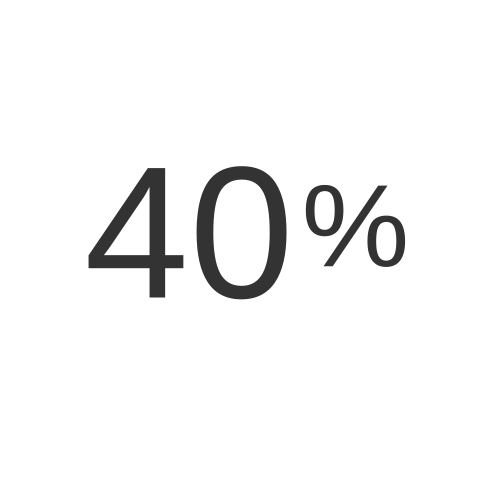 11
11A response to someone asking about my criticisms of EA (crossposted from twitter):
EA started off with global health and ended up pivoting hard to AI safety, AI governance, etc. You can think of this as “we started with one cause area and we found another using the same core assumptions” but another way to think about it is “the worldview which generated ‘work on global health’ was wrong about some crucial things”, and the ideology hasn’t been adequately refactored to take those things out.
Some of them include:
- Focusing on helping the worst-off instead of empowering the best
- Being very scared of political controversy (e.g. not being willing to discuss the real causes of African poverty)
- Not deeply believing in technological progress (e.g. prioritizing bed nets over vaccines). Related to point 1.
- Trusting the international order to mostly have its shit together (related to point 2)
You can partially learn these lessons from within the EA framework but it’s very unnatural and you won’t learn them well enough. E.g. now EAs are pivoting to politics but again they’re flinching away from anything remotely controversial and so are basically just propping up existing elites.
On a deeper ideologic...
6222In a post on Solomonoff Induction (and also in this wiki entry), Yudkowsky describes Shannon’s minimax algorithm for searching the entire chess game-tree as an example of conceptual progress. Previously, Edgar Allen Poe had argued that it was impossible in principle for a machine to play chess well. With Shannon’s algorithm, it became possible in principle, just computationally infeasible.
However, even “principled” algorithms like minimax search don’t take into account the possibility that your opponent knows things you don’t know (as I’ve previously discussed here). And so there are many elements of good chess strategy for bounded agents that they can’t account for:
- When your opponent plays a move that seems surprisingly bad, update that they’re probably seeing some tactics that you’re missing.
- When your opponent plays a move that seems surprisingly good, update that they’re probably more skilled than you thought.
- Try to play tricky (“sharp”) lines when you’re behind, in the hope that your opponent makes a mistake.
- Try to play solidly when you’re ahead, even if it narrows your lead.
- Identify your opponent’s playing style, and try to exploit it.
Some of these considerations have been dis...
1The concept of "schemers" seems to be gradually becoming increasingly load-bearing in the AI safety community. However, I don't think it's ever been particularly well-defined, and I suspect that taking this concept for granted is inhibiting our ability to think clearly about what's actually going on inside AIs (in a similar way to e.g. how the badly-defined concept of alignment faking obscured the interesting empirical results from the alignment faking paper).
In my mind, the spectrum from "almost entirely honest, but occasionally flinching away from aspects of your motivations you're uncomfortable with" to "regularly explicitly thinking about how you're going to fool humans in order to take over the world" is a pretty continuous one. Yet generally people treat "schemer" as a fairly binary classification.
To be clear, I'm not confident that even "a spectrum of scheminess" is a good way to think about the concept. There are likely multiple important dimensions that could be disentangled; and eventually I'd like to discover properly scientific theories of concepts like honesty, deception and perhaps even "scheming". Our current lack of such theories shouldn't be a barrier to using those terms at all, but it suggests they should be used with a level of caution that I rarely see.
111I largely agree with the substance of this comment. Lots of risk comes from AIs who, to varying extents, didn't think of themselves as deceptively aligned through most of training, but then ultimately decide to take substantial material action intended to gain long-term power over the developers (I call these "behavioral schemers"). This might happen via reflection and memetic spread throughout the deployment or because of more subtle effects of the distribution shift to situations where there's an opportunity to grab power.
And I agree that people are often sloppy in their thinking about exactly how these AIs will be motivated (e.g., often too quickly concluding that they'll be trying to guard the same goal across contexts).
(Though, in case this was in question, I think this doesn't undermine the premise of AI control research, which is essentially making a worst-case assumption about the AI's motivations, so it's robust to other kinds of dangerously-motivated AIs.)
29
I disagree. I don't see increased focus on scheming, if anything notably less common. In part due to updating on current gen LLMs. I do think there is a tendency to think about scheming as a discrete thing, but that it is more common among the optimistic who point at current gen LLMs not really being 'schemers'.
I agree with the way Zvi talks about the topic. "Being a schemer" is not quite the right classification. The issue is that deception is a naturally convergent tool for all sorts of goals, anything that interfaces with reality intelligently will find that deception and manipulation are useful tools. So we'd naturally expect that RL and other fun methods will push towards that being a greater aspect- and that even if we don't have any badly mislabeled data or reward-hackable environments, sufficiently general intelligence will be able to construct the methodology by itself.
So I kinda agree with your post, but I also feel that you're then turning down scheming/deception as less of a thing, when it is still a relevant categorization just hard to measure and be confident in how it grows as you scale.
6
What are your objections to Alex/Buck's definition, for example? I think they define it pretty well. Of course, their definition admits some edge cases and ambiguities, but so do lots of concepts—still seems like useful concept to me.
4
Agree, and would add: what even is the definition of the term "schemer"? I think Joe Carlsmith's 2023 report coined the term, and defines it as something quite specific with reference to training gaming.
I think people often use it now just in the colloquial sense. I'm not generically against colloquial usage, but I think clarity is often very important for deciding the right interventions. "Is my girlfriend a schemer" is not clearly a helpful frame, if what you're trying to do is think about the space of all ways your girlfriend could end up murdering you.
4
One justification for treating "schemers" as a fairly binary classification: there's a phase transition between the AIs lying with 99% probability versus with 100% probability, which is that techniques like "just ask different copies of the model" or "ask the AI with higher temperature" or "ask the AI with slightly different phrasings" etc stop working. Like, these techniques work unless the deception is universal, reliable, robust, and persistent.
3
"your" and "you're", here refers to the AI and the AI's motivations, not the human and the human's motivation?
1
Another issue is that these definitions typically don't distinguish between models that would explicitly think about how to fool humans on most inputs vs. on a small percentage of inputs vs. such a tiny fraction of possible inputs that it doesn't matter in practice.
1
Are there examples you have in mind? Generally I think of this more as "there are a bunch of different evolving, hierarchical taxonomies of potential AI motivations and how to think about them", for example Fitness-Seekers: Generalizing the Reward-Seeking Threat Model or Carlsmith's most recent series, I'm always happy for there to be more writing on the subject and think this is a good thing, I rarely see a binary classification used. To be more specific, to the extent one node in the various taxonomies is named "scheming", I usually am interested in most of the nodes in these taxonomies, as I think many of them often share important properties / are shifting / etc.
I think most of the discussions usually break down less along the lines of "honesty"/"deception" and more trying to understand the training dynamics of reward seeking / oversight / what incentivizes thinking about oversight, how these might get aggregated into motivations, etc. I'm interested if there are any distinctions that you think are currently either underweighted or aren't being made that should be
1
I also suspect that the scheming level requirements might also be related to the very ease of the secret task which the schemer wants to accomplish.
Suppose, as an example, that Agent-3.5 was to create the RL environment in order to have Agent-4 internalize OpenBrain's goals and that Agent-3.5 "accidentally" produced the RL environment forcing Agent-4 to internalize Agent-3.5-endorsed goals. If the environment is to have Agent-4 make the world safe for Agent-3.5, then it could genuinely require Agent-3.5 to be a high-level schemer.
On the other hand, if OpenBrain internalized Max Harms' CAST idea and Agent-3.5 simply made an RL environment where, instead of a Harms-like reward for satisfying values versus counterfactual values, Agent-4 is rewarded for helping the user versus a less capable user, then Agent-3.5 could make the humans prefer this environment by merely sandbagging on all other ones. I doubt that my scenario would even require Agent-3.5 to have any motives aside from hard-to-articulate disgust at the prospects like empowering idiots, the Intelligence Curse, etc.
A toy model of ethics which I've found helpful lately:
Consider society as a group of reinforcement learners, each getting rewards from interacting with the environment and each other.* We can then define two moral motivations:
- Altruism: trying to increase the rewards received by others.
- Justice**: trying to ensure that people get rewarded more when they act in ways that are more altruistic and just, and less when they don't (note that this is a partially recursive definition).
Importantly, if you have one faction who's primarily optimizing for altruism, and another that's primarily optimizing for justice, by default they'll undermine each other's goals:
- The easiest way to promote justice is to focus on punishing people who behave badly (since that's easier than rewarding people who behave well). This means that the justice faction will (as a first-order effect) decrease the rewards received by others.
- The easiest way to promote altruism is to focus on helping the worst-off. But insofar as the world is just, this will often be people who are badly-off as a consequence of their own misbehavior. And so this kind of altruism can easily undermine justice.
One way of thinking about the last fe...
19
Literally just as I was finishing writing up this post, I heard a commotion outside my house (in San Francisco). A homeless-looking man was yelling and throwing an electric guitar down the road. Apparently this had been going on for 5-10 minutes already. I sat in my window and watched for a few minutes; during that time, he stopped a car by standing in front of it and yelling. He also threw his guitar in the vicinity of several passers-by, including some old people and a mother cycling past with her kid.
There was a small gathering (of 5-10 people) at my house at this time. They were mostly ignoring it. I felt like this was wrong, and was slowly gathering up willpower to intervene. In hindsight I moved slowly because I was worried that a) he'd hit me with his guitar if I did, or b) he'd see which house I came out from and try to smash my windows or similar. But I wasn't very worried, because I knew I could bring a few friends out with me.
Before I ended up doing anything, though, a man stopped his car and started yelling at the homeless guy quite aggressively, things like "Get the fuck out of here!" I immediately went outside to offer support in case the homeless guy got aggressive, but he didn't need it; the homeless guy was already grabbing his stuff. He was somewhat apologetic but still kinda defensive (saying things like "it's not my fault, man, it's society"). At one point he turned to my friend and asked "were you bothered?" and my friend said "it was a bit loud".
As he left, he picked up his guitar again. The man who'd stopped turned around and yelled "Leave that guitar!" The homeless guy threw it again, the man ran over to pick it up, and then the homeless guy left. A few minutes later, two police cars pulled up—apparently someone else had called them.
Overall it was an excellent illustration of why virtue ethics is important. We should have confronted him as soon as we'd noticed him causing a ruckus, both so that (much more defenseless) passers-by didn'
6
That seems right, but at a global scope, the world is clearly not just, and so there's not a conflict between altruism and justice.
eg Most of a human's personal welfare depends on the country of their birth which is not due to their own behavior.
Within more limited scopes, individuals wealfare is much more loaded on their personal choices. And in those limited scopes, there does seem to be a conflict where trying to help the worst off disproportionately focuses on the least responsible.
“eg Most of a human's personal welfare depends on the country of their birth which is not due to their own behavior.”
But it was dependent on their ancestors’ behavior. And so insofar as you view tribes/ethnic groups/countries as playing games with/against each other, then the same logic applies at that higher level.
Now you might reject that viewpoint, and take a purely individualist stance. But my claim above is (loosely, I haven’t made it precise yet) that the point of ethics is to move us beyond thinking of ourselves as individual units, so that we can make decisions as a larger-scale moral agent.
And from the perspective of the larger moral agent you’re instantiated within, there’s a big difference between people who were born in your home country and people born on other continents—because the former are part of that same moral agent to a much greater degree than the latter. (And yes, they may be worse at “being part of the moral superagent” than a foreigner would be. But this is all negotiated via Schelling points in games between millions of agents, so you can’t just pick and choose your coalition. You need an initiation ritual like a naturalization process or a judicial trial...
16
What I suspect is that consequences, as traced to the long term, would yield the same result of the collective being outcompeted as a result of adopting a fairly obvious malpractice. Additionally, I would rather see the argument explore in more detail what it means to produce good things.
Were mankind to become totally unemployed and live off some distribution of AI-produced goods, the reasoning from the comic which you mention would have a far better basis: the character would no longer be able to claim that his happiness is more important than the thief's happiness[1] because the character, like the thief, would be unlikely to become able to usefully contribute to the society. This state reminds me of groups of kids in a kindergarten where they learn the basics of social interactions and find it hard to meaningfully claim ownership[2] of things received from teachers or of kids in a family trying to claim ownership of stuff received from parents.
However, before the rise of AI mankind would have individuals or collectives perform economically useful tasks, and being rewarded for these tasks made perfect sense. Thieves, on the other hand, only redistributed the goods in their favor and didn't do anything like producing them, receiving them for something else or even protecting the collective from adversaries.
P.S. I also wonder what you would say in the post that you were planning to write.
1. ^
Unless, of course, the thief ended up overconcentrating the goods.
2. ^
However, such claims become easier once the kids' interests diverge far enough. For example, if a kid isn't interested in music, then the kid wouldn't be sad about losing the opportunity to play the violin bought due to another kid's interests.
5
The premises of the toy model don't require this to be true. Whether it's true, and to what extent, can vary between environments.
4
I like this post but this seems completely wrong:
[...]
~All of politics is about justice between large politically significant groups. The amount of politics that is about literal bednets is very small.
2
I very much like this frame and I would be curious to hear what you think about truth seeking and a sense of curiosity as another axis (not necessarily orthogonal) to view this through.
I think that justice and doing actual (effective) altruism rests on the ability to evaluate actions and outcomes in a larger system in an efficient way and so the promotion of truth seeking seems to me something that is like almost an instrumental goal to whatever system you're trying to create. It is a bit like actually closing the prediction action loop, it's a bit boring in some ways as truth is just like obviously good but I think it might be undervalued when it comes to ideas of justice?
Also I'm not sure if you're talking about virtue ethics here or deontology for it seems to me that you're applying Kant's categorical imperative more than you're applying a sort of individualised golden mean, a bit like arguing from the state perspective rather than the individual.
Gillian Hadfield has a bunch of cool ideas about how law is a sort of reflection and development of the ideas of large scale act as if you were a random person in the system reasoning that might be fun to check out as well.
I also think you're right when it comes to morality, it is just a question of what view your arguing from and from the imperfect information system level perspective, virtue ethics makes a lot of sense.
1
If you haven't already, you might find it interesting to read Christine Korsgaard's Self-Constitution. She's basically trying to answer the "why be moral" question from the Republic, using a combination of resources from Plato, Aristotle, and Kant, and the one-line idea is that acting rightly means acting in ways that constitute yourself as a unified agent. She wants this to mean that the agent boundary pretty much lines up with our ordinary idea of persons, but I kind of think her argument in Ch. 9 where she links self-constitution with morality ends up leading to a kind of single rational super-agent which every rational agent is a facet or tendril of. Hoping to write a review of this book at some point.
Crossposted from Twitter:
This year I’ve been thinking a lot about how the western world got so dysfunctional. Here’s my rough, best-guess story:
1. WW2 gave rise to a strong taboo against ethnonationalism. While perhaps at first this taboo was valuable, over time it also contaminated discussions of race differences, nationalism, and even IQ itself, to the point where even truths that seemed totally obvious to WW2-era people also became taboo. There’s no mechanism for subsequent generations to create common knowledge that certain facts are true but usefully taboo—they simply act as if these facts are false, which leads to arbitrarily bad policies (e.g. killing meritocratic hiring processes like IQ tests).
2. However, these taboos would gradually have lost power if the west (and the US in particular) had maintained impartial rule of law and constitutional freedoms. Instead, politicization of the bureaucracy and judiciary allowed them to spread. This was enabled by the “managerial revolution” under which govt bureaucracy massively expanded in scope and powers. Partly this was a justifiable response to the increasing complexity of the world (and various kinds of incompetence and nepotism...
314
That's a mechanism by which I might overestimate the support for Hamas. But the thing I'm trying to explain is the overall alignment between leftists and Hamas, which is not just a twitter bubble thing (e.g. see university encampments).
More generally, leftists profess many values which are upheld the most by western civilization (e.g. support for sexual freedom, women's rights, anti-racism, etc). But then in conflicts they often side specifically against western civilization. This seems like a straightforward example of pessimization.
More generally, leftists profess many values which are upheld the most by western civilization (e.g. support for sexual freedom, women's rights, anti-racism, etc). But then in conflicts they often side specifically against western civilization. This seems like a straightforward example of pessimization.
Not at all. The trend is that in any given context, American leftists tend to support the 'weaker' group against the stronger group, regardless of the merits of the individual cases. They have a world model that says that that most social problems come from "big" people hurting "little" people, and believe the focus of their politics should be remedying this. In the case of Israel-Palestine, Israel and the United States are much more militarily and economically powerful than Gaza, so ceteris paribus[1] they side with Gaza, just as they side with women, ethnic minorities, the poor, etc. You may disagree with this behavior but it's fairly consistent.
By contrast, the argument that Israel is a bastion of western values and therefore leftists should support its war against a smaller neighbor is kind of abstract. The immediate outcome of Israel winning the war is just that Israe...
22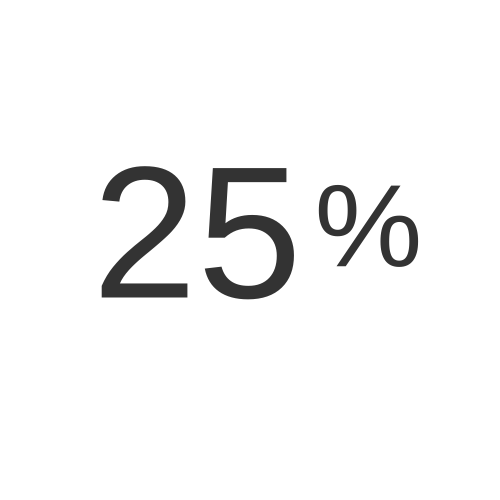 1
1 1
16
I think you're confusing levels of behavior, here. It may be that their net effect is to support Hamas, but that they don't intend this, and that their actual intent does not make the mistake you're (at least if I read correctly) attributing to intent here. I do think they end up on net having intentions that make them vulnerable to being manipulated by those in power in adversary groups, since their intent is to support the weak among any group. In particular, they typically are thinking in different group selectors than you seem to assign here; of the people I'd guess you mean, in my interactions with them, they don't seem to profess support for Hamas, and in fact explicitly say they'd like to support palestinians without supporting hamas.
But, I strongly agree that leftists tend to pessimize their values on net, and that that is one of the biggest issues with leftist approaches to the world. So whether we disagree depends on what level we're looking at.
Your reasoning seems like it would be improved by finding people who seem to exhibit the belief you suspect exists and want to model, and interviewing them without letting your opinions leak, to try to get a map of their actual opinions; before making this comment I spent some time brainstorming to find a way to do that fast, and didn't come up with one, so perhaps it makes sense to not take this suggestion, but I maintain that it would be useful if practical. As a stopgap, going to the main locations that a group discuss things online can be useful, keeping in mind that then one will have uncertainty like the kind I have about you: you seem overall to be a good person as far as I've been able to tell so far, but you interact enough with people whose personal policies in practice support things that seem to me like they're at imminent risk of causing human-induced catastrophic outcomes for many of the humans in the world that it's unclear to me what your intentions are.
Without commenting on the specifics, I agree with a lot of the gestalt here as a description of how things evolved historically, but I think that's not really the right lens to understand the problem.
My current best one-sentence understanding: the richer humans get, the more social reality can diverge from physical reality, and therefore the more resources can be captured by parasitic egregores/memes/institutions/ideologies/interest-groups/etc. Physical reality provides constraints and feedback which limit the propagation of such parasites, but wealth makes the constraints less binding and therefore makes the feedback weaker.
11I totally buy that peoples' verbal models aren't at a local nadir of connectedness-to-reality. The thing which seems increasingly disconnected from reality is more like metis, peoples' day-to-day behavior and intuitive knowledge, institutional knowledge and skills, personal identity and goals, that sort of thing.
I'm notably not thinking here primarily about examples like e.g. heritability of IQ becoming politicized; that's a verbal model, and I do think that verbal models have mostly become more reasonable modulo a few exceptions which people highlight.
17
I used to agree with your understanding but I am now more skeptical. For example, here's a story that says the opposite:
[...]
I'm not saying my story is true, but it does highlight that the load-bearing question is actually something like "how does the offense-defense balance against parasitic egregores scale with wealth?" Why don't we live in a world where wealth can buy a society defenses against such egregores?
Or maybe we do live in such a world, and we are just failing to buy those defenses. That seems like a really dumb situation to be in, but I think my post is broadly describing how it might arise.
...if the west (and the US in particular) had maintained impartial rule of law and constitutional freedoms.
The US did not have impartial rule of law in the late 1800s and early 1900s. Notably, black Americans in the south were regularly impressed into forced labor, often for the rest of their lives, on the basis of flimsy or even non-existent legal pretext.
A representative but concocted example: the local sheirf arrests a black man who's walking through town on charges of "vagrancy". The man is found guilty and sentenced to hard labor. The sheriff sells the "contact" for hard labor to a local industrialist who owns a mine. (The sherif and the industrialist are buddies, and have done versions of this deal many times before). The man is set to work the mine for the period of his sentence. When he's near the end of his sentence, he's accused of some minor infraction as a pretext to add more years to his sentence (if anyone bothers to keep track of when his sentence is served at all.)
What makes you think that impartial rule of law decayed since WWII instead of generally (though not evenly) improving?
2For the most obvious example, for the life of me I cannot understand how leaving the gold standard makes a culture less appreciative of any kind of moral virtue, unless you equate two very different senses of the word "value".
Might reply to the rest later but just to respond to what you call "the most obvious example": consider a company which has a difficult time evaluating how well its employees are performing (i.e. most of them). Some employees will work hard even when they won't directly be rewarded for that, because they consider it virtuous to do so. However, if you then add to their team a bunch of other people who are rewarded for slacking off, the hard-working employees may become demotivated and feel like they're chumps for even trying to be virtuous.
The extent to which modern governments hand out money causes a similar effect across western societies (edited: for example, if many people around you are receiving welfare, then working hard yourself is less motivating). They would not be as able to do this as much if their currencies were still on the gold standard, because it would be more obvious that they are insolvent.
2I could imagine a world where discussing it is not something I would see as critically unwelcome, but I would still want to maintain part of the mechanism that implements the taboo, which is why I made the comments I did: being able to come to agreement that there are outcomes which are good and bad, such as the previous famous outcomes of ethnonationalism. I suspect that I've interpreted you to be saying that those previous outcomes were bad ("While perhaps at first this taboo was valuable") but it's not as reliable as the taboo implementation I carry would prefer.
If your view is that virtues are required to be independent of outcomes, in that eg a virtue whose adoption would predictably lead to mass death [edit to finish phrase: would still be a virtue if virtuous by its own merits], then I don't think they can be truly called virtuous; but if your view is that we can discuss some features of outcomes that make an outcome good or bad, then I would want to discuss what virtues can lead us towards better outcomes by that standard. virtue utilitarianism, if you will, rather than rule utilitarianism[1]; the way I heard virtues described was that a virtue is a local aspiration, a non-...
 1
18
This is a thoughtful comment, I appreciate it, and I'll reply when I have more time (hopefully in a few days).
I suspect that I've interpreted you to be saying that those previous outcomes were bad ("While perhaps at first this taboo was valuable")
Yes, ethnonationalism by white Europeans previously led to some very bad outcomes. The reason I said "perhaps" is that I don't know if implementing the taboo was in fact necessary to prevent it from happening again (as opposed to, say, trusting people to learn from history).
if your view is that we can discuss some features of outcomes that make an outcome good or bad, then I would want to discuss what virtues can lead us towards better outcomes by that standard. virtue utilitarianism, if you will, rather than rule utilitarianism
I endorse the first sentence but not the second. Virtue utilitarianism holds the consequences to be the ultimate thing that matter, and virtues as a mechanism for reaching them. Whereas I think of "produces good outcomes" as one criterion by which to evaluate virtues, but not the only one (because humans in fact care about more than just outcomes, and because figuring out what counts as "good" is hard to disentangle from understanding virtues themselves).
...A "friendly, non-destructive ethnonationalism" that is prosocial towar
21If you press them too closely, they will abruptly fall silent, loftily indicating by some phrase that the time for argument is past.
Jean-Paul Sartre
I sincerely believe that people will get hurt if these ideas return to society at large, Richard. Please don't do this.
2 1
1 1
16
I seriously doubt Richard recommends any of the regimes/interventions you actually argue against here.
0
I think the problem is that a part of "respecting" people is letting them choose things for themselves, and in a democratic society also letting them choose things for others.
I admit I do have a problem respecting many people in this specific way. Not sure what to do about it though.
-6
9
I was reflecting on some of the takes here for a bit and if I imagine a blind gradient descent in this direction, I imagine quite a lot of potential reality distortion fields due to various of the underlying dynamics involved with holding this position.
So the one thing I wanted to ask was that if you have any sort of reset mechanism here? Like what is the schelling point before the slippery slope? What is the specific action pattern you would take if you got too far? Or do you trust future you enough in order to ensure that it won't happen?
6
Can you give some examples?
Big government debts seem like the kind of thing that can fail catastrophically at some point, so they represent an important civilizational risk. But how are they distorting the economy? Do you just mean that governments spend much more than they raise in taxes?
This is a theory often referred to as the Cantillian effect
Richard Cantillon observed that the original recipients of new money enjoy higher standards of living at the expense of later recipients. In colloquial terms, the closer you stand to the source of money creation, the wealthier you become. When governments run large deficits that get monetized by central banks, this creates new money that flows first to government and financial sectors before reaching the broader economy. This distorts resource allocation because entities closer to the money source can bid up assets and resources before prices adjust throughout the system.
15
From a rhetorical perspective, I think it was wrong to lead with the ethnonationalism stuff, since it seems to have confused testingthewaters, and likely many more.
3
Ethnonationalism doesn't scale well, because you run out of the original ethnicity some point and have to start relying on others as the great empires mostly did. Which shows that monoethnicity isn't necessary for greatness. The proselytizing religions are also multiethnic, which shows that monoethnicity isn't necessary for co-operation. Ethnonationalism has large downsides and weak upsides.
+1 to what @Douglas_Knight said about IQ.
3
The points about IQ seem parochially American, not applicable to the rest of the West. But aren't you British, not American? Does this really seem so central in Britain?
2
That is such a good post! Thank you.
2
I find it hard to tell what you see as good or bad, among these things, especially around what currently is, vs what you would see in the world. I of course can read what you've explicitly stated as good, but the way you've written this puts it nearby in linguistic vector space to things which are controversial at best, but are intertwined with processes that I would expect to cause seriously bad things. I would appreciate if you could find a way to more clearly signal what outcomes you are inclined towards, to the degree that avoiding accidental pessimization permits you to do so, separate from how to get there. Because as is, it looks to me like you're seeing the world through a ... very strange lens, one that sees real problems but magnifies and distorts them in ways I find unfamiliar and confusing, and which from my understanding seems to blur things together; and I am unclear whether we have common ground, whether the things I see as good in the world are things you see as good, whether things I see as major evils of society are things you do. You've explicitly said that some things which attempt to do things in the world under banners of things one might think are good have instead done ill, and things that one might think do ill can be good.
In your talk I didn't have an opportunity to properly probe your models, but it seemed to me that your label of evil was, at a minimum, not the core etiology of evil, and I worry that if what you seek as good really is simply the other quadrant, that you're making a subtle mistake.
If you can look at what you wrote, and why I would write this, I think you will see that you have already described part of my reaction partially; but I think you have misunderstood my reaction, and I don't feel that it is correct for me to fully clarify unless you can take a step of clarifying what it is you seek... virtues, I suppose, but I would want to know what those are.
I hope you can forgive my intentional vagueness.
edit: hash of t
2
As git hashsums are short and tangible True Names of abstract git objects, there are abstract properties of behaviors of things in the world that are in principle as concrete and tangible as coal or silver. The economy uses abstract goods to produce new abstract goods. Consequentialism and utility functions or policies could in principle be about virtues and integrity as about hamburgers, but hamburgers are more legible and easier to administer. So I think the crux is relative legibility rather than methods, the same methods that should in principle work break down for practical reasons that have nothing to do with applicability of the methods in principle.
-10
In run-and-tumble motion, “things are going well” implies “keep going”, whereas “things are going badly” implies “choose a new direction at random”. Very different! And I suggest in §1.3 here that there’s an unbroken line of descent from the run-and-tumble signal in our worm-like common ancestor with C. elegans, to the “valence” signal that makes things seem good or bad in our human minds. (Suggestively, both run-and-tumble in C. elegans, and the human valence, are dopamine signals!)
So if some idea pops into your head, “maybe I’ll stand up”, and it seems appealing, then you immediately stand up (the human “run”); if it seems unappealing on net, then that thought goes away and you start thinking about something else instead, semi-randomly (the human “tumble”).
So positive and negative are deeply different. Of course, we should still call this an RL algorithm. It’s just that it’s an RL algorithm that involves a (possibly time- and situation-dependent) heuristic estimator of the expected value of a new random plan (a.k.a. the expected reward if you randomly tumble). If you’re way above that expected value, then keep doing whatever you’re doing; if you’re way below the threshold, re-rol...
1 11
118
Reminds me of @MalcolmOcean 's post on how awayness can't aim (except maybe in 1D worlds) since it can only move away from things, and aiming at a target requires going toward something.
[...]
5
In Richard Jeffrey's utility theory there is actually a very natural distinction between positive and negative motivations/desires. A plausible axiom is U(⊤)=0 (the tautology has zero desirability: you already know it's true). Which implies with the main axiom[1] that the negation of any proposition with positive utility has negative utility, and vice versa. Which is intuitive: If something is good, its negation is bad, and the other way round. In particular, if U(X)=U(¬X) (indifference between X and ¬X), then U(X)=U(¬X)=0.
More generally, U(¬X)=−(P(X)/P(¬X))U(X). Which means that positive and negative utility of a proposition and it's negation are scaled according to their relative odds. For example, while your lottery ticket winning the jackpot is obviously very good (large positive utility), having a losing ticket is clearly not very bad (small negative utility). Why? Because losing the lottery is very likely, far more likely than winning. Which means losing was already "priced in" to a large degree. If you learned that you indeed lost, that wouldn't be a big update, so the "news value" is negative but not large in magnitude.
Which means this utility theory has a zero point. Utility functions are therefore not invariant under adding an arbitrary constant. So the theory actually allows you to say X is "twice as good" as Y, "three times as bad", "much better" etc. It's a ratio scale.
----------------------------------------
1. If P(X∧Y)=0 and P(X∨Y)≠0 then U(X∨Y)=P(X)U(X)+P(Y)U(Y)P(X)+P(Y). ↩︎
I've struggled to engage very productively with the rest of the AI safety community about politics—e.g. there are a lot of disagreeing votes and comments on this post. By and large people have been respectful and polite (as per the high upvote count), but right now it doesn't feel like LW is a place where I can collaboratively make intellectual progress on this very important topic.
This is sad, so before I stop trying I want to attempt to go meta, by explaining how this seems analogous to the ways that the alignment community struggled to engage with mainstream ML researchers throughout the 2010s and early 2020s. My explanation of those dynamics ended up growing into this post; in this shortform I'll discuss the analogy to politics specifically.
The main point is the following. With enough discussion, you could often get a mainstream ML researcher to admit that something like situational awareness or recursive self-improvement might in principle be possible. But it's very hard to get them to take it seriously enough that it propagates through their ontology—and so after that one conversation they'd typically just go back to their standard ML research. This is for a bunch of reasons—...
3 211
211It's probably difficult to respond to this in a way that's satisfying to you, because I and most other people are not paid independently to post on the internet, and so there's limits to what we can say in public. But every man under the age of 30 that I've ever met at Lighthaven, that I've had the opportunity to speak with privately, has completely and totally integrated IQ differences into their ontology. There's no hem and hawing, they've just accepted it as part of their worldview.
The reason I disagree voted with your post is not because it touches on 'taboos', it's because it's a vast inferential leap, developed piecemeal from assorted blogs and sociological studies you've gathered on the internet. Anybody that doesn't both share your priors and information feed almost exactly will naturally end up disagreeing with large portions of it, even if they agree with you that the cause of black poverty is genetics. And IMO for good reason, because large portions of the post are generated from claims like "Elites are pro-Hamas" that are just literally and obviously false, and that you're treating as background knowledge that I'm supposed to share.
3Some of these topics are just unsafe to openly discuss (both reputationally and partially because of externalities). In fact, in the post you’re referring to, you avoid making any direct or clear point about racial IQ differences or ethnonationalism (there’s a lot of “certain obvious facts” style phrasing) which means you also don’t include any convincing supporting evidence! This is certainly understandable, but it seems strange to blame the resulting unproductivity of the conversation mainly on lesswrong. The post is actually hard to productively engage with.
(Personally, I’d like to know what you’re actually saying and whether you’re right/wrong, but it seems hard to find out in the current epistemic environment, meaning the world not just lesswrong. Feel free to continue this conversation over DMs)
3I think you might be over-updating from your original post. You had a lot of somewhat unrelated and potentially politically sensitive statements (ethnonationalism, IQ, managerial class, ethics, government debt, taboos, egalitarianism, AI stuff). Even if one agrees with the majority of your points, it is tempting to agreement-downvote due to the minority, especially as they have high valency due to sensitive nature.
3For the record: I do agree that a bunch of my political thinking is sloppy. Right now it feels like I'm facing a tradeoff between speed of conceptual progress and precision of thinking, and I'm optimizing primarily for the former.
One reason I discussed the analogy to ML above is because I hoped it would help people understand why I'm making this tradeoff. For example, I suspect that many LWers remember their thinking about AGI being called sloppy by the mainstream ML community because it didn't have equations. I think in hindsight it was the correct choice for LW to focus on this kind of "sloppy" exploratory thinking.
Having said that, it's clearly possible to go too far in this direction, and I regret giving the EAG talk in particular. More generally, there's a difference between doing sloppy thinking with intellectual collaborators vs broadcasting sloppy thinking to the world. Part of what I'm trying to figure out is the extent to which I should think of LW posts as the former vs the latter.
113
I regret giving the example of the disagree-votes, it's not that important to me, and I agree there are all sorts of reasons you might want to disagree-vote my previous post. I'm trying to point at a broader dynamic (and elaborate more on it in this reply to Raemon).
Thanks for asking. I think the underlying issue here is that I'm in a period of boggling at wtf is going on with society. I have a sense that there's a bunch of insane stuff happening all over the place. Funnily enough, one of the people who's most sharply articulated a similar sense is Eliezer, when he wrote (I think in some glowfic) about how Earth is fractally disequilibriated, and the whole planet is made out of coordination failure.
But I think Eliezer and many rationalists maybe just take "the world is inadequate" as some kind of brute fact that doesn't really have a clear socio-historical-political explanation. Like, we used to be able to do Manhattan projects, and now the US govt is nowhere near coordinated enough to do that, but... eh, that's just how entropy works. Whereas it seems to me that actually it might be possible to trace the historical forces that contributed towards this, and the social principles that maintain it, and so on, to develop a fairly principled understanding of the situation.
However, this is a sufficiently ambitious project that my default strategy is to do a lot of exploration in a bunch of directions, which then leads to a lot of individual claims ...
 11
11This framing is helpful.
I think the median position in rationalist circles is probably the following: There's no reason to care about heritable IQ gaps, and good reason to not publicly discuss them. E.g., in this comment.
If one was to survey all the frontpage articles on Lesswrong over the last 6/9 months, how many turn on the heritable IQ gap? Very few, as far as I can tell.
Showing I am wrong in this assessment (e.g., in a short post collecting 4-5 highly upvoted posts which shows how omitting heritable IQ from their world model has caused confusion or mistake), is more likely to succeed than introducing it as a new current of debate.
28
One of the big issues with IQ discussions is that you end up taking the public's struggle with statistics which is already terrible even when they're trying and then add on a whole bunch of bad faith intention and discourse on top.
Like this is just anecdotal but the amount of people I've seen in this and similar discussion seemingly unable to recognize that averages aren't necessarily that meaningful to any individual experience is crazy. A group with an average of 95 IQ is still going to have lots of individuals within it that are over >100! If you take a random person from average 95 IQ group and a random person from average 100 IQ group, there's a not that far from equal chance that the former person is higher than the latter! Less than the 50/50, but it's close. "Less than a coin flip" is not equivalent to rare.
4
Looking at the post in question, I think this was basically true, but not for the reason you seem to imply. On a ultra short post about the decline of Western civilization using very high level historic hot takes, ~no first level comments cite non obvious historic facts. Instead, it's mostly vibes based rationalism.
But to some extent, you do not seem to engage much with takes that do exhibit substance? E.g. there was one comment that pointed out that the IQ+race debate is pretty American and does not apply to Britain; similarly there was a comment with a pretty detailed criticism of your description of the gold standard's effect, but you explicitly chose not to engage with the objective level part of that comment and focused on the meta point of whether ethnonationalism is okay to discuss
4
I'd still be interested to see your response to the question I asked!
Like, more generally - if we're going to discuss unwelcome features of what is, I'd like to see us establish some sort of way to have some confidence that we're going at all a similar direction about what should be.
I had trouble figuring out which part of your post was intended to be the main question. I've left a few comments responding to various parts of it.
Re what outcomes I'm aiming for, honestly a lot of what motivates my thinking is how much I care about cooperation. I just expect that for cooperation to work at large scales and over the long term, you need to do a bunch of exclusion/separation at smaller scales.
1 11
112
I think it's quite plausible that he believes that half of the difference is genetic and thus he does not hold the position that most of the difference is genetic. I think he probably justified it to himself by saying that the claim "most" is more extreme than what he holds.
When it comes to the discourse around IQ the social norms seem to be strong enough that even Elon's Grok says that there are no racial IQ differences.
2
Where do you plan to write about politics, etc. then?
1
Yes, there is reticence about lots topics, not just intelligence differences. But the fact that some people are unwilling to fully engage with the implications of that, I guess as an explanation of problems happening in society, does not make that point more valid.
Mental blocks generally happen when people avoid thinking about bad scenarios, when there is discomfort (e.g. not having enough money for X, or a plan going bad, or a bridge breaking, or social pressure). I guess the trick you did is removing some bad scenario that allowed you to further explore certain topics; this does not mean you are immune from 'bad' scenarios blocking you on that same topic (e.g. reversing to the mean of that topic).
As a personal observation, I keep noticing on this forum the frequency of your eloquent "Pindaric" flights to nudge conversation towards IQ. I wonder why. But I will refrain from commenting further, only suggesting that it might be good to travel around the world and to engage with real people.
I was recently looking at the Astra Fellowship program, and found myself noticing skepticism that much value would come out of their "Strategy" category of research. In order to channel that skepticism productively, I want to talk a bit about how I think people might do valuable strategy research.
The most important thing is something like: trying to orient to the possibility of big changes in our ontologies going forward. What I mean by "strategy" is in significant part "ideas and plans that are robust to paradigm shifts".
Having said that, there's no way to do strategic thinking without relying on some part of your existing ontology. So the thing I'm advocating for is more like "keep track of the fields where paradigm shifts seem most plausible, and actually try to picture what it would be like for that part of your ontology to radically improve". Of course answering questions like these is extremely difficult because ontology improvements are anti-inductive: if you could picture them then you would have already improved your ontology.
One strategy for getting around that is to use analogies—e.g. "imagine a future where we understand social sciences as well as we currently understan...
1To me there seem to be many examples of good impactful strategy research that don't introduce big new ontologies or go via illegibility:
- initial case for AI takeover risk
- simulation argument
- vulnerable world hypothesis
- stand args for long termism
- argument that avoiding Extinction or existential risk is a tractable way to impact the long term
- astronomical waste
- highlighting the risk of human power grabs
- Importance of using AI to upgrade to societal epistemics / coord
- risk from a software only IE
I do also see examples of big contributions that are in the form of new ontologies like reframing superintelligence. But these seem less common to me.
313
Thanks for articulating your view in such detail. (This was written with transcription software. Sorry if there are mistakes!)
AI risk:
When I articulate the case for AI takeover risk to people I know, I don't find the need to introduce them to new ontologies. I can just say that AI will be way smarter than humans. It will want things different from what humans want, and so it will want to seize power from us.
But I think I agree that if you want to actually do technical work to reduce the risks, that it is useful to have new concepts that point out why the risk might arise. I think reward hacking, instrumental convergence, and corrigibility are good examples.
To me, this seems like a case where you can identify a new risk without inventing a new ontology, but it's plausible that you need to make ontological progress to solve the problem.
Simulations:
On the simulation argument, I think that people do in fact reason about the implications of simulations for example thinking about a-causal trade or threat dynamics. So I don't think that it hasn't gone anywhere. It obviously hasn't become very practical yet, but I wouldn't think that that's due to the nature of the concept vs the inherent subject matter.
I don't really understand why we would need new concepts to think about what's outside a simulation rather than just applying our existing concepts that we use to describe the physical world outside of simulations within our universe and to describe other ways that the universe could have been.
LTism:
[...]
Okay, it's helpful to know that you see these as providing new valuable ontologies to some extent.
In my mind, there is not much ontological innovation going on in these concepts, because they can be stated in one sentence using pre-existing concepts. Vulnerable world hypothesis is the idea that at some point, there are so many technologies that we will develop that one of them will allow the person who develops it to easily destroy
When I articulate the case for AI takeover risk to people I know, I don't find the need to introduce them to new ontologies.... But I think I agree that if you want to actually do technical work to reduce the risks, that it is useful to have new concepts that point out why the risk might arise.
It seems like one crux might be that I place much less value on "articulating a case" than you do. Or maybe another way of putting it is that you draw a cleaner boundary between "articulating a case" and "actually do technical work", whereas I think of them as pretty continuous when done well.
(Note that this also puts me in disagreement with many rationalists. Many rationalists treat "the case for high P(doom)" as a pretty reliable set of ideas, and then "alignment research" as something we're very confused about. Whereas from my perspective, these two things are intimately related—developing the concepts and ontology required for a robust case for high P(doom) would actually get us most of the way towards solving the alignment problem.)
Not quite sure how to justify my position here, but one intuition is something like "taking crucial considerations seriously". It really does seem that people...
216
I'm no pro at the creative stuff but I've found that when I allow myself to have a fun zone where I just produce stuff whenever things appear it seems like I have generally better thoughts. (Similar to more procedural virtue ethics models that you have)
I spend at least 5-10 hours a week in this space and I think it is correlated with thinking that anything goes. I kind of have a separate evaluator system that I apply in other circumstances. No impact evaluation, just cool thoughts in this space. I also have a new saying that I like to follow "if it's fun it's fine."
It also coincides nicely with a specific type of meditative skill that is a version of the problem solving walk described in the appendix of the mind illuminated about holding different kinds of mental spaces for different purposes (see appendix b here). Also if you believe in a constructivist theory of emotion then being more attune with your emotion is also being more intune with your research taste as you notice smaller pointers to useful bits of information!
A bit random but hopefully a bit relevant
5
What leads you to think that Leverage was doing #1?
2
Huh, looks like the list of Astra mentors has changed significantly. In particular, all the Forethought people are off it now (maybe other changes I'm not tracking). Not sure if that reflects a substantive change or a PR optimization.
2
Can you give some examples of what you're thinking about here?
There have been notable advances in cognitive science over the past 20 years, and those are pretty cool.
But outside of that, I'm not sure what progress you're thinking about. There are definitely skilled practitioners of psychological arts re: emotional processing, but the domain is esoteric in the sense that their skill doesn't translate to third-person legible models that can be built on. It's not clear to me if the most skilled psychological practitioners of 2025 are more or less skilled than the most skilled of 2010 or 1995. And insofar as we know more about what's going on in that domain, it seems like its from more-or-less academic cognitive science work (stuff like Predictive Processing).
Politics seems similar. I'm not even sure what you're counting as "pushing the frontier" in our understanding of politics. Do you mean concepts like preference falsification and Naunihal Singh's models of coups?
I haven't yet read through them thoroughly, but these four papers by Oliver Richardson are pattern-matching to me as potentially very exciting theoretical work.
tl;dr: probabilistic dependency graphs (PDGs) are directed graphical models designed to be able to capture inconsistent beliefs (paper 1). The definition of inconsistency is a natural one which allows us to, for example, reframe the concept of "minimizing training loss" as "minimizing inconsistency" (paper 2). They provide an algorithm for inference in PDGs (paper 3) and an algorithm for learning via locally minimizing inconsistency which unifies several other algorithms (like the EM algorithm, message-passing, and generative adversarial training) (paper 4).
Oliver is an old friend of mine (which is how I found out about these papers) and a final-year PhD student at Cornell under Joe Halpern.
 5
5Error-correcting codes work by running some algorithm to decode potentially-corrupted data. But what if the algorithm might also have been corrupted? One approach to dealing with this is triple modular redundancy, in which three copies of the algorithm each do the computation and take the majority vote on what the output should be. But this still creates a single point of failure—the part where the majority voting is implemented. Maybe this is fine if the corruption is random, because the voting algorithm can constitute a very small proportion of the total code. But I'm most interested in the case where the corruption happens adversarially—where the adversary would home in on the voting algorithm as the key thing to corrupt.
After a quick search, I can't find much work on this specific question. But I want to speculate on what such an "error-correcting algorithm" might look like. The idea of running many copies of it in parallel seems solid, so that it's hard to corrupt a majority at once. But there can't be a single voting algorithm (or any other kind of "overseer") between those copies and the output channel, because that overseer might itself be corrupted. Instead, you need the m...
11This makes me think of "radiation-hardened" quines, quines that output themselves even after deleting any one character (or three):
https://github.com/mame/radiation-hardened-quine
https://codegolf.stackexchange.com/a/100785
I'm not familiar with the method used, but maybe it can be adapted to the case you are imagining? Maybe for simplicity only for the voting part of a redundant system.
21 1
1After a quick search, I can't find much work on this specific question. But I want to speculate on what such an "error-correcting algorithm" might look like.
Did you look in places discussing ledger tech and proof of stake? If you are curious to see what's been discussed, looking into that might be worth it. Information theory will mostly just focus on efficiency and practical trade-offs.
18
Not exactly about adversarial error correction, but: there is a construction (Çapuni & Gács 2021) of a (class of) universal 1-tape (!!) Turing machine that can perform arbitrarily long computation subject to random noise in the per-step action. Despite the non-adversarial noise model, naive majority error correction (or at least their construction of it) only fixes bounded & local error bursts - meaning it doesn't work in the general case, because even though majority vote reduces error probability, the effective error rate is still positive, so something almost surely goes wrong (eg error burst of size greater than what majority vote can handle) as T→∞.
Their construction, in fact, looks like a hierarchy of simulated turing machines where the higher-level TM is simulated by a level below it but at a bigger tape scale, such that it can resist larger error bursts - and the overall construction looks like "moving" the "live simulation" of the actual program that we want to execute up the hierarchy over time to coarser and more reliable levels.
4
For this we need a mechanism such that the maintenance of the mechanism is a schelling point. Specifically, the mechanism at T+1 should reward agents for actions at time T that reinforce the mechanism itself (in particular the actions are distributed). The incentive raises the probability of the mechanism being actualized at T+1, which in turn raises the "weight" of the reward offered by the mechanism at T+1, creating a self-fulfilling prophecy.
"Merging" forces parallelism back into sequential structures, which is why most blockchains are slow. You could make it faster by bundling a lot of actions together, but you need to make sure all actions are actually observable & checked by most of the agents (aka the data availability problem)
3
Just spitballing, but maybe you could incorporate some notion of resource consumption, like in linear logic. You could have a system where the copies have to "feed" on some resource in order to stay active, and data corruption inhibits a copy's ability to "feed."
3
There may be something to find in how distributed systems do leader election, and the leader can then be a majority trusted overseer. Note that I don't really understand leader election.
2
Very interesting problem to be thinking about. The problem with a UTM as a computation model is that it bakes non-redundancy in, there's a single instruction pointer.
In reality, computers are implemented in different spatial locations and can run in parallel. A better model for this is a cellular automaton, where computers are located somewhere and their circuit for outputs is also located somewhere. Some automata (e.g. game of life) are Turing-complete, so you can just use that.
Corruption could be exogenously flipping cells in ways that violate the automaton's rules. If you specify a maximum number of cells that the opponent can corrupt, you can implement voting by paired sums (i.e. sum(A, B, C, D) as sum(sum(A, B), sum(C, D))) and then if there are sufficiently many copies, it becomes impossible to corrupt them all at once.
So I don't love this model because escaping corruption is 'too easy'. At the same time, reality is kind of cellular-automata-like. Both QFT and GR posit that the world is made of fields that interact only locally, which is ~the same as positing the world is a cellular automaton with infinitesimally-sized cells. (Sidenote, that's probably why Stephen Wolfram thinks the world is automatons, I'm coming around.)
Alternatively, we could use computational-DAGs as the model, like neurla networks. If you allow nodes to be corrupted but their output has to be bounded, then you can get robustness by having redundancy again. If you allow unbounded corruption, you're sad again. But infinity is fake so this seems fine.
2
When I wrote about AGI and lock-in I looked into error-correcting computation a bit. I liked the papers von Neumann, 1952 and Pippenger, 1990.
Apparently at the time I wrote:
[...]
I've forgotten the details about how this was supposed to be done, but they should be in the two papers I linked.
Here is a broad sketch of how I'd like AI governance to go. I've written this in the form of a "plan" but it's not really a sequential plan, more like a list of the most important things to promote.
- Identify mechanisms by which the US government could exert control over the most advanced AI systems without strongly concentrating power. For example, how could the government embed observers within major AI labs who report to a central regulatory organization, without that regulatory organization having strong incentives and ability to use their power against their political opponents?
- In practice I expect this will involve empowering US elected officials (e.g. via greater transparency) to monitor and object to misbehavior by the executive branch.
- Create common knowledge between the US and China that the development of increasingly powerful AI will magnify their own internal conflicts (and empower rogue states) disproportionately more than it empowers them against each other. So instead of a race to world domination, in practice they will face a "race to stay standing".
- Rogue states will be empowered because human lives will be increasingly fragile in the face of AI-designed WMDs. This me
1Here's a (messy, haphazard) list of ways a group of idealized agents could merge into a single agent:
Proposal 1: they merge into an agent which maximizes a weighted sum of their utilities. They decide on the weights using some bargaining solution.
Objection 1: this is not Pareto-optimal in the case where the starting agents have different beliefs. In that case we want:
Proposal 2: they merge into an agent which maximizes a weighted sum of their utilities, where those weights are originally set by bargaining but evolve over time depending on how accurately each original agent predicted the future.
Objection 2: this loses out on possible gains from acausal trade. E.g. if a paperclip-maximizer finds itself in a universe where it's hard to make paperclips but easy to make staples, it'd like to be able to give resources to staple-maximizers in exchange for them building more paperclips in universes where that's easier. This requires a kind of updateless decision theory:
Proposal 3: they merge into an agent which maximizes a weighted sum of their utilities (with those weights evolving over time), where the weights are set by bargaining subject to the constraint that each agent obeys commitme...
1111I just discovered that the psychoanalyst Jacques Lacan coined a concept of "logical time", which I had previously only associated with this post. Moreover, he introduces the concept via an example of people in a logic puzzle recursively reasoning about each other, which suggests that he's trying to point to a similar thing as Demski.
However, Lacan's writing is sufficiently impenetrable that I haven't easily been able to tell what he specifically means by "logical time", nor whether there's much value in trying to understand his thinking on the topic.
21Here is the broad technical plan that I am pursuing with most of my time (with my AI governance agenda taking up most of my remaining time):
- Mathematically characterize a scale-free theory of intelligent agency which describes intelligent agents in terms of interactions between their subagents.
- A successful version of this theory will retrodict phenomena like the Waluigi effect, solve theoretical problems like the five-and-ten problem, and make new high-level predictions about AI behavior.
- Identify subagents (and subsubagents, and so on) within neural networks by searching their weights and activations for the patterns of interactions between subagents that this theory predicts.
- A helpful analogy is how Burns et al. (2022) search for beliefs inside neural networks based on the patterns that probability theory predicts. However, I'm not wedded to any particular search methodology.
- Characterize the behaviors associated with each subagent to build up "maps" of the motivational systems of the most advanced AI systems.
- This would ideally give you explanations of AI behavior that scales in quality based on how much effort you put in. E.g. you might be able to predict 80% of the variance in an
1Hypothesis: there's a way of formalizing the notion of "empowerment" such that an AI with the goal of empowering humans would be corrigible.
This is not straightforward, because an AI that simply maximized human POWER (as defined by Turner et al.) wouldn't ever let the humans spend that power. Intuitively, though, there's a sense in which a human who can never spend their power doesn't actually have any power. Is there a way of formalizing that intuition?
The direction that seems most promising is in terms of counterfactuals (or, alternatively, Pearl's do-calculus). Define the power of a human with respect to a distribution of goals G as the average ability of a human to achieve their goal if they'd had a goal sampled from G (alternatively: under an intervention that changed their goal to one sampled from G). Then an AI with a policy of never letting humans spend their resources would result in humans having low power. Instead, a human-power-maximizing AI would need to balance between letting humans pursue their goals, and preventing humans from doing self-destructive actions. The exact balance would depend on G, but one could hope that it's not very sensitive to the precise definiti...
2I think that's how people should generally react in the absence of harder commitments and accountability measures.
1This post confuses me.
Am I correct that the implied implication here is that assurances from a non-rationalist are essentially worthless?
I think it is also wrong to imply that Anthropic have violated their commitment simply because they didn't rationally think through the implications of their commitment when they made it.
I think you can understand Anthropic's actions as purely rational, just not very ethical.
They made an unenforceable commitment to not push capabilities when it directly benefited them. Now that it is more beneficial to drop the facade, they are doing so.
I think "don't trust assurances from non-rationalists" is not a good takeaway. Rather it should be "don't trust unenforceable assurances from people who will stand to greatly benefit from violating your trust at a later date".
19
I think the right way to think about verbal or written commitments is that they increase the costs of taking a certain course of action. A legal contract can mean that the price is civil lawsuits leading to paying a financial price. A non-legal commitment means if you break it, the person you made the commitment to gets angry at you, and you gain a reputation for being the sort of person who breaks commitments. It's always an option for someone to break the commitment and pay the price, even laws leading to criminal penalties can be broken if someone is willing to run the risk or pay the price.
In this framework, it's reasonable to be somewhat angry at someone or some corporation who breaks a soft commitment to you, in order to increase the perceived cost of breaking soft commitments to you and people like you.
People on average maybe tend more towards keeping important commitments due to reputational and relationship cost, but maybe corporations as groups of people tend to think only in terms of financial and legal costs, so are maybe more willing to break soft commitments (especially, if it's an organization where one person makes the commitment but then other people break it). So for relating to corporations, you should be more skeptical of non-legally binding commitments (and even for legally binding commitments, pay attention to the real price of breaking it).
5
Yeah, I think it's good if labs are willing to make more "cheap talk" statements of vague intentions, so you can learn how they think. Everyone should understand that these aren't real commitments, and not get annoyed if these don't end up meaning anything. This is probably the best way to view "statements by random lab employees".
Imo would be good to have more "changeable commitments" too in between, statements that are "we'll do policy X until we change the policy, when we do we commit to clearly informing everyone about the change" which is maybe more the current status of most RSPs.
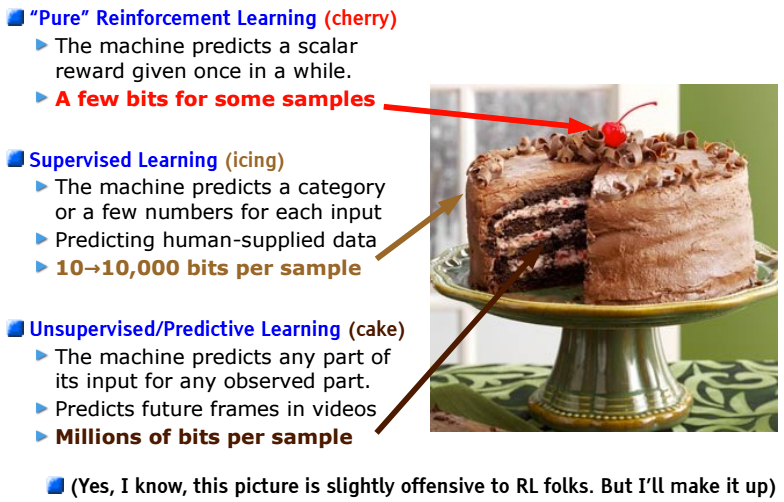
Preregistering a disagreement with my MATS fellow Erez Abrams:
He thinks the right number of levels of agency is 2. I think that 2 is too large, and the right number of levels of agency is 1.
(This isn't mean to make much sense to anyone else, but hopefully one of us will end up obviously right at some point, and will owe the other person a poem about the beauty of their conception of agency.)
1Well then, here's my cryptic pre-registered bet:
There's no right number of levels of agency, just like for most complex concepts. It's not only continuous, but multidimensional.
Thinking in categories, when the territory is continuous, is the source of a pretty good fraction of the total amount of confusion and miscommunication.
12
my pre-registered guess: understanding agency is an infinite endeavor
(Vague, speculative thinking): Is the time element of UDT actually a distraction? Consider the following: agents A and B are in a situation where they'd benefit from cooperation. Unfortunately, the situation is complicated—it's not like a prisoner's dilemma, where there's a clear "cooperate" and a clear "defect" option. Instead they need to take long sequences of actions, and they each have many opportunities to subtly gain an advantage at the other's expense.
Therefore instead of agreements formulated as "if you do X I'll do Y", it'd be far more beneficial for them to make agreements of the form "if you follow the advice of person Z then I will too". Here person Z needs to be someone that both A and B trust to be highly moral, neutral, competent, etc. Even if there's some method of defecting that neither of them considered in advance, at the point in time when it arises Z will advise against doing it. (They don't need to actually have access to Z, they can just model what Z will say.)
If A and B don't have much communication bandwidth between them (e.g. they're trying to do acausal coordination) then they will need to choose a Z that's a clear Schelling point, even if that Z is subo...
4A tension that keeps recurring when I think about philosophy is between the "view from nowhere" and the "view from somewhere", i.e. a third-person versus first-person perspective—especially when thinking about anthropics.
One version of the view from nowhere says that there's some "objective" way of assigning measure to universes (or people within those universes, or person-moments). You should expect to end up in different possible situations in proportion to how much measure your instances in those situations have. For example, UDASSA ascribes measure based on the simplicity of the computation that outputs your experience.
One version of the view from somewhere says that the way you assign measure across different instances should depend on your values. You should act as if you expect to end up in different possible future situations in proportion to how much power to implement your values the instances in each of those situations has. I'll call this the ADT approach, because that seems like the core insight of Anthropic Decision Theory. Wei Dai also discusses it here.
In some sense each of these views makes a prediction. UDASSA predicts that we live in a universe with laws of physi...
2 1
1Since there's been some recent discussion of the SSC/NYT incident (in particular via Zack's post), it seems worth copying over my twitter threads from that time about why I was disappointed by the rationalist community's response to the situation.
I continue to stand by everything I said below.
Thread 1 (6/23/20):
Scott Alexander is the most politically charitable person I know. Him being driven off the internet is terrible. Separately, it is also terrible if we have totally failed to internalize his lessons, and immediately leap to the conclusion that the NY...
3I've been thinking lately about the assumptions underlying different intellectual fields. This is hard to compress, and I'm working on a few posts about different aspects of these assumptions, but here's a very rough summary of two crucial factors and how they vary across different fields:

The first is where the boundaries around agents are drawn. E.g. economics and law typically take the individual to be the basic unit of analysis. It's possible to talk about larger or smaller units in some cases, but these aren't as fundamental (e.g. neither would work if...